 sheffield.ac.uk
University of Sheffield Reproduces Ancient Roman Dichroic Glass Effect
Article Content

- •University of Sheffield successfully replicated the Lycurgus Cup's optical effects.
- •The new glass uses a recipe derived from original fragments, achieving consistent results.
- •A contemporary sculpture will showcase the recreated dichroic glass at a public exhibition.
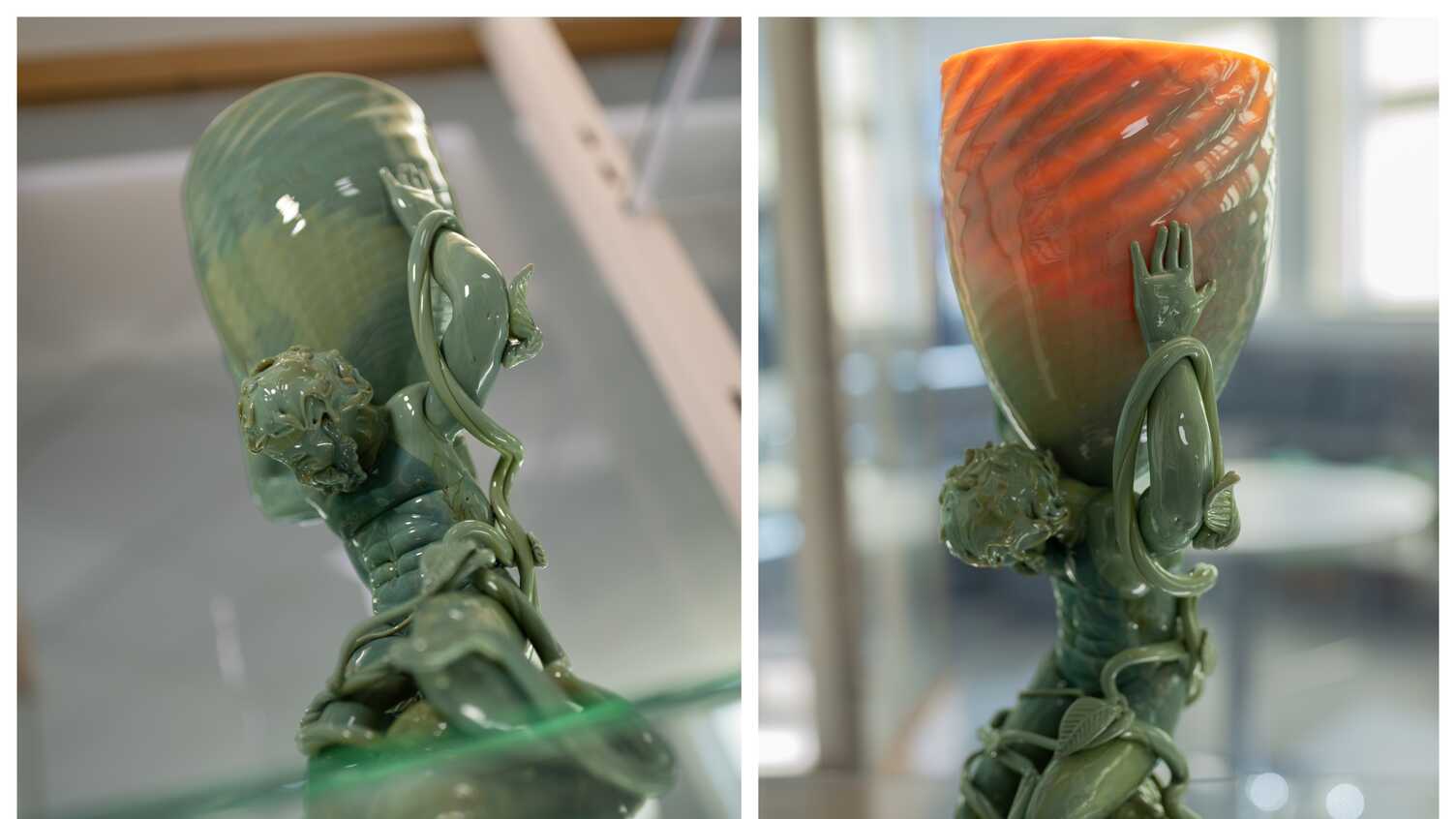
Researchers at the University of Sheffield have successfully replicated the color-changing effect of the ancient Roman Lycurgus Cup, which shifts from jade green to ruby red. The team, led by Lisa Hollands, used a recipe derived from fragments of the original glass, achieving a consistent and reproducible method for creating this dichroic glass. This breakthrough follows previous attempts by Dutch researchers in 2020, who had not established a reliable recipe. The newly created glass will be featured in a contemporary sculpture by artist Elliott Walker, set to be unveiled at the University of Sheffield's Festival of the Mind. The original Lycurgus Cup, crafted in the 4th century, is renowned for its unique optical properties, attributed to the presence of gold and silver nanoparticles. The Sheffield team's work not only honors this ancient craftsmanship but also has implications for modern materials science and photonics.
Ask AI about this cluster
Answers cite the sources they use
Timeline
More articles in this cluster (7)
Common questions
What is the Lycurgus Cup?
How was the glass replicated?
Where can I see the new sculpture?
Continue Reading
 Critical RCE Vulnerability in Confection WordPress Plugin (CVE-2026-115252) A critical vulnerability, CVE-2026-115252, has been identified in the Confection WordPress Cable plugin, affecting versions 0.4.0 to 0.4.7. This flaw allows unauthenticated attackers to execute arbitrary PHP code on the server by writing unmodified settings into a PHP file without proper checks. The vulnerability has…
 Critical Code Injection Vulnerability in Staggs Plugin for WordPress A critical code injection vulnerability, CVE-2026-78287, has been identified in the Staggs plugin for WordPress, affecting versions up to 3.3.0. This flaw allows unauthenticated attackers to execute arbitrary code remotely, posing severe risks to affected sites. The vulnerability stems from improper control over code…