 Back Gbhackers
12 Adversarial Exposure Validation Tools: The 2026 Buyer’s Verdict Guide
Adversarial exposure validation (AEV) is the label the market settled on for the merged territory of breach-and-attack simulation, autonomous penetration testing, and automated red teaming three lanes that always answered the same buyer question with different risk appetites.
The purchase goes wrong when a change-averse estate adopts a live-testing engine it cannot govern, or a proof-hungry CISO adopts simulation scorecards that lose every patch-owner debate.
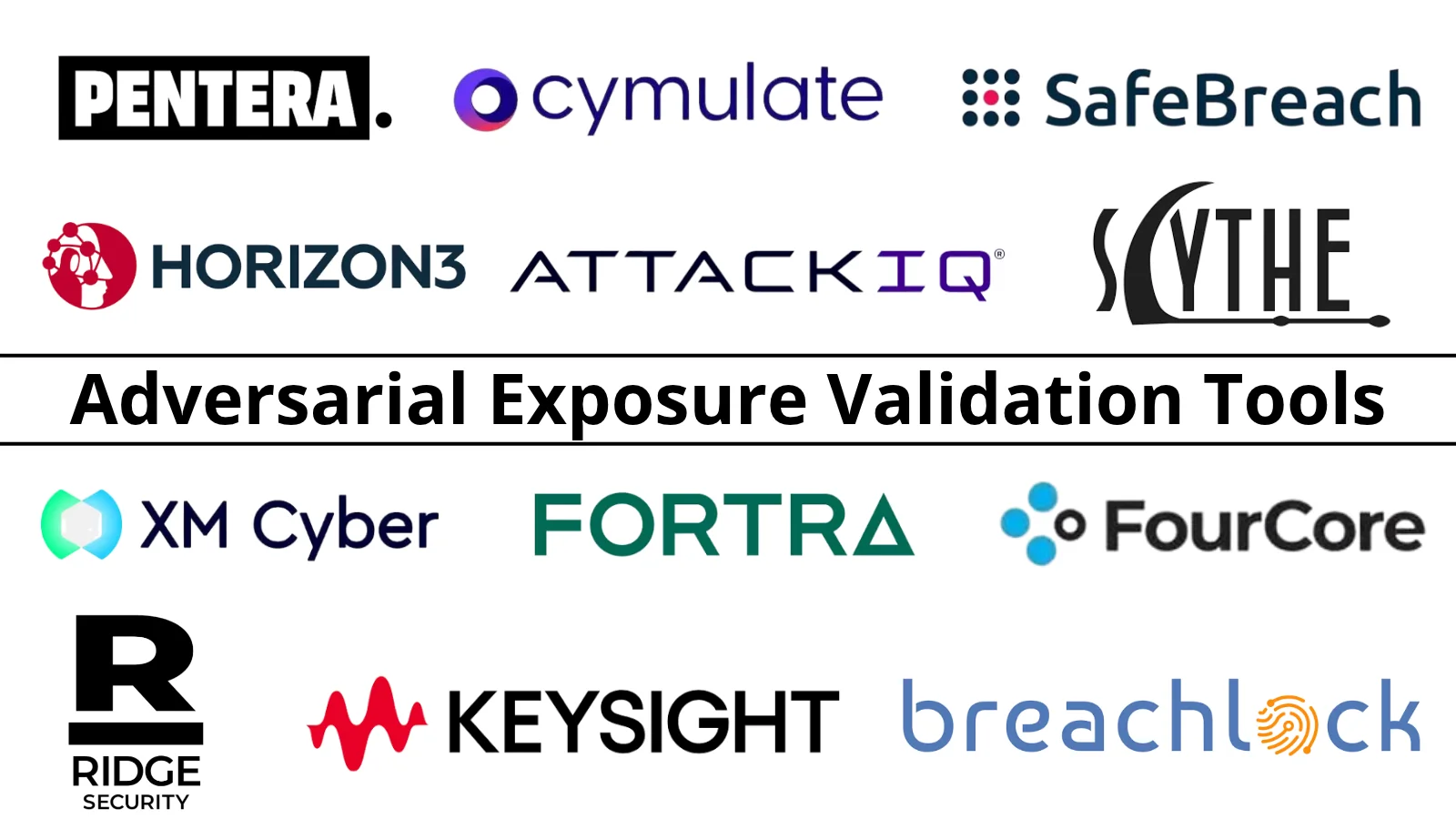
This verdict guide judges twelve tools with the lane declared on every entry, the governance posture each one assumes, and the procurement questions that separate the lanes before a demo ever runs.
One editorial note: Picus Security is not covered here. Readers assembling the surrounding program should keep our BAS guide and threat hunting guide open alongside.
The Capability Grid First
Twelve tools, five questions, before any prose sways you:
Research-based assessment across five criteria: lane honesty (what each tool actually does), governance burden (what change control must approve), evidence durability (does the finding survive a remediation meeting), content and technique currency, and pricing-structure clarity. No paid placements; no lab testing claimed.
The Twelve Tools, Reviewed and Judged
1. Pentera — The Proof-Lane Benchmark
Pentera defines the live-testing lane: autonomous assessments that validate real attack chains credential reuse, relay paths, privilege-escalation routes to domain control under production guardrails, documented step by step.
The findings settle arguments because they reflect a demonstrated path rather than a theoretical one. Governance is the trade: change control must approve real-technique testing, and scope discipline is a standing duty.
Weaving this into your cyber risk quantification program helps translate technical paths into financial priorities.
Key capabilities: autonomous validation; directory and credential-path depth; documented evidence.
Pricing structure: per-scope licensing.
Verdict: adopt when remediation meetings need demonstrated facts, not scores.
2. Horizon3.ai — The Self-Service Assessment
NodeZero puts a real penetration assessment behind a button: autonomous operations that chain exposures the way human testers would, evidence attached, and the differentiator re-runs after remediation that confirm the path actually closed.
The assess-fix-reassess loop is the discipline annual engagements never delivered, closely aligned with robust incident response playbooks .
Key capabilities: autonomous assessment; fix re-verification loop; attack-path evidence.
Pricing structure: subscription.
Verdict: the assessment that checks your homework.
3. Cymulate — The Breadth Workhorse
Cymulate sweeps more surface per analyst-hour than anything in the simulation lane email, web gateway, WAF, endpoint, lateral movement, exfiltration paths operable by small teams and feeding an exposure-management layer.
The safe-lane default for programs that need weekly truth without a governance conversation, backed by continuous security policy development .
Key capabilities: full-surface modules; lean ergonomics; exposure integration.
Pricing structure: module-based SaaS.
Verdict: the widest validation a two-person team can run.
4. AttackIQ — The Framework Grader
Attackiq provides ATT&CK-mapped scenarios, gap reports naming the exact techniques that slipped past which control, and delivery from self-serve to managed: AttackIQ suits programs that report to boards and regulators in framework language and need coverage claims graded against the canon.
Key capabilities: ATT&CK alignment; detection-gap precision; managed tiers.
Pricing structure: platform subscription.
Verdict: for coverage reported in MITRE’s vocabulary.
5. SafeBreach — The Arsenal Keeper
SafeBreach provides a deep library of curated attack methods, headline TTPs operationalized within days of disclosure, and a studio for composing custom scenarios: SafeBreach is the simulation lane’s deepest magazine, rewarding programs with a dedicated owner who works it.
Key capabilities: playbook corpus; new-threat velocity; custom composition.
Pricing structure: platform subscription.
Verdict: maximum methods bring an owner to exploit them.
6. XM Cyber — The Route Mathematician
XM Cyber computes rather than executes: continuous attack-path graphs from breach points to crown jewels, with choke-point ranking showing which single fix severs the most paths at once.
Modeled evidence persuades differently than demonstrated proof, and the remediation economics are the category’s cleanest, integrating smoothly into a comprehensive cybersecurity risk assessment program.
Key capabilities: continuous path graphs; choke-point ranking; hybrid coverage.
Pricing structure: SaaS platform.
Verdict: the one-fix-many-paths argument, automated.
7. SCYTHE — The Emulation Workshop
SCYTHE equips teams that build their own adversary emulations: plans mapped to named actors, controllable payloads, and purple-team workflow that turns each campaign into detection improvements.
A craftsman’s tool that multiplies offensive skill already on staff rather than substituting for it.
Key capabilities: emulation authoring; controllable payloads; purple-team workflow.
Pricing structure: platform licensing.
Verdict: for estates with red-team hands in-house.
8. Ridge Security — The Value Automator
RidgeBot runs automated validation with documented evidence at economics the premium lane skips real-technique testing, risk-scored findings, mid-market invoice.
Ecosystem gravity trails the anchors; the honest alternative at this budget is usually no validation at all.
Key capabilities: automated validation; evidence documentation; value pricing.
Pricing structure: platform licensing.
Verdict: the proof lane at a mid-market price.
9. Fortra — The Operator-Led Lineage
Fortra ’s offensive-security lineage (the long-standing commercial red-team tooling it stewards) serves operator-led engagements rather than push-button automation: skilled testers running structured campaigns with mature tradecraft.
It is validation delivered by expertise, not a self-service platform scope it as the human-led lane and confirm current packaging.
Key capabilities: operator-led campaigns; mature tradecraft; services depth.
Pricing structure: licensing + services.
Verdict: the expert-driven lane, not an automation platform.
10. Keysight — The Network-Layer Validator
Keysight’s Threat Simulator validates where its test-engineering heritage lives: realistic malicious traffic against IPS, -gen firewall, and sandbox controls at packet-level fidelity.
For carrier- and industrial-scale network estates, it is the wire’s specialist in a mostly endpoint-and-identity field.
Key capabilities: traffic realism; network-control grading; test-lab pedigree.
Pricing structure: platform licensing.
Verdict: the network stack’s validation specialist.
11. FourCore — The Accessible Challenger
FourCore brings simulation economics down-market: ATT&CK-mapped scenarios, detection grading, and remediation hints at tiers a mid-market budget clears.
Library depth trails the incumbents, but the alternative at this spend is frequently no continuous validation at all.
Key capabilities: ATT&CK-mapped simulation; detection grading; entry economics.
Pricing structure: accessible SaaS tiers.
Verdict: first continuous validation for lean budgets.
12. BreachLock — The Service-Delivered Lane
BreachLock wraps validation in managed delivery: penetration-testing-as-a-service and continuous assessment run by its experts on a platform, with retesting included and findings tracked to closure.
The outcome-buyer’s lane for teams that want proof without owning the engine.
Key capabilities: service-delivered testing; included retesting; tracked closure.
Pricing structure: subscription/engagement.
Verdict: validation outcomes, staffing included.
Full Comparison Table
Decide the lane before the shortlist, because governance posture not feature count is the real gate.
Change-averse estates start in the simulation lane (Cymulate, AttackIQ, SafeBreach, Keysight, FourCore); estates whose remediation meetings need demonstrated proof budget for the live-testing lane (Pentera, Horizon3.ai, Ridge Security) and route it through change control with written scope limits and lab-first trials; teams wanting outcomes without owning the engine take the service lane (BreachLock) or the operator-led lineage (Fortra); and red-team-equipped shops get the most from emulation authoring (SCYTHE).
Run the pilot as a remediation test, not a demo: the same three control sets for every finalist, graded on failures fixed within thirty days using each tool’s guidance.
Wire results into your SOAR workflow and detection engineering loop so findings become durable detections, feed them into the vulnerability management queue so proven exposures and scanner findings one prioritized list, pipe the validated exposures into your CTEM program as the truth filter it exists to be, and hold the whole program to one metric the median days a validated finding stays open before it is closed and re-checked.
What are the best adversarial exposure validation tools in 2026?
Pentera and Horizon3.ai lead the live-testing lane, Cymulate and AttackIQ the simulation lane, with SafeBreach, XM Cyber, SCYTHE, Ridge Security, Fortra, Keysight, FourCore, and BreachLock across the modeled, operator-led, service, and value lanes. Picus Security is not covered in this guide.
What is adversarial exposure validation?
The consolidated category covering breach-and-attack simulation, autonomous penetration testing, and automated red teaming tools that continuously validate, by simulation or real-technique execution, what an attacker could accomplish against your actual estate.
Which lane do we need — simulation or live testing?
Simulation runs continuously without governance friction and grades control coverage; live testing produces demonstrated proof but needs change-control approval. Mature programs run one of each for different internal audiences.
Is it safe to run these against production?
Simulation-class tools are engineered production-safe; live-testing tools run real techniques under guardrails and deserve explicit change-control governance, scope limits, and lab-first validation aligned with your security policy development standards before any production run.
How does AEV fit the CTEM cycle?
AEV is the validation stage of continuous threat exposure management the truth filter that separates genuinely exploitable exposure from scanner noise before remediation is mobilized.
Twelve tools, three lanes, one gate that matters more than any feature: can your change-control culture govern what the tool actually does? Pentera and Horizon3 and RidgeBot demonstrate the path, Cymulate and AttackIQ and SafeBreach grade the surface safely, XM Cyber ranks the routes, SCYTHE arms the purple team, BreachLock and Fortra bring the humans, Keysight and FourCore cover the wire and the budget declare the lane, pilot on fixes shipped, and let the time-to-close-and-re-check number prove the program earns its line item.
The full story
This article is one source in a clustered incident — the cluster page carries the summary, timeline and every other outlet covering it.
