 Gbhackers
Falcon C2 Framework Compromises Government Browsers in Southeast Asia and Middle East
Article Content

- •Falcon C2 framework targets government agencies using malicious JavaScript.
- •Attackers compromised browsers to steal credentials without traditional endpoint implants.
- •The incident involved the delivery of a Rust implant named Antino via compromised web applications.
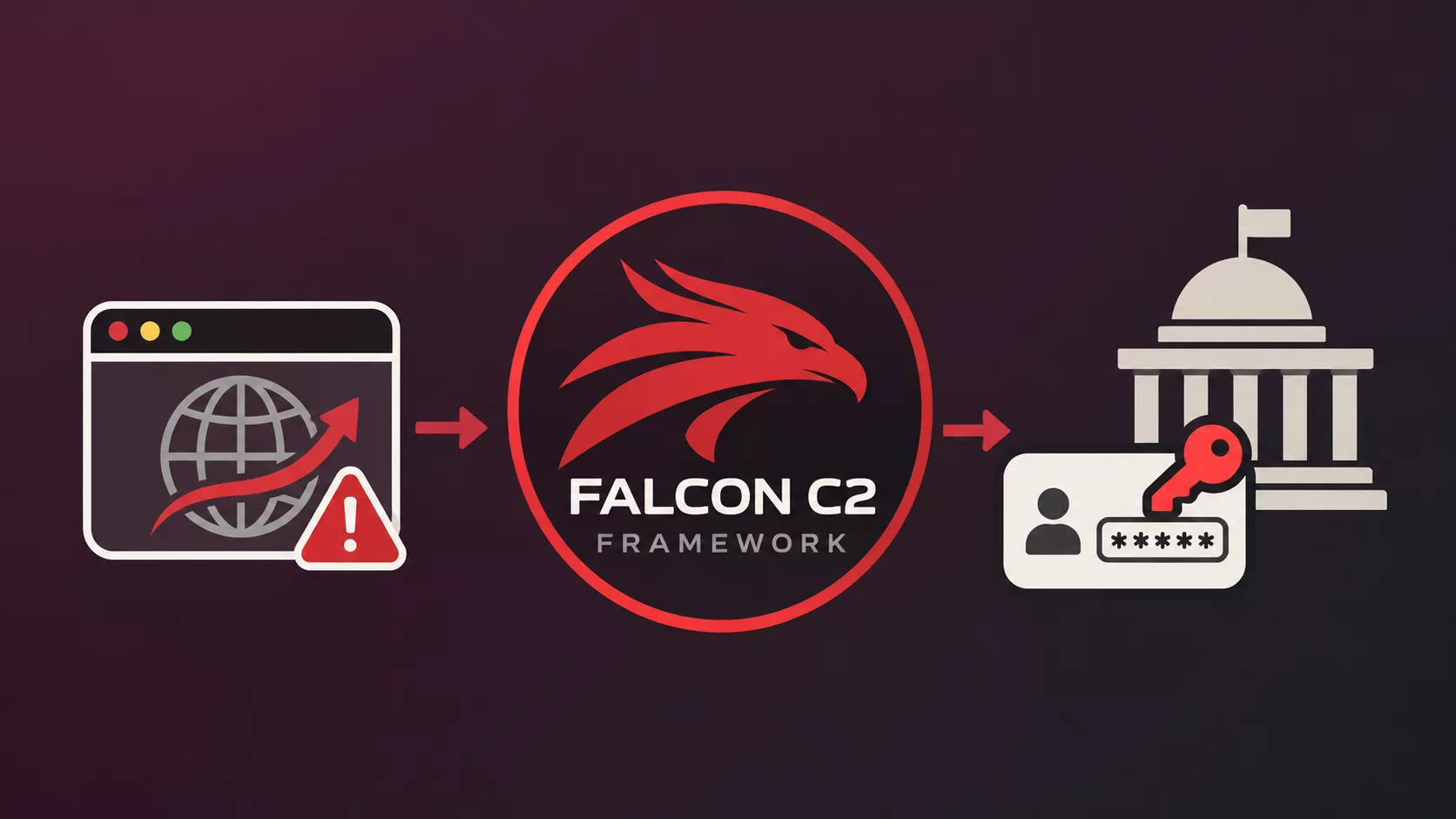
Unit 42 has identified the Falcon command-and-control framework, also known as XG or Xiàng Gē, which has been used to compromise browsers of government entities in one Middle Eastern country and four Southeast Asian countries between March and May 2026. The framework executes malicious JavaScript within the browser, allowing attackers to intercept credentials and gain unauthorized access to government applications. Attackers injected malicious scripts into webmail portals and government applications, targeting ministries of foreign affairs, defense, and law enforcement. The Falcon framework conceals its management interface and uses games like Tetris as camouflage. Additionally, it delivered a Rust implant called Antino, which communicates via Microsoft OneDrive. The incident highlights the growing sophistication of browser-based attacks against government infrastructure.
Ask AI about this cluster
Answers cite the sources they use
Timeline
More articles in this cluster (2)
Following this threat?
Track blacknevas and Antino in your own feed — you're alerted when they show up in new reporting, leak sites or exploitation.
Free account · no card needed
Common questions
Which government agencies are affected?
How does the Falcon C2 framework operate?
What should organizations do to protect themselves?
Continue Reading
 Chinese Hackers Exploit Stolen LLM API Keys for Credential Theft via ARTEX Chinese-nexus threat actors utilized ARTEX, an open-source penetration-testing framework, to exploit stolen large language model API keys for credential theft. Amazon Threat Intelligence reported that these operations were detected between October 3 and November 5, 2026, through their MadPot decoy network. The…
 GhostFrame Malware Targets VMware ESXi Servers Amid Ransomware Attacks Recent investigations by Kaspersky and Insikt Group revealed that ransomware attacks on ESXi and Proxmox environments exploited weak administrative controls and misconfigurations rather than VM escape techniques. The Kaspersky Global Emergency Response Team linked these incidents to BlackNevas and The Gentlemen…