 Bitdefender
SYS010 malvertising campaign uses fake wallpaper apps to hijack Meta Business and email accounts
Article Content

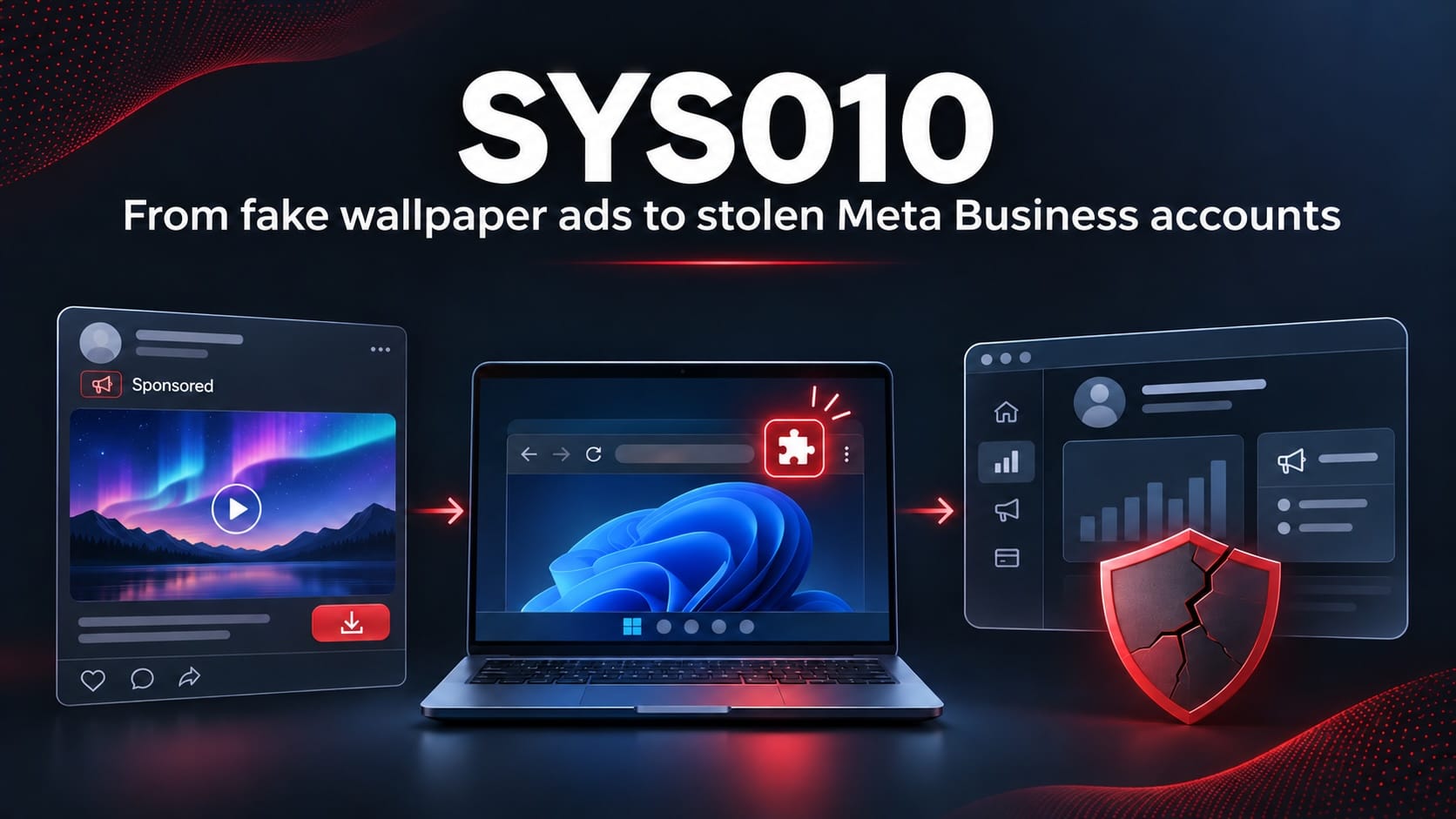
- •SYS010 is a second-generation SYS01 infostealer delivered via Meta ads that impersonate Wallpaper Engine and Lively Wallpapers.
- •The final payload is a malicious browser extension for Chrome, Edge and Firefox that steals cookies and Meta Business data.
- •The Chrome version can read recent Gmail and Outlook messages and permanently delete selected emails, including security alerts.
- •Extensions are force-installed through browser enterprise management policies, making them difficult for victims to remove.
- •Bitdefender reports the campaign was ongoing as of its report, with hundreds of ads created since at least October 16.
Bitdefender Labs reports SYS010, a new version of the SYS01 infostealer, delivered through Meta ads promoting free animated wallpaper apps for Windows. The malicious installers run a working wallpaper application while installing malicious components in the background. Bitdefender describes a PHP loader that enrolls victims with a command-and-control server and delivers later stages selectively. The final payload is a malicious browser extension for Chrome, Edge and Firefox that can steal cookies and collect data from ad accounts, Business Managers and Pages. According to Bitdefender, the Chrome version can also read recent Gmail and Outlook messages in the browser and permanently delete messages selected by the operator, which could hide security alerts. Per BleepingComputer's account of the report, the extensions are force-installed by abusing browser enterprise management features (Chrome admin enrollment, Firefox ExtensionSettings policy, Edge MDM), using repeated UAC prompts to obtain administrator approval. Bitdefender observed requests to the infrastructure from countries across Asia, Europe, North America, Africa and South America, with the highest volumes from the Philippines, Thailand, Bangladesh, Poland, Mexico, Algeria, Belgium, Mongolia and the United States; the company emphasises these do not confirm infections. Bitdefender says it first identified a malicious SYS010 ad on October 16 and that the campaign was still ongoing with hundreds of ads created. The report states no SYS010 activity was observed from Vietnam, which it describes as consistent with but not proof of operator location. Infrastructure is resilient, with loader and extension C2 domains obtainable from Telegram, Cloudflare R2, Google Docs and Google Sites.
Ask AI about this cluster
Answers cite the sources they use
Timeline
More articles in this cluster (4)
Following this threat?
Track Infostealer and Adaptive Security in your own feed — you're alerted when they show up in new reporting, leak sites or exploitation.
Free account · no card needed
Common questions
Am I affected if my organisation uses Meta Business accounts?
How do the malicious extensions avoid removal?
Does the report confirm infections in specific countries?
Continue Reading
 Fake Google Sheets Chrome extension used to read Gmail for Remus stealer buyers Gen researchers report that the Gmail 'zero-day' advertised by Remus infostealer sellers is a malicious Chrome extension disguised as Google Sheets, not a Gmail vulnerability. Gen's analysis was published November 24, and Invoke RE independently traced the feature to the same extension. Remus developers began…
 OXLoader Malware Loader Uses DLL Hijacking to Deliver Multiple Infostealers and RATs Malwarebytes reports a rise in activity involving OXLoader, a loader that installs other malware on Windows PCs, with payloads varying by campaign and including Remcos, OverLord, PureRAT, Lunex Stealer, LOLD, and Hermes. Depending on the payload, attackers could steal saved browser passwords and other data, remotely…