 United24Media
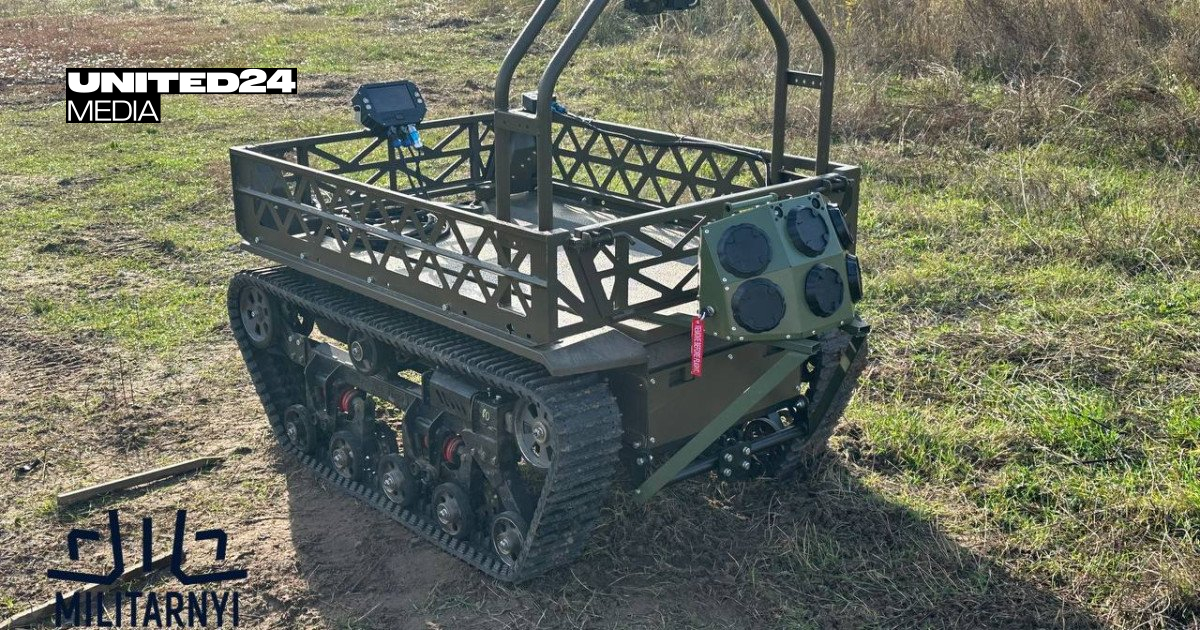
Ukraine's Mangal System Enhances Defense Against Russian FPV Drones
Article Content

- •The Mangal system detects and intercepts FPV drones using nets, responding in 0.2 seconds.
- •Each net round costs approximately $48, making it a cost-effective defense solution.
- •The VORON UGV complements Mangal by providing multi-directional drone interception capabilities.
Ukrainian engineers have developed the Mangal automated protection system to defend ground robots from Russian FPV drones. The system can detect threats at ranges of 40 to 60 meters and responds in just 0.2 seconds by launching nets to entangle the drones. Each net round costs approximately $48, and the system has undergone extensive testing, with around 1,000 test firings reported. The Mangal system is set for mass production, evolving from earlier manually operated net launchers used by Ukrainian forces since March 2026. Additionally, the VORON UGV, equipped with Pavuk net launchers, has been introduced to intercept drones from multiple angles, showcasing Ukraine's innovative approaches to counter drone threats on the battlefield.
Ask AI about this cluster
Answers cite the sources they use
Timeline
More articles in this cluster (12)
Following this threat?
Track Frontline Robotics in your own feed — you're alerted when they show up in new reporting, leak sites or exploitation.
Free account · no card needed
Common questions
How does the Mangal system work?
What is the cost of each net round?
What are the operational capabilities of the VORON UGV?
Continue Reading
 Critical RCE Vulnerability in Prefab UI Disclosed A critical remote code execution vulnerability, CVE-2026-120338, was disclosed on November 1, 2026, affecting Prefab UI's Generative UI sandbox. The flaw allows attackers to execute arbitrary Python code by exploiting Deno's permissions, enabling file read/write access on the host server. This vulnerability affects…
 Volt Typhoon's Silent Train Network Targets US Critical Infrastructure The Chinese state-sponsored hacking group Volt Typhoon has been linked to a covert network called Silent Train, which has exploited at least four zero-day vulnerabilities over three years. This network utilizes rapidly rotating chains of compromised SOHO routers, IoT devices, and enterprise infrastructure to access…