Vulnerability Overview
Exploitation Activity
Exploitation Intelligence
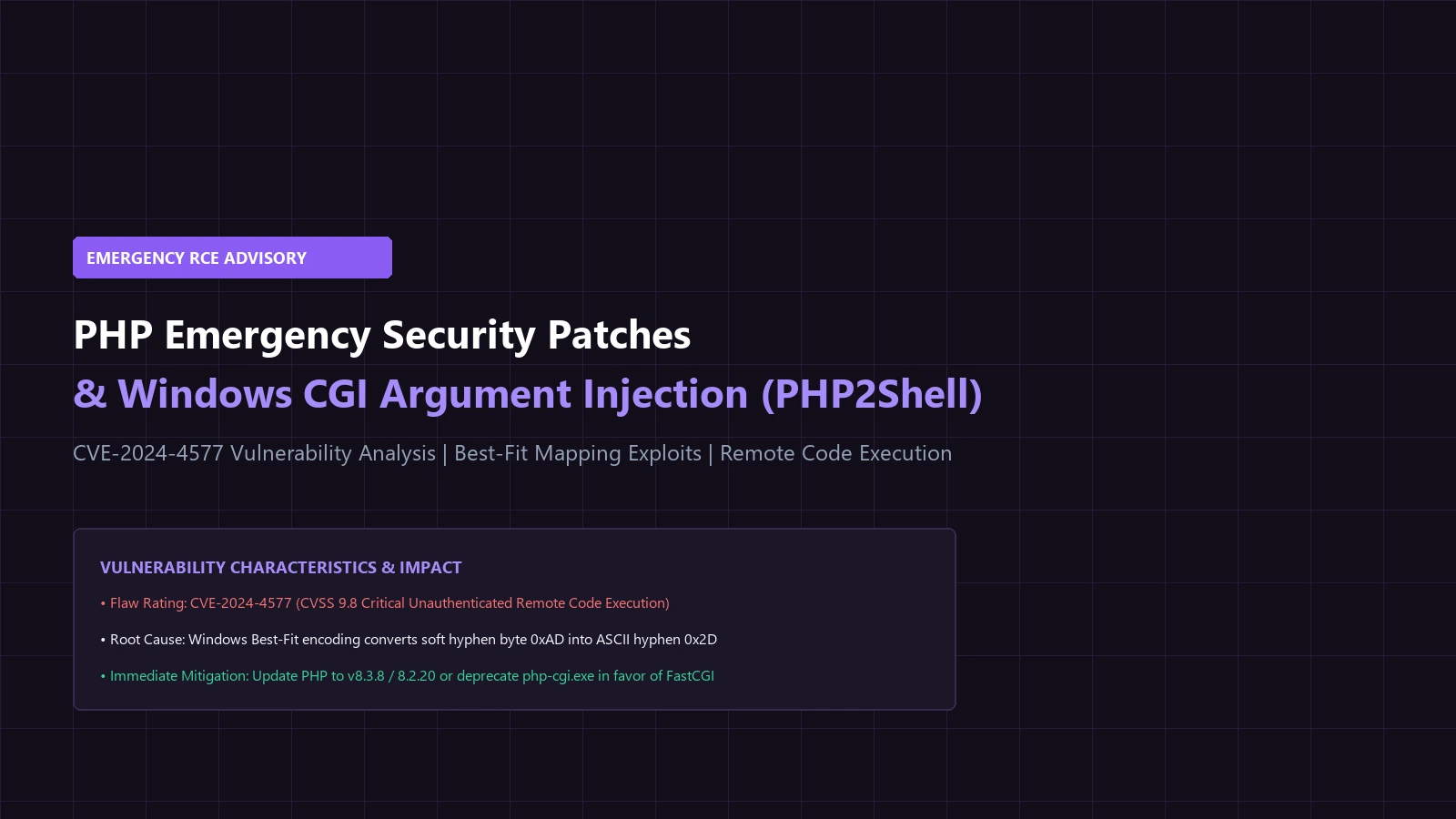
On October 21, 2026, the PHP development team released patches for two critical vulnerabilities in PHP, known as PHP2Shell (CVE-2026-109618 and CVE-2026-109619), which allow unauthenticated remote code execution. These vulnerabilities were actively exploited by a suspected China-linked threat actor...
The PHP2Shell vulnerabilities, identified as CVE-2026-109618 and CVE-2026-109619, pose a critical threat to approximately 70% of websites globally, allowing unauthenticated remote code execution. Discovered by the security firm Calif using AI, these flaws were leaked before a scheduled patch on Octo...
Two critical vulnerabilities in PHP, tracked as CVE-2026-109618 and CVE-2026-109619, were disclosed on October 21, 2026, allowing unauthenticated remote code execution (RCE). The vulnerabilities, collectively known as PHP2Shell, affect all PHP installations serving web requests, including popular pl...
In August 2026, a mass-scanning campaign targeted internet-exposed Vite development servers to steal sensitive cloud credentials and configuration files from AWS and Azure. The attackers exploited CVE-2026-39364, a high-severity vulnerability allowing unauthenticated access to restricted files via m...