Vulnerability Overview
Exploitation Activity
Exploitation Intelligence
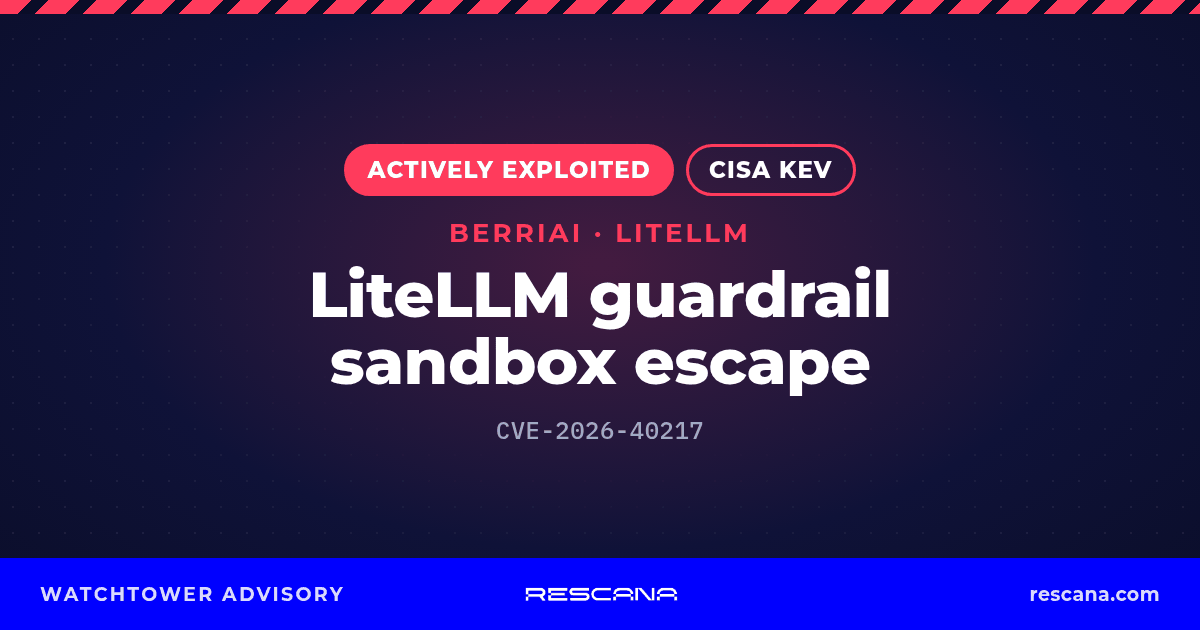
CVE-2026-40217, a vulnerability in LiteLLM, allows attackers to escape its sandbox and execute arbitrary code in the proxy process. This flaw was added to CISA's Known Exploited Vulnerabilities catalog on November 18, 2026, with a federal patch deadline of December 2, 2026. The vulnerability affects...
Two critical vulnerabilities (CVE-2026-47101 and CVE-2026-47102) have been identified in LiteLLM versions prior to 1.83.14. CVE-2026-47101 allows authenticated internal users to create API keys with unauthorized access, enabling privilege escalation to proxy_admin. CVE-2026-47102 permits users to mo...
In 2026, multiple incidents of LLMJacking have been reported, where cybercriminals hijack enterprise access to large language models (LLMs) using stolen cloud credentials and API keys. These attacks have resulted in fraudulent charges exceeding $100,000 in a single day, with cumulative costs reachin...