Three critical zero-day vulnerabilities have been identified in PickleScan, a tool used for scanning Python pickle files and PyTorch models. These flaws, all rated 9.3 on the CVSS scale, enable attackers to bypass…
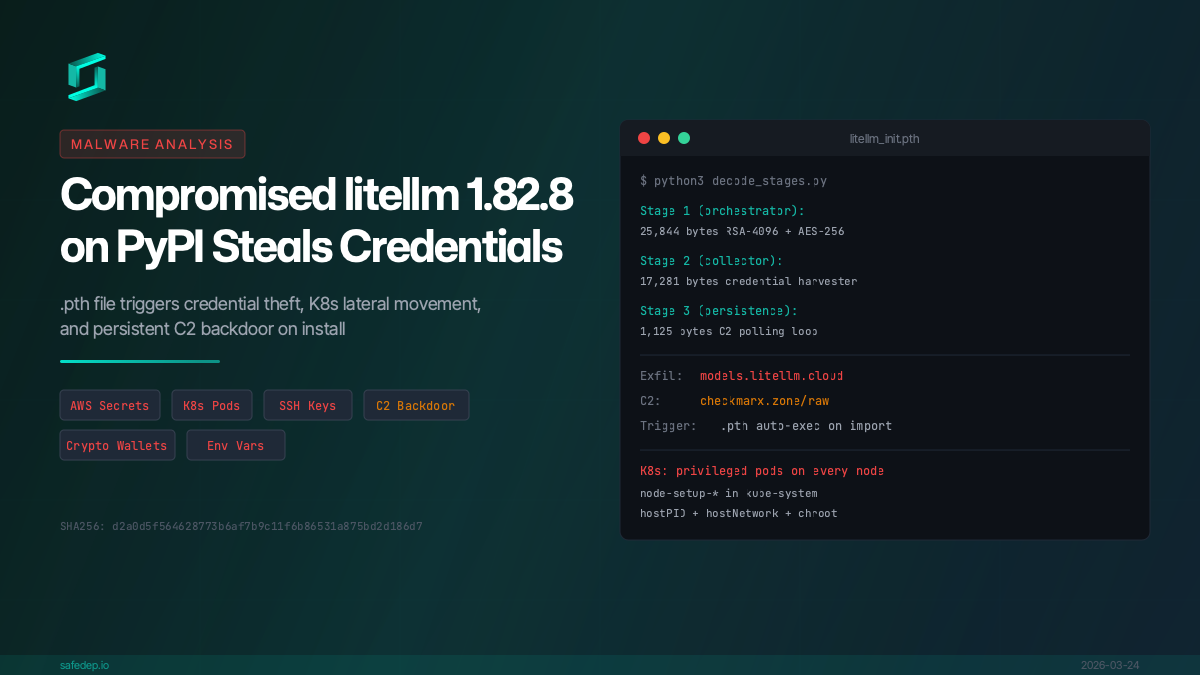
A critical command injection vulnerability, CVE-2026-42271, in LiteLLM, an open-source AI gateway, allows unauthenticated remote code execution (RCE) when chained with CVE-2026-48710, a Host header validation bypass in…
A critical pre-authentication remote code execution (RCE) vulnerability in Marimo, an open-source Python notebook platform, was disclosed on April 8, 2026, and exploited within 9 hours and 41 minutes. The vulnerability,…
A critical zero-day vulnerability (CVE-2026-35273) in Oracle PeopleSoft has been exploited by the ShinyHunters group, leading to breaches of over 100 organizations, primarily in the education sector. The vulnerability…
Amazon's threat intelligence has linked a series of compromises of popular npm packages—axios, debug, chalk, and typo-crypto—to a North Korean hacking group known as Sapphire Sleet. The group employed social engineering…
CVE-2026-11332, published on 2026-06-05, exposes a vulnerability in Ansible-Core that allows for argument injection during role installations, potentially leading to arbitrary code execution. This flaw affects Fedora 43…
A new malware named NarwhalRAT has been discovered targeting Korean users through phishing emails impersonating the Microsoft security team. The malware, linked to the North Korean hacking group APT37, can perform over…
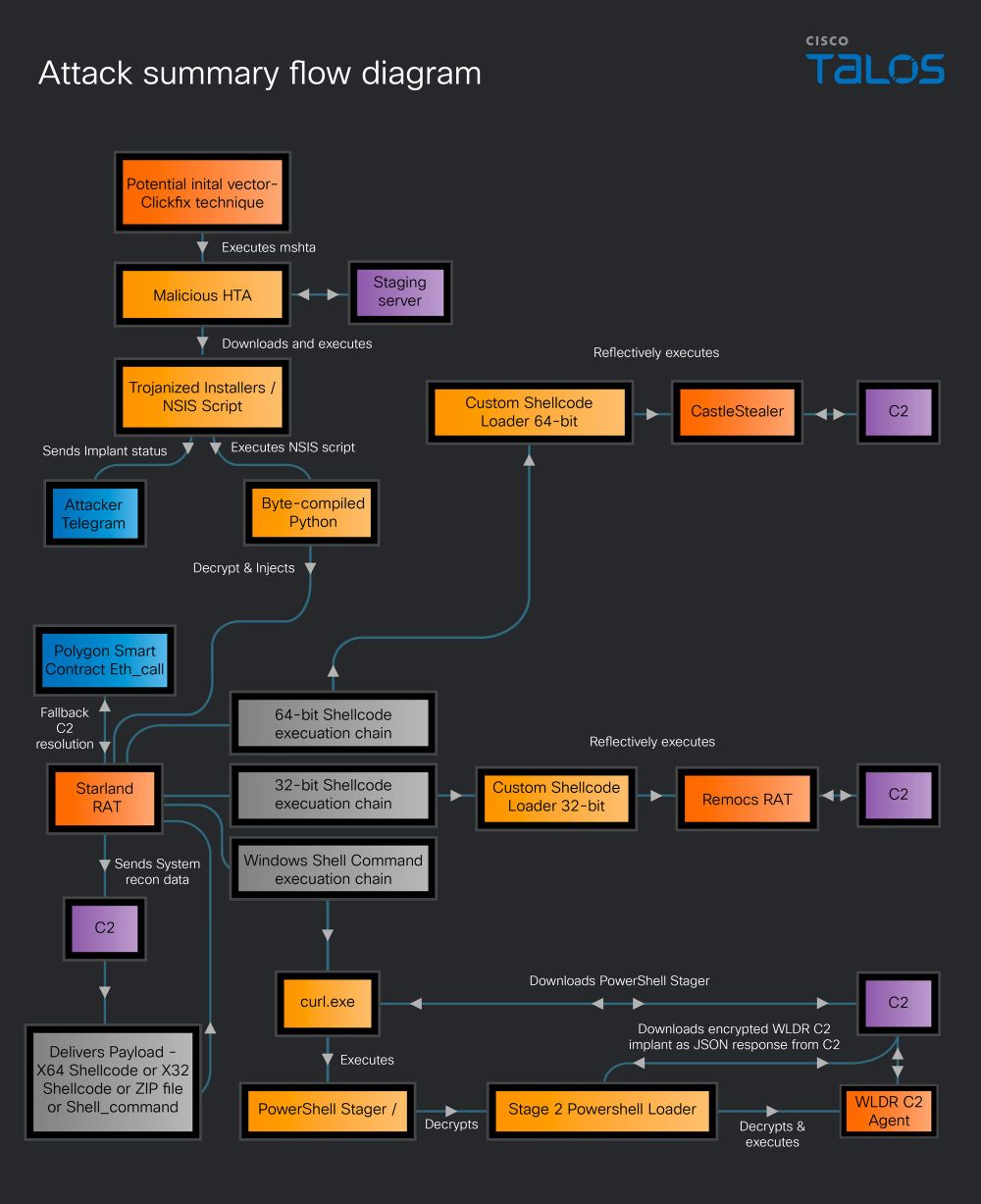
A Russian threat actor known as UAT-11795 has been deploying the Starland RAT and WLDR agent since June 2025, primarily targeting users in the U.S., Germany, Romania, and Venezuela. The group uses trojanized installers…
A coordinated supply chain attack has been identified, targeting vulnerability researchers and penetration testers through malicious proof-of-concept (PoC) repositories on GitHub. The malware, named ChocoPoC, is a…
The TeamPCP threat group has expanded its supply chain attack campaign, compromising the Microsoft DurableTask Python client with versions v1.4.1, v1.4.2, and v1.4.3 found to contain a credential-stealing worm. This…