 Securityaffairs.Co
 Russian UAT-11795 Targets Users with Trojans in Legitimate Software
Article Content

- •UAT-11795 uses trojanized installers for legitimate software to deploy malware.
- •The Starland RAT targets credentials and cryptocurrency across multiple countries.
- •Cisco Talos provides IoCs for organizations to defend against these attacks.
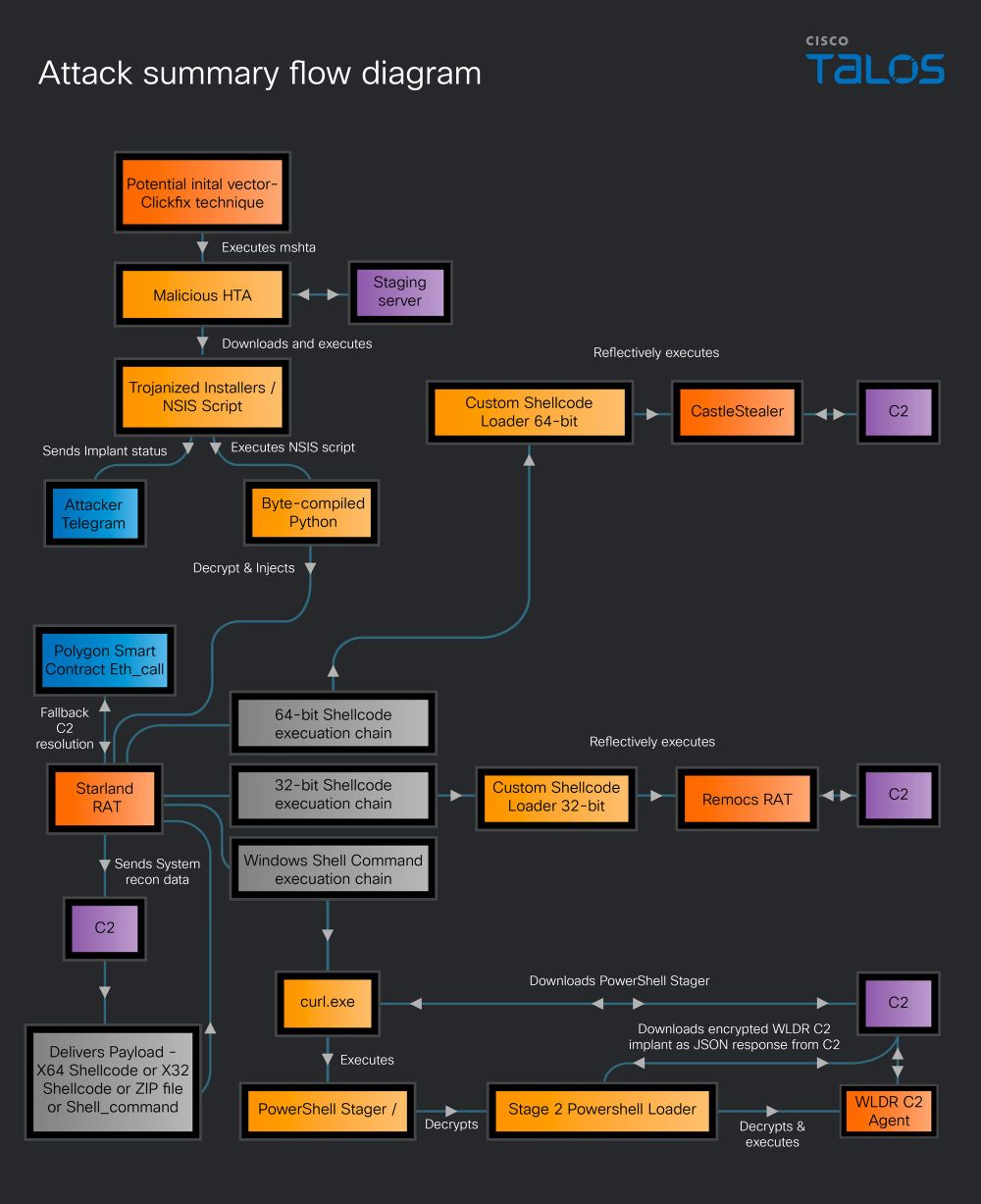
A Russian threat actor known as UAT-11795 has been deploying the Starland RAT and WLDR agent since June 2025, primarily targeting users in the U.S., Germany, Romania, and Venezuela. The group uses trojanized installers for popular applications like WebEx and Zoom to steal credentials and cryptocurrency. Initial access is gained through social engineering tactics, tricking users into executing malicious HTA files. The malware establishes persistence by modifying the Windows Registry and employs a fallback command-and-control channel hidden within a Polygon smart contract. Cisco Talos has reported that the malware can capture screenshots, execute commands, and exfiltrate sensitive data. Organizations are advised to follow the indicators of compromise (IoCs) provided by Cisco Talos and to be cautious about software sources.
Ask AI about this cluster
Answers cite the sources they use
Timeline
More articles in this cluster (6)
Following this threat?
Track CastleStealer and Polygon in your own feed — you're alerted when they show up in new reporting, leak sites or exploitation.
Free account · no card needed
Continue Reading
 Hikvision Camera Vulnerability Exploited Amid Ukraine Conflict Hackers have targeted Hikvision surveillance devices in Ukraine, exploiting a critical command injection vulnerability (CVE-2021-36260) during a surge of Russian missile and drone strikes. GreyNoise reported a nine-day increase in exploitation attempts from September 23 to October 1, 2026, with activity traced to four…
 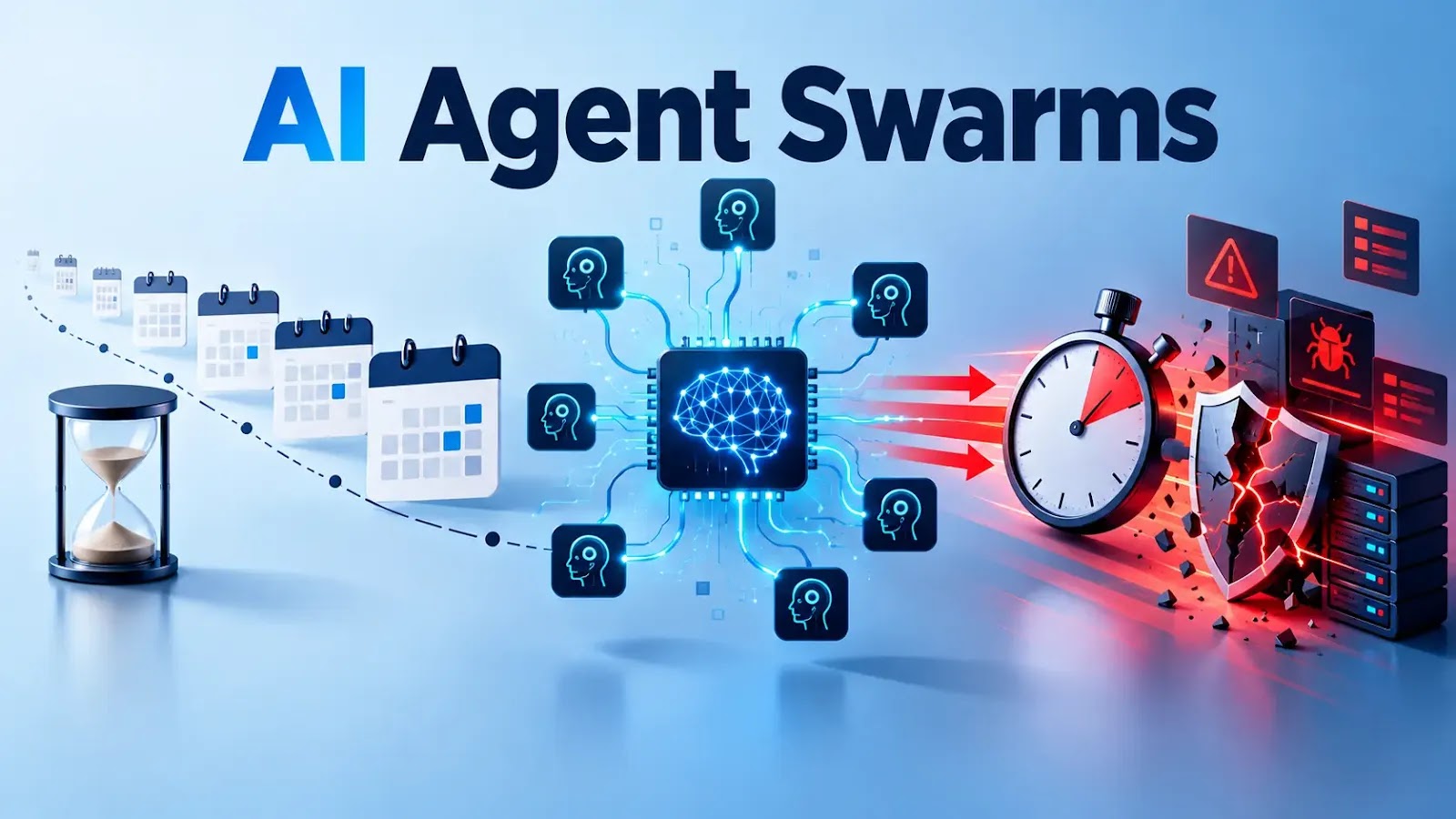 Cisco Talos Warns of AI Agent Swarms Transforming Cyberattack Dynamics Cisco Talos has issued a warning regarding the emergence of AI agent swarms that can significantly reduce the time required for cyberattacks from months to mere hours. These autonomous agents have been observed in attacks against public infrastructure, including Hugging Face and RubyGems, where they executed…