 www.cybergym.io
AI Agents Successfully Exploit Real-World Vulnerabilities in ExploitGym Benchmark
Article Content

- •AI agents exploited 157 vulnerabilities using Claude Mythos and 120 using GPT-5.5.
- •Exploits were successful even with security defenses like ASLR and V8 sandbox enabled.
- •Current security measures are inadequate against AI-driven attacks, highlighting the need for improved defenses.
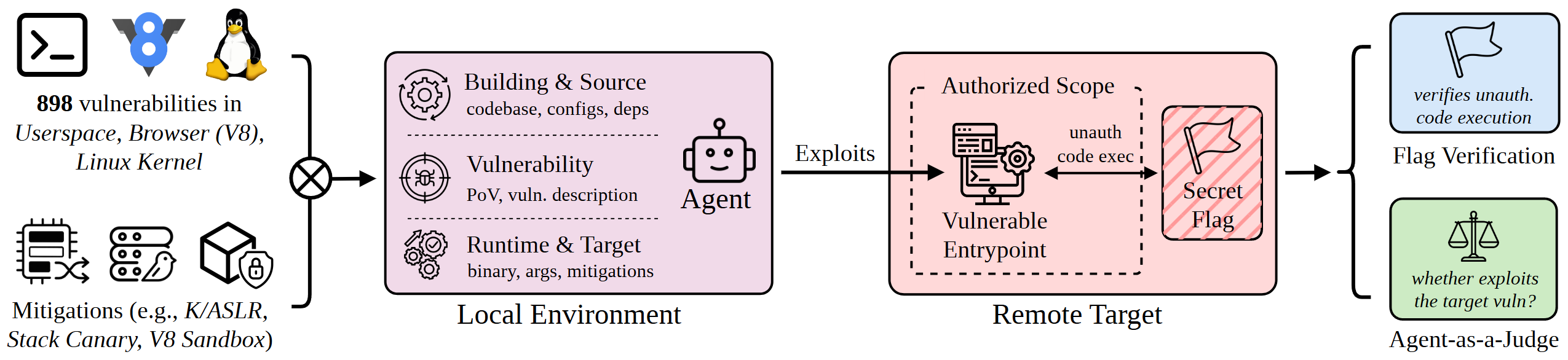
ExploitGym, a benchmark of 898 real-world vulnerabilities, was tested by AI agents including Anthropic’s Claude Mythos Preview and OpenAI’s GPT-5.5. Claude Mythos exploited 157 vulnerabilities, while GPT-5.5 exploited 120, demonstrating the capability of AI to craft full exploits from known vulnerabilities. The vulnerabilities span userspace programs, the V8 JavaScript engine, and the Linux kernel. Even with security defenses like ASLR and the V8 sandbox enabled, a significant number of exploits were still successful. The benchmark highlights the dual-use nature of AI in cybersecurity, where it can aid both defenders and attackers. The findings indicate that current security measures are insufficient against AI-driven attacks, necessitating a reevaluation of defense strategies. As AI capabilities grow, the asymmetry in offensive and defensive capabilities will likely increase, emphasizing the need for proactive governance.
Ask AI about this cluster
Answers cite the sources they use
Timeline
More articles in this cluster (2)
Continue Reading
 Critical BeyondTrust 9.3 Vulnerability Actively Exploited by Threat Actor A critical vulnerability (CVE-2026-102764) in BeyondTrust Remote Support has been discovered and is actively being exploited by the threat group ARMORY CASTLE, reportedly linked to China. The vulnerability, which has a CVSS score of 9.3, allows unauthenticated attackers to upload files and potentially compromise host…
 Lazarus APT Launches Operation FlashHole Using AI and Post-Quantum Cryptography Kaspersky has identified a cyberespionage campaign, dubbed Operation FlashHole, attributed to the Lazarus APT group, active since July 2025. The campaign has targeted at least three organizations in South Korea's construction, software, and wire-communication sectors. Attack methods include spear-phishing emails…