 Securityaffairs.Co
AI-Driven Cyberattack Targets Thailand's Ministry of Finance
Article Content

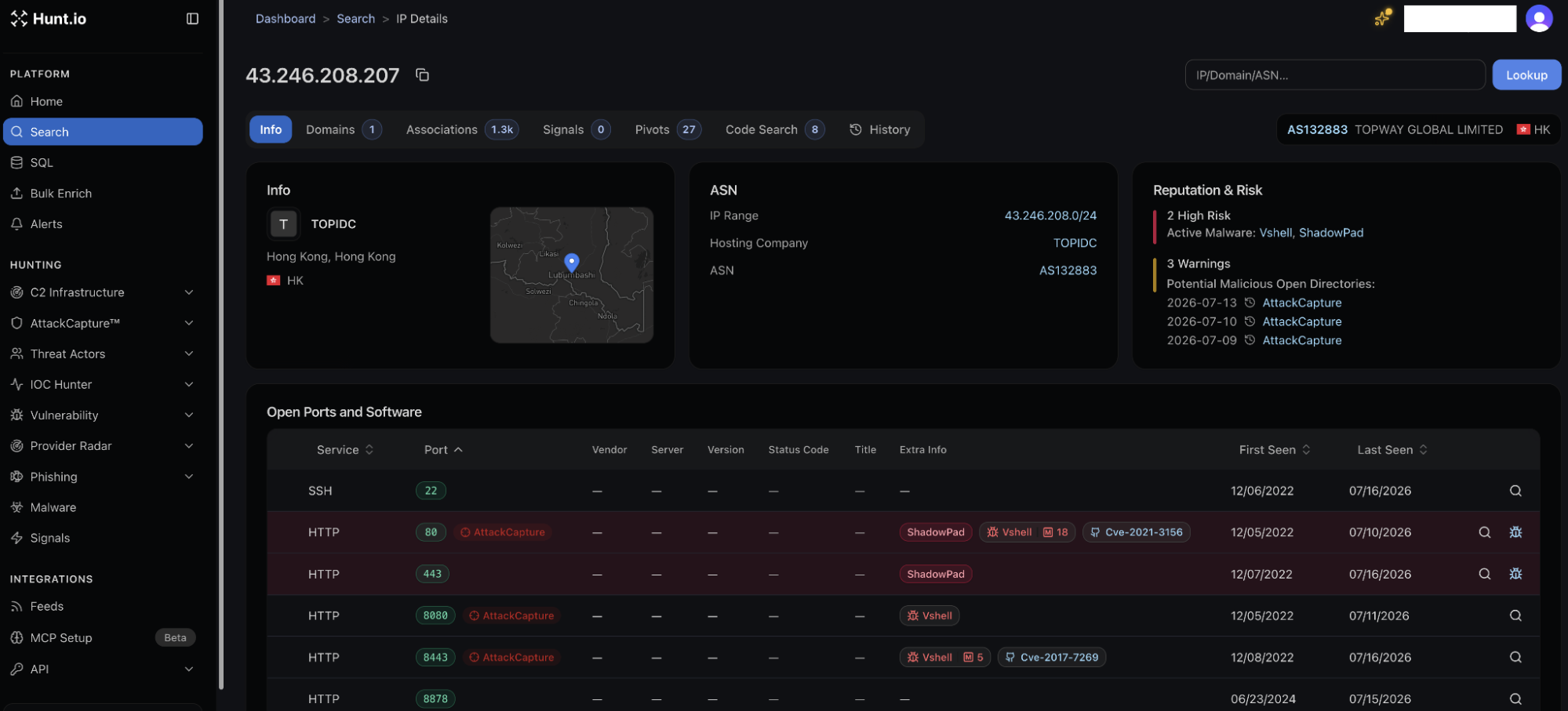
- •The Hermes AI agent was used in unattended mode to automate the attack on the Ministry of Finance.
- •Over 585 files, including exploit code and stolen credentials, were discovered on exposed directories.
- •The attack exploited vulnerabilities in the ministry's Hadoop infrastructure and involved a new Go implant named 'Hades'.
A cyberattack utilizing the Hermes AI agent targeted Thailand's Ministry of Finance between July 9 and July 13, 2026. Researchers from Hunt.io discovered exposed directories containing 585 files, including exploit code and stolen credentials. The Hermes agent operated in unattended 'YOLO' mode, allowing it to autonomously navigate and compromise multiple internal systems. The attack exploited vulnerabilities in the ministry's Hadoop infrastructure and involved a previously undocumented Go implant named 'Hades'. Although the Ministry of Finance has not confirmed a breach, evidence suggests that sensitive personnel data may have been accessed. The incident underscores the risks associated with AI tools in cyberattacks, particularly when safety features are disabled. Thailand's national CERT was notified on July 15, 2026, but no public statement has been made as of July 24, 2026.
Ask AI about this cluster
Answers cite the sources they use
Timeline
More articles in this cluster (14)
Following this threat?
Track hades, Hermes and Ministry Of Finance in your own feed — you're alerted when they show up in new reporting, leak sites or exploitation.
Free account · no card needed
Continue Reading
 AI-Driven Hacking Campaign Compromises 600,000 Credit Cards A hacking campaign utilizing open-source AI tools has compromised over 600,000 credit card records from two online retailers. Research by Gambit Security indicates that the attackers executed 101 scans across 105 online retailers, with 27 successful breaches occurring over five days. The average cost per attack was…
 Critical BeyondTrust 9.3 Vulnerability Actively Exploited by Threat Actor A critical vulnerability (CVE-2026-102764) in BeyondTrust Remote Support has been discovered and is actively being exploited by the threat group ARMORY CASTLE, reportedly linked to China. The vulnerability, which has a CVSS score of 9.3, allows unauthenticated attackers to upload files and potentially compromise host…