T1112 - Modify Registry is a mitre_attack tracked across 28 threat clusters and 33 intelligence report mentions on ThreatCluster. First observed November 17, 2025; most recent activity July 23, 2026.
The China-aligned threat group SHADOW-EARTH-053 has been exploiting unpatched Microsoft Exchange and IIS server vulnerabilities, specifically the ProxyLogon vulnerability chain, to conduct cyberespionage. This group has…
A critical vulnerability in FortiWeb Web Application Firewall (WAF) has been actively exploited, allowing attackers to gain full administrative access to affected systems. Organizations using FortiWeb are at risk of…
In early 2026, the Iranian APT group MuddyWater launched cyberattacks against U.S. banking, a major airport, and Israeli operations of a U.S.-based software company. The attacks intensified in March, coinciding with…
Adversaries are employing data destruction and disk wiping techniques to disrupt organizational operations. Techniques include overwriting files and disk data, with malware exhibiting worm-like propagation capabilities.…
The U.S. Cybersecurity and Infrastructure Security Agency (CISA) has confirmed active exploitation of critical vulnerabilities in Lantronix EDS5000-series devices and Ubiquiti's UniFi OS. The Lantronix vulnerability,…
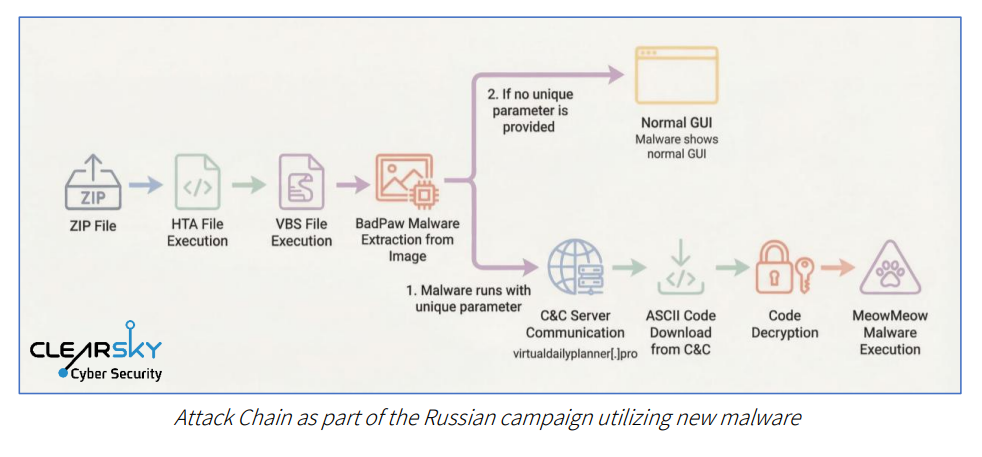
A Russian cyber campaign has been identified targeting Ukrainian organizations using new malware families, BadPaw and MeowMeow, delivered via phishing emails. The operation begins with emails containing links to ZIP…
On July 15, 2026, security researcher Nightmare Eclipse released a proof-of-concept exploit named LegacyHive, targeting a zero-day vulnerability in the Windows User Profile Service (ProfSvc). This flaw allows arbitrary…
Security researcher Nightmare-Eclipse has disclosed two critical zero-day vulnerabilities affecting Windows 11 and Windows Server 2022/2025. The first, YellowKey, allows attackers to bypass BitLocker encryption,…
A newly discovered Windows zero-day exploit, named MiniPlasma, allows attackers to gain SYSTEM-level privileges on fully patched Windows systems. The exploit targets the cldflt.sys Cloud Filter driver, specifically the…
Russian hackers have deployed a new remote access toolkit named 'CTRL' to hijack Remote Desktop Protocol (RDP) sessions. This toolkit utilizes FRP-based reverse tunnels to gain stealthy access to compromised Windows…