 Back Finance.Biggo
 Apple Breaks Its Annual Update Cycle to Ship Security Fixes Early, Citing AI
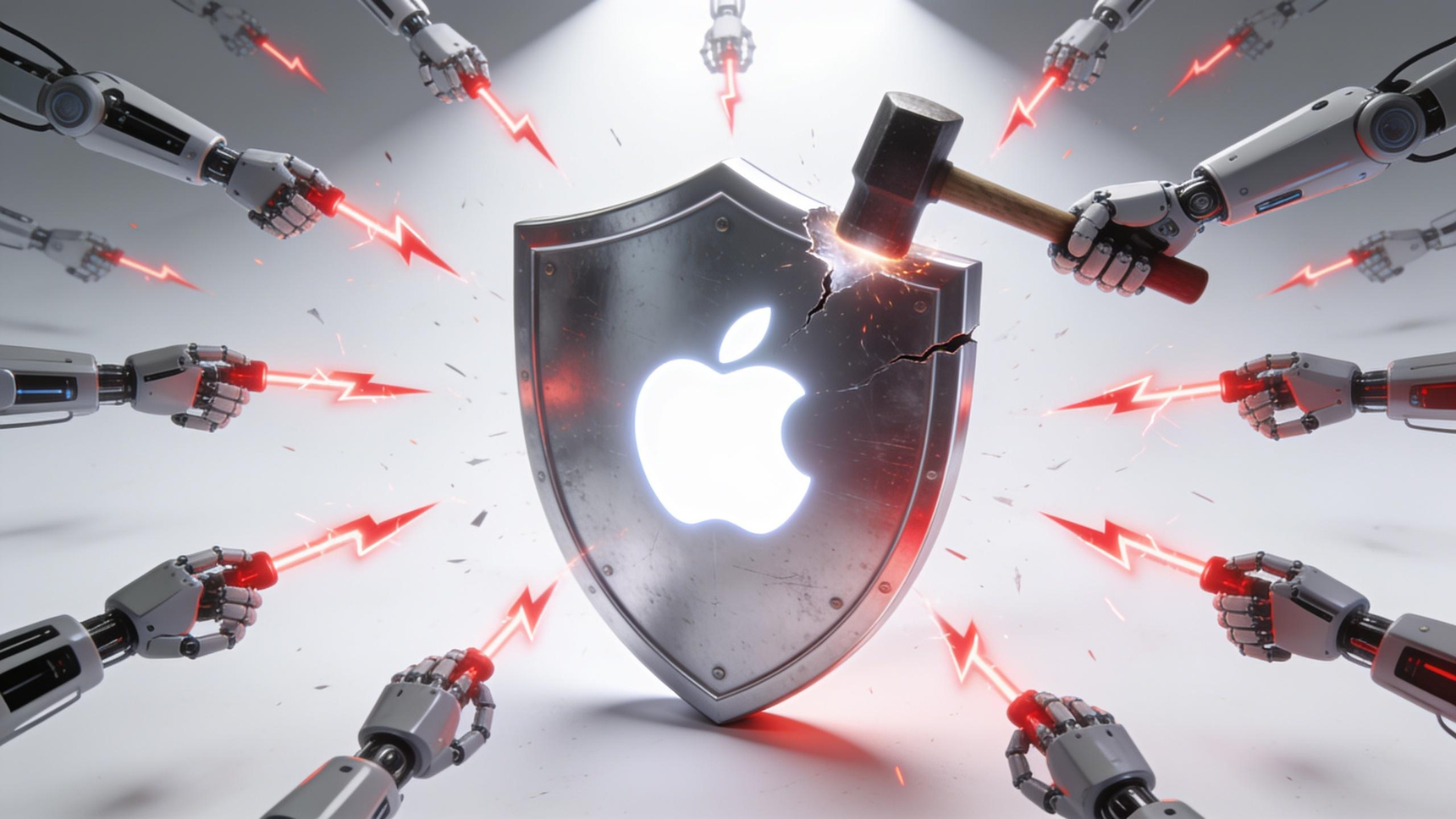
In a significant procedural shift, Apple has released emergency security updates for its iPhone, iPad, and Mac platforms ahead of schedule, breaking from its long tradition of bundling such fixes into major annual software releases. The company explicitly attributes this change to the accelerating threat posed by artificial intelligence, which it says is dramatically shortening the window of opportunity for attackers to weaponize known vulnerabilities.
Apple released iOS 26.5.2, iPadOS 26.5.2, and macOS 26.5.2 on Monday, patches that were originally slated to arrive with the upcoming version 26.6 of each operating system. The updates address nearly 30 security issues, primarily affecting core web technologies such as WebKit and WebRTC, alongside kernel-level vulnerabilities. Apple confirmed that while there is no evidence any of these flaws have been actively exploited in the wild, the decision to push the fixes out early was a preventive measure.
Key Vulnerabilities Patched in iOS 26.5.2, iPadOS 26.5.2, and macOS 26.5.2:
The core rationale, as explained by Apple to Reuters, is that advanced AI models have fundamentally altered the economics of cyberattacks. Traditionally, the most labor-intensive step in creating a working exploit was reverse-engineering a software patch to understand the underlying vulnerability. Modern AI tools, capable of reading code, summarizing diffs, and suggesting attack vectors, have drastically lowered that barrier.
Apple acknowledged that the gap between the public disclosure of a vulnerability and its exploitation is now dangerously narrow. By decoupling security fixes from the rigid schedule of a major point release—where they would have sat in beta for weeks—Apple aims to compress its own deployment timeline. "A patch is only protection once it is installed," the company stated, concluding that the slowest part of that process is no longer a luxury it can afford.
This move is notable precisely because it is procedural rather than technological. Apple is not unveiling a new security product or defensive architecture. Instead, it is altering the cadence of its existing update pipeline, a concession that its historically tight control over release timing can be a liability in an era of AI-accelerated threats. The change signals a broader recognition that security must now operate on a timetable dictated by adversaries, not by product launch cycles.
The decision also lands at an awkward moment for Apple’s own AI ambitions, which have faced public stumbles ranging from accidental rollouts to regulatory delays. The contrast is sharp: a company still working to ship its consumer AI features cleanly is pivoting quickly to defend against the security consequences of everyone else’s AI. Apple is a known partner in Anthropic’s Project Glasswing, using the Claude Mythos model to proactively hunt for vulnerabilities, though it remains unclear if that system directly triggered this specific batch of early releases.
Apple’s adjustment is the latest sign of a systemic shift in cybersecurity. The same AI capabilities that empower defenders to scan code for flaws are equally available to malicious actors. The US government recently restricted access to Anthropic’s Claude Fable 5 and Mythos 5 models, while OpenAI launched its GPT-5.6 series under government safeguards. The competitive landscape is global, with Tokyo-based Sakana AI’s Fugu system and China’s 360 Security Technology’s Tulongfeng model all claiming to rival these frontier capabilities.
For consumers, the practical takeaway is straightforward. While iOS 26.5.2, iPadOS 26.5.2, and macOS 26.5.2 introduce no new features, they are critical for device security. The updates are available now through the Settings app. Apple has not specified which future categories of fixes will be pulled forward, leaving the practical scope of this policy shift to be defined by subsequent releases. For now, the message is clear: in the race between the patch and the exploit, Apple is no longer willing to run at a leisurely pace.
See BigGo Finance first across Google's platforms — the broadest, most up-to-the-minute, and most comprehensive global financial news.
Follow the three steps to link a messaging app like Telegram or LINE, and get schedule notifications pushed to you automatically
The full story
This article is one source in a clustered incident — the cluster page carries the summary, timeline and every other outlet covering it.
