 Back Latimes
Big Oil reaps $56 billion as conflicts send fuel prices soaring
Big Oil reaped more than $50 billion in windfall profits as conflicts in the Persian Gulf and Russia roiled energy markets and drove refining results to record highs.
ExxonMobil Holdings Corp., Chevron Corp., BP Plc, Shell Plc and TotalEnergies SE all surpassed third-quarter expectations with combined adjusted net income of $56.3 billion, driven by an unprecedented fuel-supply crises that drove pump prices to record highs.
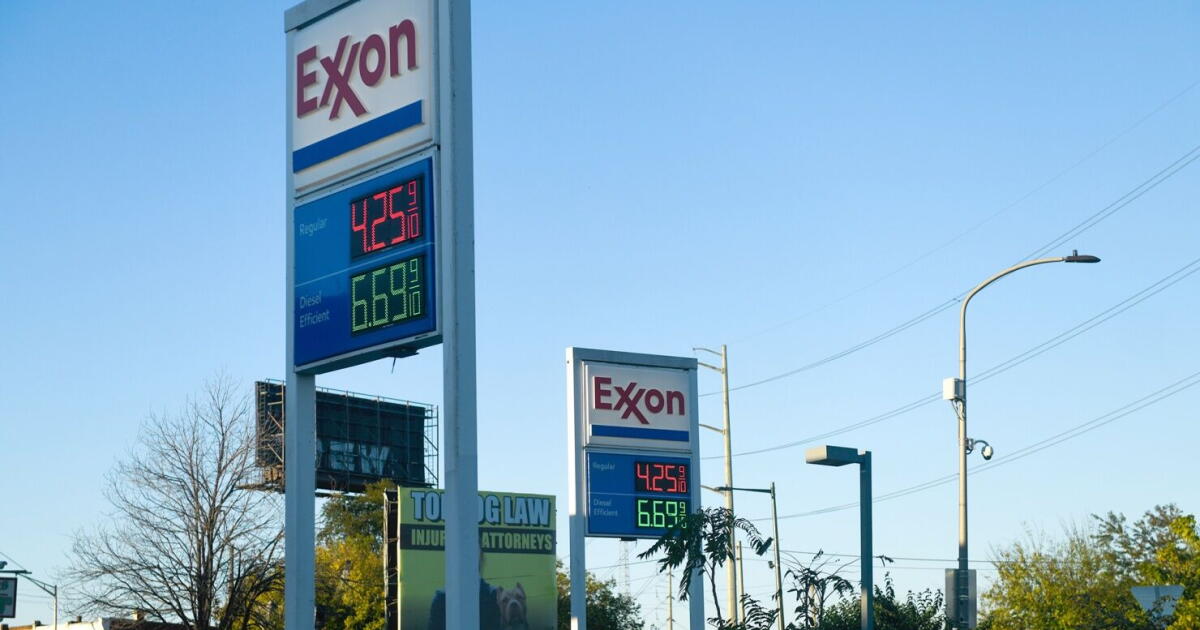
Motorists’ pain at the pump is providing outsized profits for oil supermajors while fanning discontent as US President Donald Trump and his Republican Party head into midterm elections that will determine control of Congress. American voters consistently cite the cost of living as a top concern with high fuel prices turning traditional Republican strongholds including Texas, Kansas and Alaska into battleground states.
International oil prices are up almost 60% since the US and Israel attacked Iran in late February, and refining has emerged as an additional choke point in the global energy supply chain. The fighting in the Middle East and Ukrainian strikes in Russia have sidelined 10% of the world’s fuel-making capacity, handing enormous profits to plants that remain operational.
ExxonMobil’s refining division earned a record $9.05 billion during the third quarter, almost five times higher than a year earlier, according to a statement Friday. Meanwhile, Chevron’s refineries raked in $4.93 billion in profit, the highest on record and four times more than a year ago.
For BP, more than half its $8.46 billion in adjusted net income came from the unit that includes oil refining and trading. Earlier in the week, Shell and Total also disclosed blockbuster results.
ExxonMobil rose as much as 2.5% in New York while Chevron climbed 2.1%. BP advanced as much as 1.8% in London. Shell and Total also advanced.
Trump has batted away concerns over gasoline and diesel prices, which are higher on average during his second term than under his predecessor Joe Biden, saying they will come down “very soon” at a rally in Texas this week. A few days earlier he praised US oil companies for making “a freaking fortune” for the country, an apparent U-turn after criticizing them for “making too much money” this summer.
Yet with the Iran conflict entering its ninth month, the disruptions to global energy markets show little sign of easing despite more ships now passing through the Strait of Hormuz. Until now, markets have leaned heavily on supplies from strategic and commercial stockpiles. But with these buffers running low, price volatility is forecast to escalate.
ExxonMobil, which operates the largest refining system outside China, reported its fourth-highest overall profit in the company’s 156-year history. The company’s adjusted third-quarter earnings of $4.23 a were 10 cents higher than the average analyst estimate.
ExxonMobil raised dividends for the 44th consecutive year and pledged to maintain $20 billion in annual buybacks.
Chief Financial Officer Neil Hansen said the profit surge was less a windfall than a reward for ramping up production at a time when it is most needed. ExxonMobil has increased Gulf Coast distillate production 40% since 2019 as a result of heavy investment since 2020, when rivals sold off fuel-making facilities or converted them to biofuel plants.
“The most meaningful response to those higher global commodity prices that we can offer as a company is to pull every lever that’s available to us to increase supply,” Hansen said during an interview. ExxonMobil is “putting more diesel on the market in a very strained environment today.”
Chevron also notched its fourth-highest quarterly profit in company history. Its third-quarter net income of $5.28 a was 35 cents higher than the average analyst estimate. The company maintained buybacks at $2.5 billion for the quarter, the low end of its full-year guidance range. For the second consecutive quarter, Chevron executives funneled windfall profits primarily into debt reduction.
“We don’t react to upside or downside, we don’t move things around,” Chief Financial Officer Eimear Bonner said during an interview. “For now, we’re sticking with our longstanding financial priorities and we’re not making any changes.”
The fact that Chevron didn’t bump up its annual repurchase range “perhaps reflects the optics around bumper buybacks rather than increasing investment in an energy crisis,” Biraj Borkhataria of RBC Capital Markets said in a note.
Aided by last year’s acquisition of Hess Corp., Chevron increased production year-on-year, allowing it to take advantage of the roughly 34% jump in international crude prices from a year earlier. The Hess deal gave Chevron a 30% stake in Guyana’s prolific Stabroek Block that’s operated by ExxonMobil.
Chevron is on track to produce 300,000 barrels a day from Venezuela by the end of this year, up 20% from a year ago. The company’s costs are less than $20 a barrel in the country, making it one of the most profitable oil theaters in the world.
Venezuela is “immediately accretive and free cash flow positive,” Bonner said. “We are not concerned with our ability to grow that production.”
Crowley and Ferman write for Bloomberg.
The full story
This article is one source in a clustered incident — the cluster page carries the summary, timeline and every other outlet covering it.
