 Back Latintimes
 Bolivia and Chile Strike Historic Fiber Optic Deal That Could Reshape South America's Data Grid
On October 16, Bolivia and Chile signed a memorandum of understanding for the Chile-Bolivia Bioceanic Fiber Optic Corridor — part of five bilateral agreements reached during the first official visit by a Chilean president to La Paz in 71 years.
Bolivia's primary objective is to tap into the Humboldt cable, a 14,800-kilometer, 144-terabyte-per-second project backed by Google and Chile's state enterprise Desarrollo País that will be the first submarine fiber-optic link to cross the South Pacific.
The MOU launches a period of studies, not construction — no routes, operators, or funding have been committed, meaning the corridor's future depends entirely on work both governments must now complete.
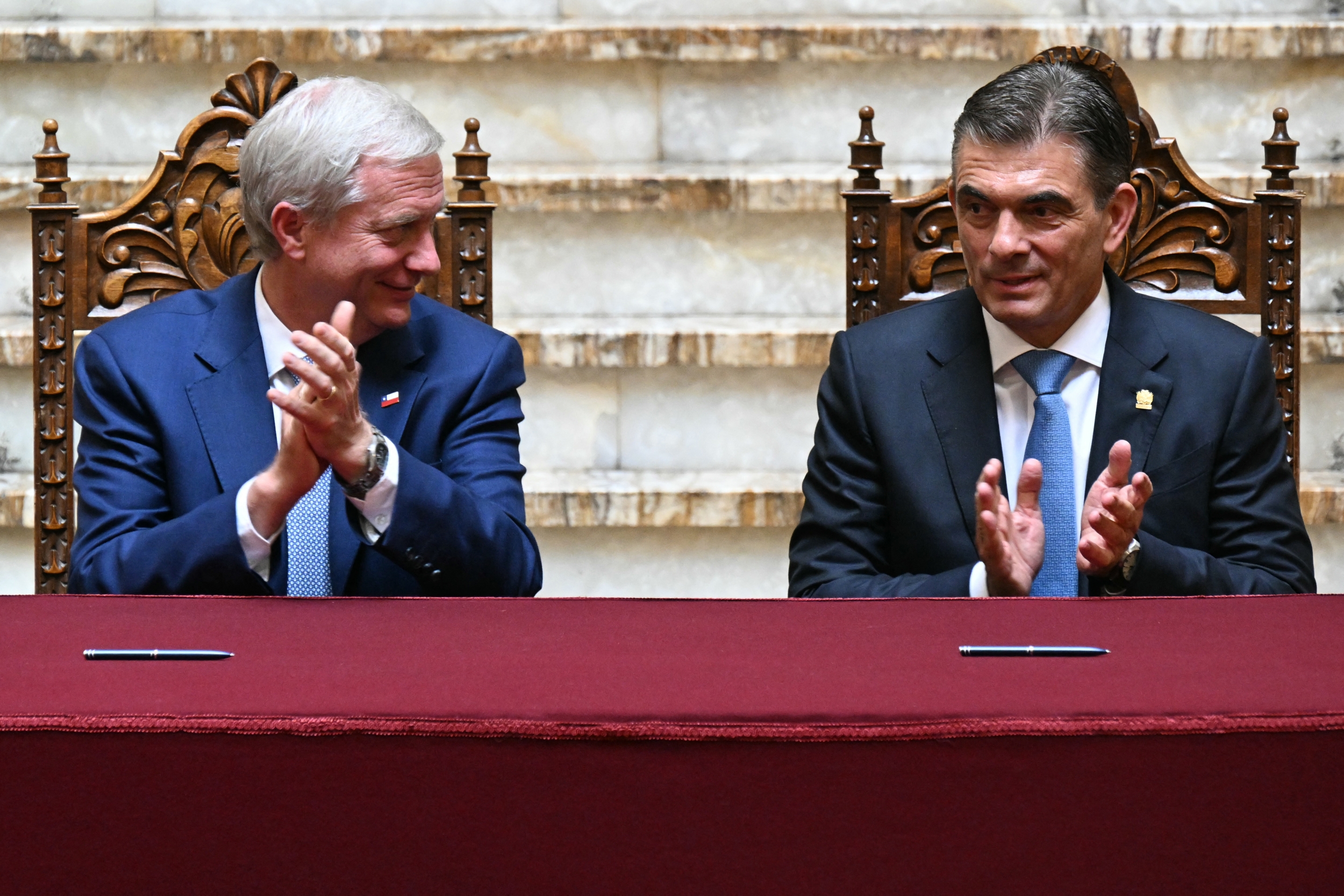
Bolivia has repositioned itself on South America's map — not with territory, but with terabytes. On October 16, during the first Chilean presidential visit to La Paz in 71 years, President José Antonio Kast of Chile and President Rodrigo Paz of Bolivia oversaw the signing of a memorandum of understanding for the Bioceanic Fiber Optic Corridor between the two nations. The deal, formalized by both countries' foreign ministries, is designed to link Pacific and Atlantic submarine cable networks through Bolivia and Chile's territory — and represents the landlocked nation's clearest shot yet at becoming a regional data transit hub.
Five Agreements, One Landmark Deal
The bilateral summit in the Bolivian capital produced five bilateral documents in total: protocols modernizing the existing ACE 22 economic complementation agreement, a technical mining cooperation memorandum, an energy integration declaration, a joint presidential declaration, and the fiber optic corridor MOU as the headline item. President Kast, addressing the meeting publicly, acknowledged that historical differences between Bolivia and Chile "exist" but committed to advancing toward restored full diplomatic relations "step by step." The two countries have operated without ambassadors since 1962 — except for a brief interval from 1975 to 1978 — due to Bolivia's longstanding maritime sovereignty claim, a dispute the International Court of Justice ruled in Chile's favor in 2018.
The Route: From Arica to the Atlantic
The proposed corridor would originate in Chile's Arica y Parinacota region and cross into Bolivia through one of several northern border passes, including the Visviri-Charaña crossing. From there, it would extend eastward toward Atlantic-linked networks. The arrangement creates a reciprocal benefit: Bolivia gains direct westward access to Pacific submarine cable landings — eliminating the premium it has historically paid to route international data traffic through neighboring networks — while Chile acquires an eastward terrestrial path connecting its Pacific cable infrastructure to the Atlantic. Both governments are now tasked with assessing viable routes, traffic projections, border permits, financing sources, and potential private operators.
The Humboldt Factor: Bolivia's Gateway to Asia-Pacific Data
The strategic prize at the center of Bolivia's interest is the Humboldt cable project — a collaboration between Google and Desarrollo País , Chile's state development enterprise. The Humboldt cable will be the first submarine fiber-optic system to directly connect South America with the Asia-Pacific, running from a landing station at Santo Domingo — a coastal municipality in Chile's Valparaíso Region — to Sydney, Australia, via French Polynesia. The cable spans 14,800 kilometers and delivers a transmission capacity of 144 terabytes per second over a 25-year operational lifespan. A second segment of approximately 6,500 kilometers will link Chile to Panama City — giving the full Humboldt system more than 21,000 kilometers of submarine infrastructure across two undersea cables.
In June 2026, Valparaíso's Regional Coastal Use Commission unanimously approved the cable's installation and operation, clearing a key permitting milestone. Physical deployment is scheduled for the fourth quarter of 2026, with commercial operations expected to begin in 2028. For Bolivia — landlocked since the War of the Pacific cost it its coastline in 1879 — a terrestrial link to the Humboldt landing station would mark a structural upgrade to international connectivity that has eluded it for decades.
Bolivia as a Digital Transit Hub
The ambition embedded in the October 16 agreement builds on connectivity groundwork Bolivia has already laid. State telecom operator Entel operates a fiber-optic intercontinental network running from Lima, Peru, through Bolivian territory, to São Paulo, Brazil — a route that, owing to Bolivia's geography, delivers some of the lowest data-transmission latency between the Atlantic and Pacific in the region. A western extension to Chile's Pacific cable infrastructure, if the corridor is built, would complete a full transcontinental digital spine across Bolivian territory. Minister of Public Works Mauricio Zamora has framed Bolivia's hyper-connectivity agenda in exactly those terms — describing the country as a future strategic node for intercontinental data traffic connecting the Pacific and Atlantic. The MOU also opens a path for countries such as Brazil and Paraguay, which border the existing bioceanic corridor, to eventually participate in an expanded fiber network reaching across South America.
A Diplomatic Reset Across the Andes
The fiber optic deal did not arrive in isolation. Alongside the connectivity MOU, Kast and Paz also signed an energy integration document aimed at advancing electrical interconnection between the two countries and a technical memorandum on mining cooperation. Taken together, these five agreements constitute one of the most substantive bilateral exchanges between Bolivia and Chile in recent memory — a sharp departure from the constrained, consulate-level relationship that has defined the two nations for more than six decades. Kast, on his official social media account, wrote that seven more decades should not pass before the two countries meet again at the presidential level. Bolivia, for its part, maintains its claim to sovereign ocean access — a demand that was not addressed in any of the October 16 documents — but the Paz government has deliberately separated that historic grievance from a parallel, pragmatic economic and commercial agenda with Chile.
What Remains Unresolved
The MOU's scope is clear in what it does not do: it authorizes study, not spending. No construction timeline has been established. No private operator has been named. No multilateral financing vehicle — whether through the Inter-American Development Bank, CAF Development Bank of Latin America, or another institution — has been identified or committed. The corridor's actual capacity, precise routing, and commercial structure remain entirely open. Bolivia's geography gives it a real structural case as a transcontinental fiber transit country — its territory shortens the distance between both oceans, and its existing Entel network proves the route can carry international data traffic competitively. Whether that geographic logic translates into funded infrastructure, or remains a diplomatic headline, now depends on the technical studies both governments have formally committed to completing.
The full story
This article is one source in a clustered incident — the cluster page carries the summary, timeline and every other outlet covering it.
