 Back Atlanticcouncil
 Conflicts are jolting energy systems. Will they cause ‘structural breaks’?
The wars in Ukraine and Iran are producing compounding effects on global energy systems, forcing countries to reshape their energy security strategies, while blind to how the Strait of Hormuz standoff will end. Speaking at this year’s Atlantic Council Global Energy Forum, energy leaders highlight solutions that have improved energy security, particularly in response to Russia’s weaponization of gas, and identify vulnerabilities yet to be addressed as oil and gas traffic through the Strait of Hormuz remains severely constricted.
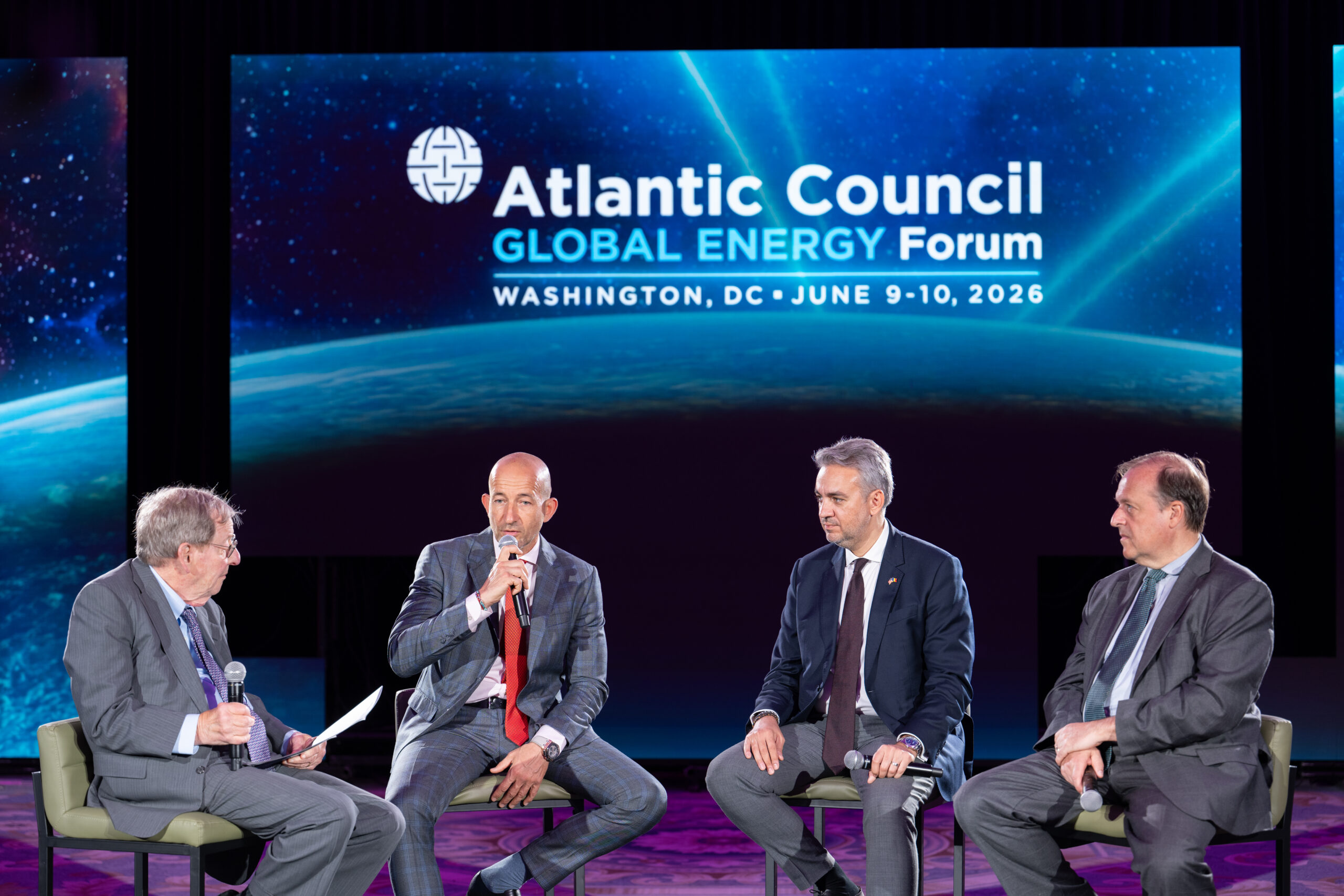
In a discussion on European energy corridors, policymakers from Romania, Bulgaria, and the United States said that Central and Eastern Europe has made striking progress reconfiguring its energy system since Russia’s 2022 full-scale invasion of Ukraine, but warned that the infrastructure was still not built to withstand the crisis.
The discussion turned to one of Europe’s most energy-vulnerable corners. Ambassador Richard Morningstar, founding chairman of the Atlantic Council’s Global Energy Center and the panel’s moderator, asked what more needed to happen to bring reliable power to the Western Balkans, noting that Croatia’s Krk liquefied natural gas (LNG) terminal had been transformative but may not be enough on its own.
The Balkans challenge
Part of this adaptation is turning to more resilient energy supplies and diversifying the region’s mix. Romania has deployed more than seven gigawatts of renewables and expects two gigawatts of storage capacity to come online by the end of 2026. The country is also advancing Europe’s most developed small modular reactor project —a 462-megawatt NuScale facility at the former Doicești coal plant, which received a final investment decision in February.
Globally, energy architecture is experiencing fundamental change as a result of the effective closure of the Strait of Hormuz—to what degree systems will change has yet to be determined. With world energy markets facing substantial uncertainty, speakers at the Forum argued that the crisis would take the energy system in different directions.
While the strait’s closure has caused a historic energy shock with uneven immediate impacts, its duration and the conditions under which it will reopen will determine the future of energy demand.
The state of infrastructure
*Excelerate Energy, GE Vernova, Glavbolgarstroy Holding are partners of the Global Energy Forum.
EnergySource Jun 10, 2026
At the 2026 Global Energy Forum, lawmakers leading the charge on US energy security discussed their efforts and the role that allies can play.
EnergySource Jun 11, 2026
At the 2026 Global Energy Forum, two Caribbean leaders explained that small island developing states are feeling the pinch of this crisis, in the form of high gas prices and shrinking climate adaptation finance.
EnergySource Jun 9, 2026
Energy experts, policymakers, and business leaders at the Atlantic Council’s tenth Global Energy Forum their insights into the current crisis and the path toward a more energy secure future.
The Global Energy Center develops and promotes pragmatic and nonpartisan policy solutions designed to advance global energy security, enhance economic opportunity, and accelerate pathways to net-zero emissions.
The full story
This article is one source in a clustered incident — the cluster page carries the summary, timeline and every other outlet covering it.
