 Back Helpnetsecurity
 Fastfetch 2.70.0 changes how Disk free space is reported
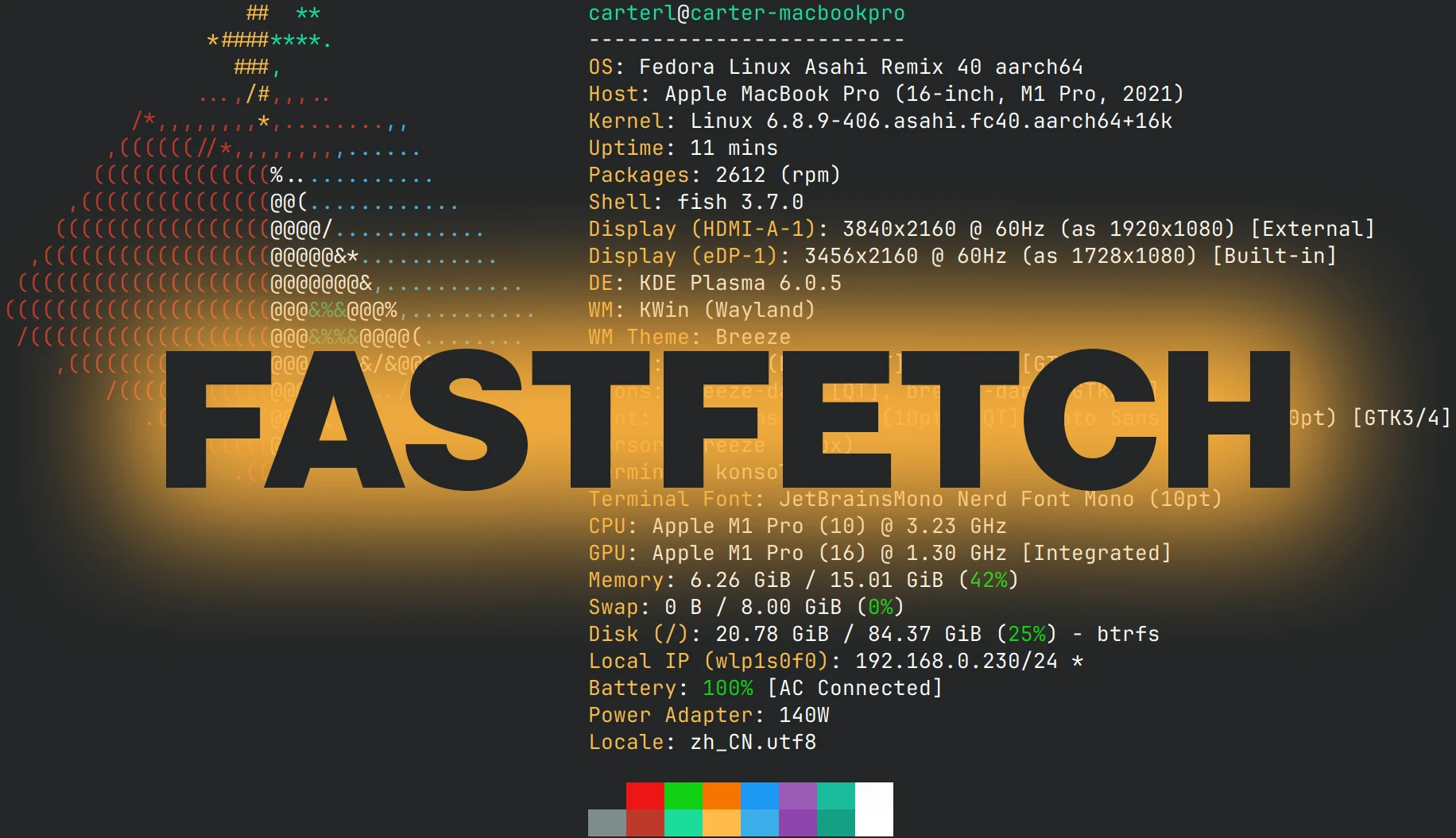
Fastfetch is a system information tool written mainly in C that runs on Linux, macOS, Windows 8.1 and later, Android and several BSDs.
The fastfetch project removed QuickJS scripting and changed what its Disk, Command and Shell modules report in version 2.70.0, released October 14. Configs written for older versions may print different values or stop working.
The Disk custom format drops {size-available}. {size-free} now reports whichever of free or available space the disk.useAvailable option selects, so its value moves with that setting; before, it always reported the file system’s free size. Raw byte counts are now {bytes-used} and {bytes-total}. JSON output drops bytes.available and bytes.used, and you can derive used as total minus free.
Windows numbers change
Volumes with a per-user quota, such as network shares, reported a wrong total and a wrapped-around used size (issue #2651), because the total was quota-limited and the free size was not. On Windows 10 build 17763 and later, fastfetch now reports the whole volume’s capacity and free space by default. Set disk.useAvailable to true to keep the space available to the current user, quota included. LocalIP flags now describe the interface itself, such as IEEE80211 or SOFTWARE_LOOPBACK, and interfaces with no unicast address are no longer reported.
The Command option useStdErr is replaced by useOutput, which takes “stdout”, “stderr” or “both”. The default is “both”, so a command that logs to stderr now has that output captured. Before, it was discarded. The Shell module now takes the shell from /etc/passwd and ignores $SHELL, which can differ when the login shell changed after the session started.
QuickJS scripting, deprecated in v2.69.0, is gone, and scripts need migrating to Lua. On Linux, libpulse and libddcutil aren’t used, so package managers should drop them from their fastfetch packages.
Android gets five additions: Sound detection, display detection over binder, battery temperature, remaining time and charger type, media detection, and app display names. Media detection applies when fastfetch runs as an app UID and needs the Notification access permission.
The full story
This article is one source in a clustered incident — the cluster page carries the summary, timeline and every other outlet covering it.
