 Back News.Err.Ee
Hackers raised freezer temperature at Selver supermarket to +50°C - news
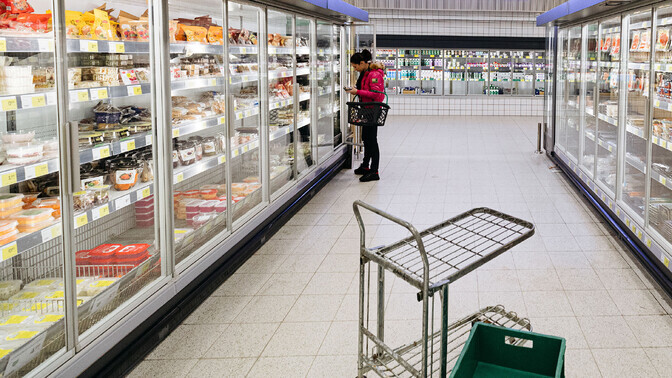
A cyber attack hit a Selver supermarket in Estonia, with hackers accessing a computer controlling refrigeration and changing a freezer setting to 50 degrees above zero.
Similar incidents were reported on Monday in Sweden, Belgium and Luxembourg.
Jann Mutso, head of refrigeration technology maker and distributor Kitman Coldtech, told ERR that one of its clients was attacked, but that there had been other attacks.
"I don't know exactly yet, but other clients in Estonia have also been attacked, not only ours. This is very fresh, it happened this morning," Mutso said.
Selver communications chief Mariann Järvela said the attack took place in one Selver outlet.
"For security reasons we will not disclose more specific information the particular store or the technical solutions," Järvela added.
She said the chain was aware of similar cyber attacks elsewhere in the world and had therefore prepared for possible threats. The partner identified the attack quickly and the store suffered no damage.
Järvela said they pay great attention to the security of technical systems and have consistently updated the controllers and software solutions of stores' refrigeration systems.
"This was the last Selver store where the new system had not yet been taken into use," Järvela said.
According to Mutso, the attackers gained access to the control computer of an older type of Danfoss refrigeration system and raised its temperature to 50 degrees. The method resembles attacks in France and the Netherlands in October, where the operation of supermarkets' digital refrigeration systems was also interfered with and their temperature settings changed.
"The signature is the same, but I can't further yet," Mutso said.
He said it is normal in large food stores for refrigeration systems to be digital and connected to the network, but that the current attack sought specific security holes.
"All the store chains have started fighting this and have updated their controllers, but there are also places where the controllers are old and not updated, and those are being targeted now," the refrigeration systems maker said.
This time the incident was responded to within ten minutes, and so damage was avoided. Mutso said the temperature in the freezers rose by two to three degrees and no damage was caused to products, with normal temperature restored in 10–15 minutes. How the attackers gained access is not yet known.
Attacks also occurred in other European countries
Similar attacks hit food stores in Belgium, Luxembourg and Sweden. Swedish daily Dagens Nyheter reported overnight faults in the refrigeration systems of ICA and Coop stores.
"The worst-case scenario has come true," the ICA store in Sjöbo said on social media, after its freezers were set to 50 degrees and spoiled goods had to be pulled from sale.
Engla Ingwall, sales manager at ICA Baronen in Stockholm, said freezers became "extremely hot" and a significant quantity of food was thrown away. Police were informed.
An ICA spokesperson said the number of affected stores is small and involves those with connections outside the central network. Coop said six of its central Swedish stores were affected, and new systems had already been ordered after the French incident.
According to Reuters, supermarket chain Ahold Delhaize identified temperature rises in its fridges and freezers in Belgium and Luxembourg and is investigating. Belgian outlet Le Soir reported problems in several Shop&Go and Carrefour stores.
three weeks ago, hundreds of food stores in France were hacked, with attackers triggering a defrost cycle in many stores of major retail chains. Neither ICA nor Coop has yet confirmed whether hackers were behind Monday's issues in Sweden.
Editor's note: This piece was updated to include from Selver and information on the Europe-wide hacking.
Follow ERR News on and Twitter and never miss an update!
Editor: Karin Koppel, Andrew Whyte
The full story
This article is one source in a clustered incident — the cluster page carries the summary, timeline and every other outlet covering it.
