 Back news.err.ee
 Kaja Kallas Russia Using Hybrid Attacks To Erode Europe S Support For Ukraine
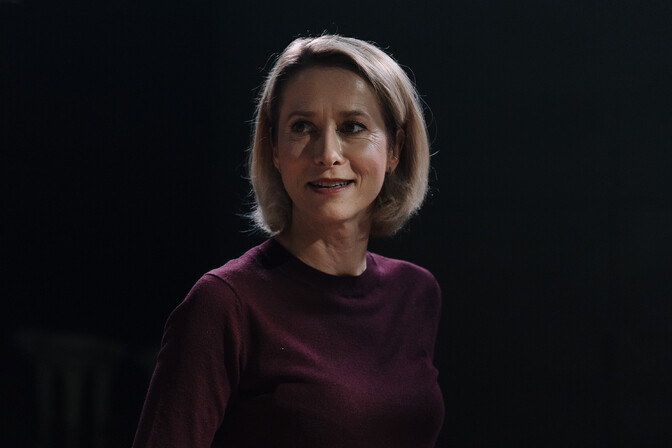
The European Union's High Representative for Foreign Affairs, Kaja Kallas, said that Russia's increasing hybrid attacks, acts of sabotage, and stray drones are aimed at frightening the residents of European countries and deterring them from supporting Ukraine.
Kallas also acknowledges that the of MEPs who openly argue that Ukraine should not be supported and that Russia poses no threat to Europe has grown.
German Chancellor Friedrich Merz and Polish Prime Minister Donald Tusk have warned that decisive weeks and months may lie ahead for Europe's security. Tusk did not rule out that Russia's escalation could directly affect Polish territory. In Estonia's domestic debate, newly appointed defense minister and former commander of the EDF Martin Herem has also highlighted concerns the threat assessment. How would you describe the security picture and threat assessment to the Estonian public from your position?
First of all, the security picture is not good. We are seeing hybrid attacks that are no longer hybrid at all, but real attacks — acts of sabotage, cyberattacks. And drones straying into European territory. So there is actually quite a lot of this.
What we also see in the data is that Russia wants to escalate. It wants to make the situation even more tense. Why? Because the aim is to frighten European countries and, above all, their citizens away from supporting Ukraine.
At the beginning of 2024, you warned in The Times that Russia could need three to five years after the end of the war in Ukraine to rebuild its capability to pose a serious military threat to NATO. Now that a couple of years have passed, have you and other decision‑makers truly been heard? Does the sense of threat among leaders in Central and Western Europe — and in public opinion — now match the actual threat assessments?
If you listened to the debates in the European Parliament, for example the debate on hybrid attacks, the of MEPs who say Ukraine should not be supported and that these threats supposedly do not exist has actually increased — those who speak out publicly on this.
Therefore, it seems to me that while we have made many decisions at the European level to strengthen Europe's defense capability — and similar decisions have been made at NATO — we must also work with our own people to ensure they understand why this is necessary. And I don't mean only Estonia, but public opinion across different European countries.
But could speaking more the Russian threat in countries like Germany or France actually have the opposite effect — increasing support for parties such as AfD, which promise to end support for Ukraine, lift sanctions on Russia, and resume buying Russian gas?
The question to ask is: what is the goal? If the goal is truly to give Russia what it wants to achieve with this war, so that there is supposedly peace — that is not how it works. I also thought that after the Leipzig attack, when it became clear it came from Russia, it would make the picture much clearer in Germany. That this is not a distant threat somewhere far away, but something that directly endangers Europeans, including Germans.
But the reaction from AfD has been completely different: let Russia take what it wants, and then there will be peace. It reminds me of history — a lack of interest in what happens on the other side of the Iron Curtain. But we are not talking territories; we are talking people.
Estonia's new defense minister, Martin Herem, has argued that domestic activities are not based on a unified threat assessment. He has set a goal of formulating such a common assessment to guide all state agencies. He has already received criticism from several reserve generals. Meelis Kiili has warned that if fear of war becomes the basis for political leadership, security could actually weaken. From your perspective, does Herem risk stirring excessive fear of war in Estonia?
To be honest, I don't know what threat assessment he is referring to. For example, in the Security Cabinet, these assessments are always present — whether we are in red, green, or yellow in different categories. And if certain elements are in red, the risk and threat are higher. If they are in green, the risk is lower. The government weighs this weekly or biweekly.
Still, how does it seem to you — is Herem overreacting or not?
I really haven't had the time to follow everything happening in Estonian politics or everything Martin Herem has said in such detail. So I would refrain from commenting here.
Follow ERR News on and X and never miss an update!
Editor: Urmet Kook, Argo Ideon
news in simple estonian
Lihtsad uudised 25. septembril
listen: radio tallinn
ERR News is the English-language service of Estonian Public Broadcasting, run by a fully independent editorial team. To read up on ERR News' rules and to ERR's other services, please follow the link below. Staff, contacts &
Tartu wants to buy 1,000 new rental bikes
Months later, Estonian Navy patrol vessel still out of service
Expert: Drop in Center Party support tied to shrinking backing among Russian‑speaking voters
Estonia launches joint study to map optimal electricity mix by 2027
International nightlife conference to be held in Tallinn in October
Estonia's only artichoke farmer sees bright future for local crop
Defense official: Russia's neighbors have stepped up responses to air threats
Prosecutors launch criminal probe into Maardu football match-fixing case
Finance minister: Those getting a positive exception should not complain pay
Unions consider public sector wage hikes insufficient
Download the ' Ole valmis! ' crisis preparedness app
Reminder: How to act when Estonia's EE‑ALARM public warning alert is issued
Where can I find crisis information for Estonia?
Tallinn school asks ministry for €400,000 in emergency funds to finish out the year
Largely EU-funded Narva defense base delayed by political turmoil
Magnitude 1.4 quake shakes northwestern Estonia
Baltic states ask EU for €500 million in additional support for drone defense
Rail Baltica delays leave local communities disappointed
Investor: Baltic defense forces cool on domestic drones
Minister: Estonia's threat assessment unchanged after Denmark report
Trans activists accuse state gender committee of bias and obstruction
Estonia imposes own sanctions on delisted Russian oligarch pair
Interior Ministry now publishes deceased people's personal data online
public broadcasters launch news portal
European public broadcasters launch joint trusted news portal
Commenting on ERR News articles
The full story
This article is one source in a clustered incident — the cluster page carries the summary, timeline and every other outlet covering it.
