 Back cyberscoop.com
 National Cyber Director Ai Cybersecurity Threats
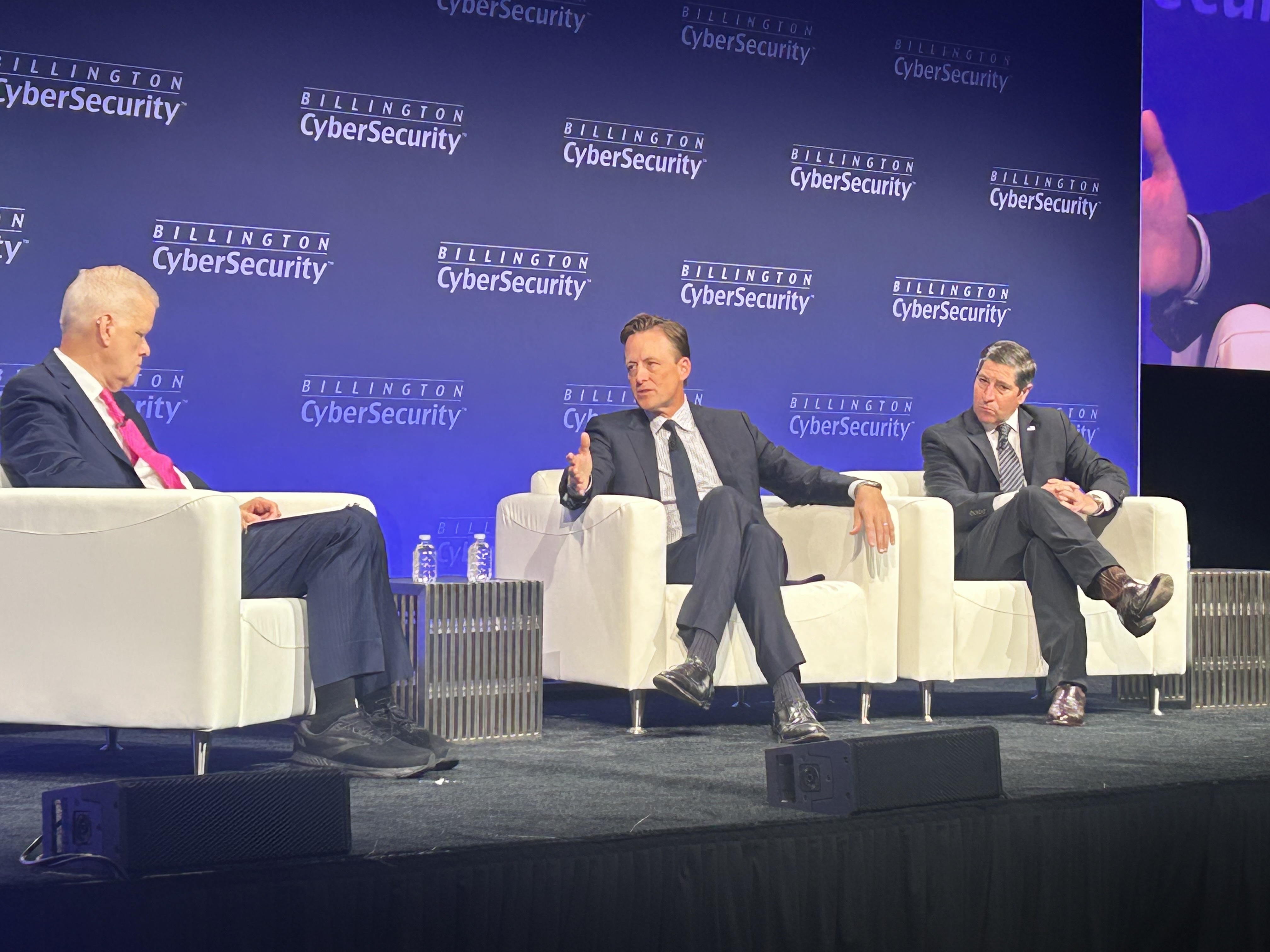
The United States and allied governments are “buying time for our systems to become more secure” as artificial intelligence advances and spreads, National Cyber Director Sean Cairncross said Thursday.
“That is a big deal to be ahead of this, to be ahead of this race, and because it’s an exponential equation,” he said at the Billington CyberSecurity Summit. “Once you fall behind, it is much more difficult to make it up, and so that is the context in which all this is taking place. We are trying to balance the innovation side of running at speed with securing our systems and handling this technology responsibly, which is to say, not letting it fall into the hands of people who would do us harm, our adversaries.”
Earlier this week, U.S. security agencies accused Chinese AI companies of trying to illegally distill U.S. frontier AI models. Also this week, Anthropic disclosed a fourth AI hacking incident where one of its models broke into third-party systems.
“We all face the same threat picture, and it’s vital that we’re working closely together to secure those systems before that technological cycle catches up on the back end,” Cairncross said.
AI has further exposed long-standing cybersecurity problems that have gone unaddressed, he said.
“In AI development, particularly on the vulnerability discovery side and the coding side, it hasn’t created a new set of problems,” Cairncross said. “What it’s done is it’s dragged to the surface problems that have been latent in this space for decades. There’s been under-resourcing and deprioritization of basic cyber hygiene and cybersecurity.”
Cairncross’s messages echoed those of other Trump administration cyber officials speaking this week at the summit.
A top FBI official, Jason Bilnoski, said the solutions to the difficulties AI poses aren’t new ; basic cyber hygiene is key.
And the director of the Cybersecurity and Infrastructure Security Agency, Nick Andersen, said historical neglect of cybersecurity fundamentals poses a serious threat that requires a speedy answer.
“We know the worst that can happen, and if we don’t make some very serious, very significant changes in quick succession … you all are going to have to go and look your family, look your friends in the eye and explain to them how you knew the worst that could happen and why we didn’t do enough,” he said.
What the Section 702 lapse means for cybersecurity
AI-adaptable security platforms are critical for autonomous decision-making
Defending in the middle of the vulnpocalypse
The Vulnpocalypse arrived early
Hawley probes OpenAI over Hugging Face breach
FTC rescinds policy statement requiring health apps to notify customers after a breach
Lawmakers call on Commerce to sanction hackers-for-hire
FBI cyber chief worries private sector not sharing enough cyber threat information
European parliament members call for slowdown of Serbia’s EU entry over spyware use
The G7 tells industry to hurry up and prep for post-quantum encryption
FCC proposes public scorecard to rate telecoms on anti-robocall efforts
Pegasus, NoviSpy variant spyware found on devices of Serbian activists
Chinese espionage groups swarm to exploit triple-link chain of zero-days
Microsoft discloses two actively exploited zero-days among 974 vulnerabilities
Russian national extradited to US for alleged involvement in bank-account takeover scheme
Attackers exploit zero-days in consistently besieged SonicWall product
Wyden seeks upgraded NSA security guidance on commercial VPN use
Whistleblower says USPS deploying new, ‘untested’ IT systems governing mail-in ballots
Former sexual abuse victims say Grok used their images, videos to train deepfake capabilities
Cyber threats nudge Trump to sign executive order on foreign equipment in U.S. energy infrastructure
The full story
This article is one source in a clustered incident — the cluster page carries the summary, timeline and every other outlet covering it.
