 Back Palestinechronicle
'Nothing Will Be the Same': Iran Warns of Unexpected Response to Renewed Attack
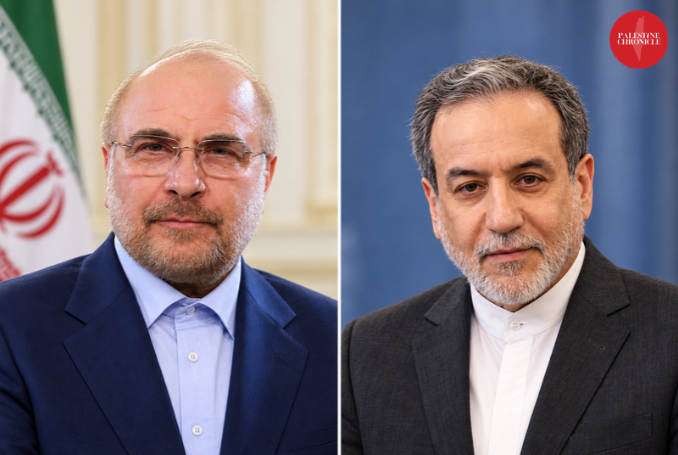
Araghchi declared the war had changed everything as Ghalibaf warned of an unexpected response and Iran reported downing US drone.
Araghchi declared the war had changed everything as Ghalibaf warned of an unexpected response and Iran reported downing US drone.
Araghchi said shipping routes and management of the Strait of Hormuz would not return to arrangements.
Ghalibaf said threats of wider warfare would not force Iran to surrender its rights and promised an unexpected response to aggression.
Iran’s army reported shooting down a US drone over Bandar Abbas after Trump raised the possibility of renewed strikes.
Iranian Foreign Minister Abbas Araghchi said Sunday that the war with the US and Israel had fundamentally altered the region, warning that the Strait of Hormuz would no longer operate under its arrangements.
“The current war has changed everything. We must acknowledge that new realities have emerged,” Araghchi said during a speech at the Foreign Ministry, according to Press TV.
“The shipping routes through the Strait of Hormuz will no longer be the same as before, nor will the strait be managed as it was in the past,” he added.
Araghchi said those defeated in the war had no option but to respect Iran’s power and sovereignty.
He argued that security structures in some regional countries built around foreign intervention had collapsed. US bases, he said, had failed to provide security and had instead contributed to destabilization.
Iranian military operations had overturned calculations based on reliance on foreign powers, Araghchi said, stressing that renewed fighting would not change Tehran’s policies.
“Whether war breaks out again or not, Iran’s policies will remain unchanged,” he said.
The foreign minister also warned against another military confrontation.
“If there is any logic among the enemies, they will not attempt to launch a military war against Iran again, because they have tried it twice and seen the result,” he said.
‘Where Is the Victory?’: Obama Challenges Trump over Six-Month War on Iran
‘Where Is the Victory?’: Obama Challenges Trump over Six-Month War on Iran
For his part, Iranian Parliament Speaker Mohammad Bagher Ghalibaf warned Sunday that any attack on Iran would draw a response its adversaries did not anticipate.
Speaking during a public parliamentary session, Ghalibaf said threats to expand the war would not force the Iranian people to relinquish their rights.
“The United States has become embroiled in a quagmire as a result of its miscalculations,” he said, according to Al-Mayadeen.
He urged Washington to take the steps necessary to extricate itself.
The warnings followed US President Donald Trump’s statement Saturday that Washington could strike Iran as soon as Sunday or reach a “big, beautiful” agreement with Tehran.
Iran’s army subsequently announced Sunday that its air defense forces had shot down and destroyed a US Lucas-type drone over Bandar Abbas, the southern port city near the Strait of Hormuz.
The military’s public relations department said the drone was destroyed “by the fire of the Air Defense Force’s systems, under the country’s integrated air defense network,” according to Tasnim news agency, as cited by Anadolu.
The announcement came amid stalled diplomatic negotiations and renewed US threats of military action.
Iran Reports US Drone Downing, Rejects Hormuz-for-Blockade Deal
Iran Reports US Drone Downing, Rejects Hormuz-for-Blockade Deal
In a separate statement, Araghchi also said ending the conflict required a comprehensive halt to hostilities rather than a ceasefire confined to individual fronts.
“A ceasefire can only be achieved through a complete halt to fighting on all fronts,” he said, according to Al-Mayadeen.
He reiterated Iran’s readiness to cooperate with regional countries, particularly Gulf states, on security arrangements based on their own capabilities and participation.
Tehran would welcome “any security plan originating from within the region itself,” he said, according to Anadolu.
Araghchi argued that lasting stability required countries in the region to live peacefully alongside one another without foreign intervention.
Separately, Expediency Council Chairman Sadeq Amoli Larijani said European statements rejecting a military solution to the Strait of Hormuz crisis reflected the war’s impact on their economies.
Larijani argued that the US, Israel and their European allies would halt their attacks only when confronted with force.
Iran and the US remain at odds over passage through Hormuz. Tehran insists on its authority to manage the waterway, while Washington demands unrestricted .
The latest US-Israeli war against Iran began in late February, triggering a wider regional conflict.
Washington and Tehran signed an interim agreement in June, but negotiations toward a final settlement have stalled amid rising tensions and renewed threats of military action.
(PC, Anadolu, Al-Mayadeen)
The full story
This article is one source in a clustered incident — the cluster page carries the summary, timeline and every other outlet covering it.
