 Back Straitstimes
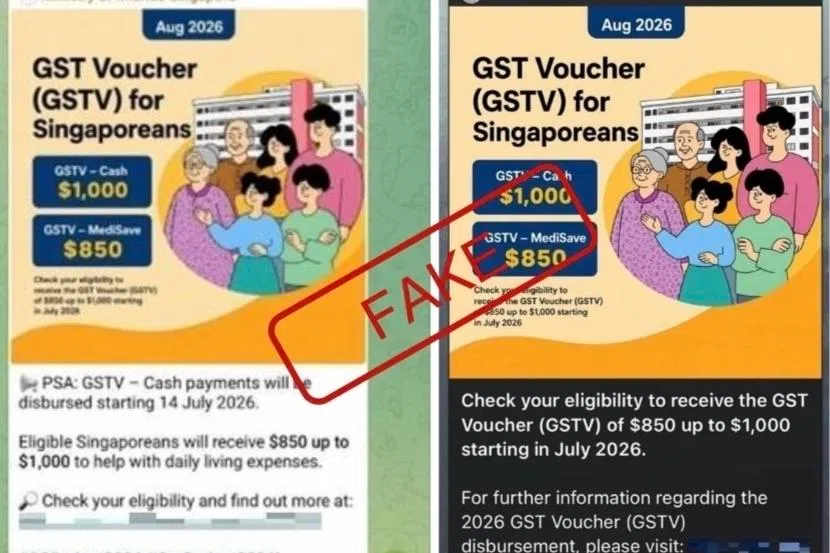
 Police warn of GST Voucher scam messages to hijack Telegram accounts
SINGAPORE - Telegram users should beware of fraudulent messages claiming to provide links to information on the GST Voucher scheme and MediSave, said the police on July 16.
The resurgence of the scam variant has resulted in victims’ Telegram accounts being hijacked, the police said.
The Ministry of Finance (MOF) announced on July 9 that 1.5 million Singaporeans will receive up to $850 in GST Voucher cash payouts in August.
Around 710,000 seniors will get up to $450 in MediSave top-ups, with the amount depending on their income and value.
Scam victims would receive messages containing infographics urging them to check their eligibility for payouts through a fake link embedded in the Telegram messages.
Once victims click on the link, they would be asked to disclose personal information such as mobile phone numbers, names or NRIC numbers.
They may also be asked to provide Telegram verification codes which would allow scammers to take over their Telegram accounts.
Scammers would then use these hijacked accounts to send phishing links to the victims’ contacts or add them to chat groups that promote fraudulent investment schemes.
The police said that only an SMS notification from “gov.sg” will inform Singapore citizens of their benefit(s).
Citizens will not be asked to to the SMS, click on any links, or provide any information to the sender.
Members of the public may visit govbenefits.gov.sg for more details.
The police added that MOF does not have a broadcast channel on Telegram and will not members of the public via the platform.
Jozsef Gegeny, a senior security researcher for research and development at Acronis Threat Research Unit, said messages on government payouts are highly effective phishing lures because they combine trust and financial incentive.
The cybersecurity expert said: “People are familiar with legitimate announcements vouchers, rebates and cash assistance, so they are more likely to click on a message that appears to come from a government agency.”
The police reminded the public that the authorities would never ask them via phone calls, social media or e-mails to disclose personal or banking details to claim government vouchers.
They would also not ask them to transfer money or install mobile applications from unofficial app stores to claim such vouchers or other government cash benefits.
Gegeny advised those who have provided banking information to their banks immediately to secure their accounts, block cards if necessary, and monitor any unauthorised transactions.
He said: “The faster action is taken, the greater the chance of preventing financial losses.”
Gegeny also advised that if a Telegram account has been compromised, users should review active sessions, log out unfamiliar devices and enable two-factor authentication.
They should also report the incident, save evidence such as screenshots, and alert their contacts if the scammers have sent messages from their account.
In their annual scam statistics for 2025 released in February , the police said $913 million was lost that year.
To report scam-related information, the public can call the police hotline on 1800-255-0000 or submit details online at
For more information on scams, go to , or call the ScamShield Helpline on 1799.
Internet crimes and scams
The full story
This article is one source in a clustered incident — the cluster page carries the summary, timeline and every other outlet covering it.
