 Back Escudodigital
 Tech-armed crime: Europol warns AI and encryption are giving villains the edge
The increasing technological sophistication puts security forces in check and demands a stronger international response
The Internet Organized Crime Threat Assessment (IOCTA) 2026 , published by Europol , reveals the latest trends and developments in cybercrime affecting the European Union (EU). The report "How encryption, proxies, and AI are expanding cybercrime" highlights the accelerated pace and increasing sophistication of cyber threats, urging the need to enhance law enforcement capabilities and international cooperation.
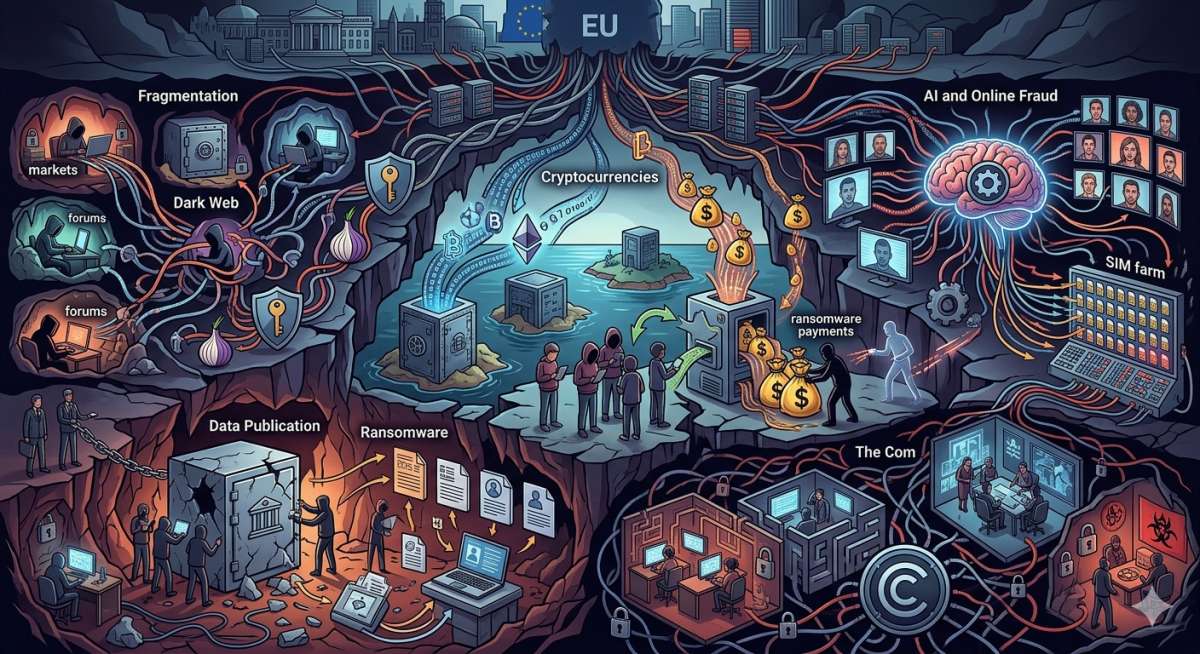
The IOCTA 2026 highlights t he dynamic and interconnected nature of cybercrime , showing that criminals continue to leverage technological advancements to perpetrate a wide variety of illicit activities. The dark web remains a key facilitator , with markets and forums demonstrating notable resilience despite ongoing law enforcement efforts.
The fragmentation and specialization of these platforms pose significant challenges for investigators, as criminals quickly adapt and migrate to new, often more secure, environments. Platforms with end-to-end encryption and anonymized services now connect the realms of the visible web and the dark web, increasingly blurring their distinction.
The report highlights the increasing use of cryptocurrencies in the realm of cybercrime. Privacy-focused coins and offshore exchange services have become key elements for laundering ransomware payments , hindering law enforcement's ability to trace illicit transactions. Cryptocurrencies are also growing in popularity among minors and young adults, who sometimes unknowingly participate in money laundering operations.
Cybercriminals are integrating automation and artificial intelligence (AI) to enhance the efficiency and reach of their misdeeds, the study reveals. Generative AI tools are increasingly used to personalize social engineering tactics , accelerating and concealing online fraud schemes.
For example, caller ID spoofing , which hides the caller's identity, and SIM farms , capable of distributing thousands of SMS, calls, and social media posts, are facilitators of large-scale fraud.
The IOCTA 2026 highlights the persistent threat of ransomware, with a significant number of active variants detected over the past year. The report notes the growing interconnection between state- hybrid threats and criminal actors, who can act as intermediaries for destabilization purposes.
The emergence of new hacker coalitions poses a significant threat to public institutions, large tech companies, and individuals' private data.
The growth of online child sexual exploitation is also addressed, with an increase in sextortion cases. The trade of child sexual abuse material for profit is also on the rise, as is the production of synthetic content of this type.
The situation presents additional challenges for law enforcement and regulatory bodies. Messaging applications with end-to-end encryption have become a key communication environment for criminals, further complicating investigations.
Online communities operating under the network known as The Com represent a grave threat to minors and society in general due to their involvement in a complex web intertwined with child sexual exploitation, cyberattacks, extortion, assaults, rapes, murders, and violent extremism.
The Internet Organized Crime Threat Assessment (IOCTA) 2026 , published by Europol , reveals the latest trends and developments in cybercrime affecting the European Union (EU). The report "How encryption, proxies, and AI are expanding cybercrime" highlights the accelerated pace and increasing sophistication of cyber threats, urging the need to enhance law enforcement capabilities and international cooperation.
The IOCTA 2026 highlights t he dynamic and interconnected nature of cybercrime , showing that criminals continue to leverage technological advancements to perpetrate a wide variety of illicit activities. The dark web remains a key facilitator , with markets and forums demonstrating notable resilience despite ongoing law enforcement efforts.
The fragmentation and specialization of these platforms pose significant challenges for investigators, as criminals quickly adapt and migrate to new, often more secure, environments. Platforms with end-to-end encryption and anonymized services now connect the realms of the visible web and the dark web, increasingly blurring their distinction.
The report highlights the increasing use of cryptocurrencies in the realm of cybercrime. Privacy-focused coins and offshore exchange services have become key elements for laundering ransomware payments , hindering law enforcement's ability to trace illicit transactions. Cryptocurrencies are also growing in popularity among minors and young adults, who sometimes unknowingly participate in money laundering operations.
Cybercriminals are integrating automation and artificial intelligence (AI) to enhance the efficiency and reach of their misdeeds, the study reveals. Generative AI tools are increasingly used to personalize social engineering tactics , accelerating and concealing online fraud schemes.
For example, caller ID spoofing , which hides the caller's identity, and SIM farms , capable of distributing thousands of SMS, calls, and social media posts, are facilitators of large-scale fraud.
The IOCTA 2026 highlights the persistent threat of ransomware, with a significant number of active variants detected over the past year. The report notes the growing interconnection between state- hybrid threats and criminal actors, who can act as intermediaries for destabilization purposes.
The emergence of new hacker coalitions poses a significant threat to public institutions, large tech companies, and individuals' private data.
The growth of online child sexual exploitation is also addressed, with an increase in sextortion cases. The trade of child sexual abuse material for profit is also on the rise, as is the production of synthetic content of this type.
The situation presents additional challenges for law enforcement and regulatory bodies. Messaging applications with end-to-end encryption have become a key communication environment for criminals, further complicating investigations.
Online communities operating under the network known as The Com represent a grave threat to minors and society in general due to their involvement in a complex web intertwined with child sexual exploitation, cyberattacks, extortion, assaults, rapes, murders, and violent extremism.
Become a premium member for free!
The full story
This article is one source in a clustered incident — the cluster page carries the summary, timeline and every other outlet covering it.
