 Back Calcalistech
 "The sheer velocity of AI innovation makes control the single biggest challenge for m
Project Glasswing by Anthropic didn't just find the bugs. It also found the real vulnerability in cybersecurity.
AI is making decades of security advice harder to ignore and easier to apply
I ran Israel's national red team. Now every attacker has one
"If you're building a frontier technology, then you don't have growth"
Kape Technologies CEO: “People are now much more aware that they need to be better protected”
"The sheer velocity of AI innovation makes control the single biggest challenge for modern enterprises"
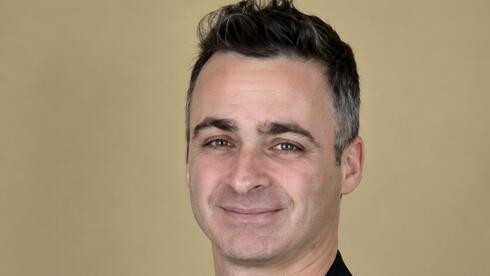
Yoav Chen, VP Threat and Vulnerability Management at Akamai, joined CTech to his thoughts on agentic AI security, and why he thinks the real risk isn't a malicious AI, it's losing visibility into what agents are doing.
“The sheer velocity of AI innovation makes visibility and control the single biggest challenge for modern enterprises,” said Yoav Chen, VP Threat and Vulnerability Management at Akamai, on his biggest fear agentic AI rollout in the tech industry. “Developers and engineers are naturally eager to adopt new agentic tools to accelerate their work, which creates a significant risk of shadow AI and blind spots.”
“My biggest concern for the industry is a loss of operational visibility that degrades security posture and leaves teams unable to quickly contain a breach, data exfiltration, or rogue agent behavior,” he explained. “To combat this, we spend considerable energy designing new frameworks and harnesses specifically built to limit the blast radius of any agentic deployment.”
CTech reached out to a spread of Israeli companies to find out how they're actually handling agentic AI security, and whether local security leaders are ahead of the curve on the risk, or simply closer to it.
Are any AI agents currently operating with real autonomy within Akamai?
As part of our ongoing commitment to driving organizational efficiency, we deploy AI agents across various operational domains. Today, our primary focus is reducing cognitive overload and removing friction from repetitive tasks. While the potential for full agent autonomy is technically feasible and highly compelling, we maintain a "human-in-the-loop" architecture for final decision-making and critical execution.
What security controls are in place versus on the roadmap?
We build security into the agent lifecycle, including security assessment and review to define scoped permissions, map necessary actions, and model expected behavior. Additionally, we are deploying capabilities from our recent LayerX acquisition to gain additional visibility, monitoring, and tracking into agent use in our environment. Establishing dynamic guardrails and execution harnesses remains an active, continuous focus on our roadmap as the technology evolves.
We operate under the assumption that it is a matter of when, not if. Our teams run simulation exercises specifically designed around agentic failure modes. Because AI-driven incidents can cascade in seconds, our focus is on ensuring rapid detection, automated containment, and swift mitigation strategies are fully operational before a real-world event occurs.
Where has AI already made things better or safer?
We have seen substantial returns from supportive agents designed to streamline high-volume workflows. In our security operations, agents now assist with continuous system scanning and testing, accelerating control assessments, and optimizing detection use-case creation. They have also significantly decreased our response times during initial triage and investigations, freeing up our engineers and analysts to focus on higher-tier strategic tasks.
The full story
This article is one source in a clustered incident — the cluster page carries the summary, timeline and every other outlet covering it.
