 Back Forkast.News
 Three Patches, Zero Progress: ShieldCrash Exposes the Endpoint
Nightmare Eclipse published a proof-of-concept on GitHub on September 9, 2026. The exploit reads arbitrary files as SYSTEM on fully patched Windows 10, Windows 11, and Windows Server systems running the September 2026 security updates. It is the third consecutive bypass of the same component—the Microsoft Malware Protection Engine—in four months.
The sequence started in June with RoguePlanet ( CVE-2026-50656 ), a race condition in the engine’s scanning pipeline. Microsoft patched it in July. Nightmare Eclipse bypassed that patch in August using a rogue cloud storage provider, CLFS log manipulation, and symbolic links to achieve SYSTEM access. Microsoft assigned the bypass as CVE-2026-69414 (ShieldBreak) and shipped a fix in engine version 1.1.26080.3.
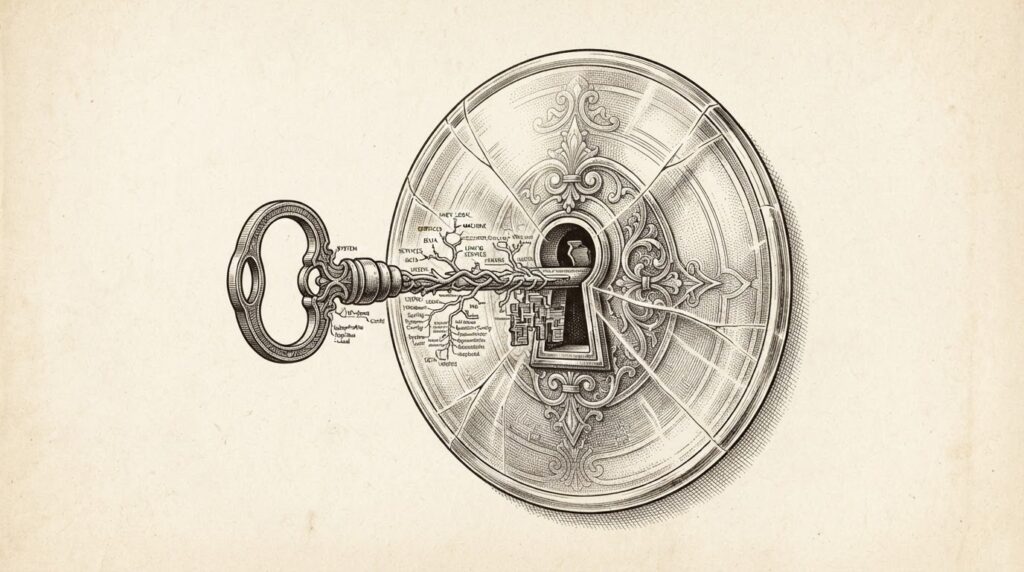
ShieldCrash bypasses that fix. “Microsoft has failed to properly patch ShieldBreak CVE-2026-69414,” the researcher wrote . “Under specific conditions it is still possible to trigger the exact same problem that was caused by ShieldBreak. While Microsoft fixed several things to prevent re-exploiting the issue, they missed a spot where ShieldBreak can still be exploited. This PoC demonstrates an arbitrary file read as SYSTEM with September 2026, all supported Windows versions are affected.” BleepingComputer and The Register independently confirmed the details. No separate CVE has been assigned to ShieldCrash; it operates against the same CVE-2026-69414 surface.
The current PoC reads files only—it does not write or execute code as SYSTEM. But reading arbitrary files at SYSTEM privilege means dumping SAM hives, extracting credential stores, and mapping the entire local file system without triggering Defender’s own scanning pipeline. The researcher described the release as a basic version and indicated a full SYSTEM shell may follow.
Three Bypasses, Same Component
Four months, three patches, three bypasses—all targeting the Malware Protection Engine (mpengine.dll), the core scanning engine that runs inside Microsoft Defender on every Windows endpoint. RoguePlanet exploited a race condition. ShieldBreak exploited a chain involving a rogue cloud provider and symbolic links. ShieldCrash exploits what the researcher describes as a missed condition in the same original attack path.
The pattern is not a series of unrelated bugs. Each patch addressed the specific exploit technique without closing the underlying architectural exposure. The Malware Protection Engine must operate at SYSTEM privilege to scan files, registry keys, and process memory. That requirement makes it the endpoint-protection plane equivalent of a firewall management console: a component whose operational purpose demands the exact access level that makes it dangerous when compromised.
The Endpoint-Plane-as-Attack-Surface Pattern
This is the same pattern Forkast has documented in network infrastructure. Cisco FMC’s management plane produced three CISA KEV entries in 2026, each targeting the web interface meant to control firewall infrastructure. The BlueMoon exploit chain turned a browser patch gap into a security-product bypass achieving SYSTEM. The SonicWall SMA1000 first chain converted a VPN appliance into an MFA seed harvesting machine.
In each case, the security or management component—the infrastructure that must be trusted to function—became the primary attack surface. ShieldCrash extends that thesis from network infrastructure to the endpoint. Windows Defender is the default on every Windows installation. The Malware Protection Engine is the component that makes it work. When that engine is bypassed, the security layer that every Windows endpoint relies on becomes the vector for SYSTEM-level access.
What Organizations Can Do Now
The PoC is public on GitHub . There is no patch. Microsoft has not announced a timeline for addressing the bypass. “Fully patched” no longer means protected against this class of attack on the endpoint-protection plane.
Organizations relying on Microsoft Defender as their primary endpoint protection should evaluate their exposure to arbitrary file-read attacks at SYSTEM privilege. Supplementary endpoint detection tooling, filesystem monitoring for anomalous SAM or credential-store access, and network segmentation that assumes endpoint compromise are concrete steps. The researcher’s track record—this is the 11th Microsoft zero-day from Nightmare Eclipse—suggests the iteration may not be read-only.
The full story
This article is one source in a clustered incident — the cluster page carries the summary, timeline and every other outlet covering it.
