The problem? They're often fake videos from companies trying to scam consumers, according to a new TODAY investigation.
"It’s all a ruse powered by the latest AI deepfakes, designed to get your money," TODAY chief consumer investigative correspondent Vicky Nguyen explained.
Victims of these scams are now speaking out.
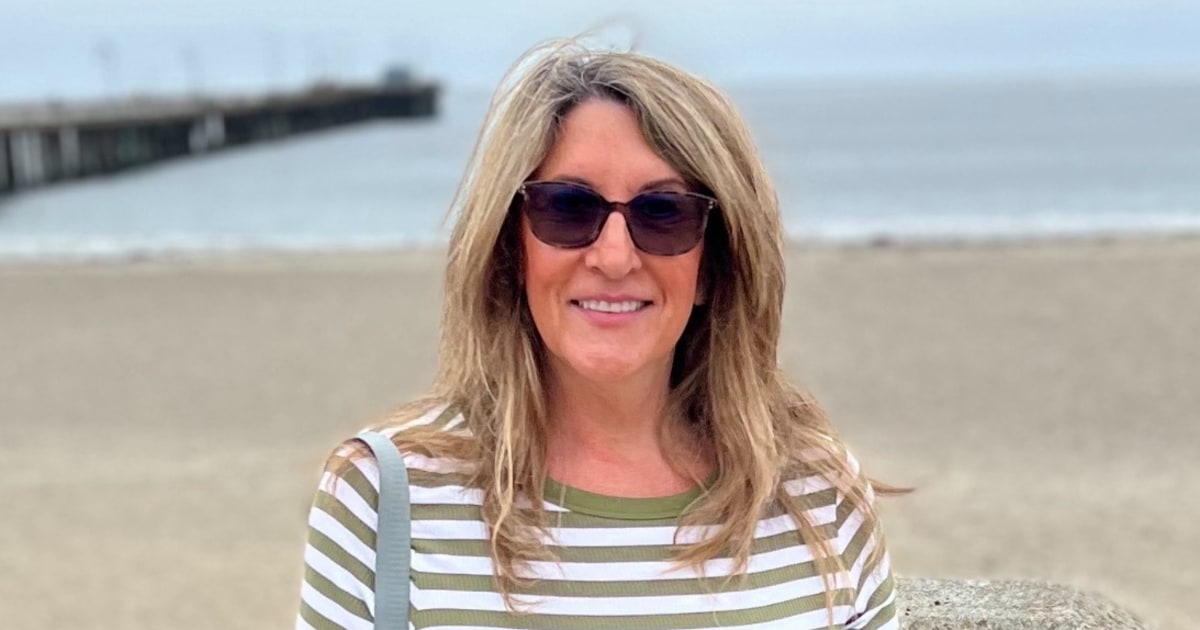
Beth Holland is one of the 17 million women in the United States diagnosed with lipedema , a chronic condition characterized by an abnormal buildup of fat in the legs which causes swelling and reduced mobility. There’s no cure.
“It just got so bad. And you can’t lose weight. It’s painful," Holland told TODAY.
"You secure deep, long-term transformation," the company said in an ad. "It’s already been tested on over 11,532 women, with 96% reporting noticeable improvements."
The ad featured testimonials from Oprah Winfrey, Kelly Clarkson and Carnie Wilson. Even more convincing, it seemed to feature Holland's own doctor, board-certified lipedema surgeon Dr. David Amron.
"I thought it was affiliated with Dr. Amron, so I thought, this is great," Holland says. She ordered six bottles, which cost $300.
What Holland didn’t know was the footage of Amron and the celebrities was pirated off the web and digitally manipulated to lure in hopeful patients.
The ad for the cream was a deepfake, a type of artificial intelligence-generated content that digitally alters a person's image or voice to seem real.
Increasingly, these AI-generated deepfakes appear to feature real doctors making false claims and promoting treatments. Scammers circulate these on social media to deceive people into giving away their money, Nguyen reported.
In Holland's case, her doctor's likeness was doctored to endorse a fake treatment. “There’s no cream that’s going to treat lipedema. It really is impossible,” Amron told TODAY, adding that he was "aghast" seeing the videos.
In response to TODAY’s investigation, Oprah said she “does not sell any product” and has a dedicated security team “doing takedowns of false ads ... found on social media every day."
Meta told TODAY that the lipadema cream ad featuring Winfrey is no longer on , and that the company uses celebrity facial recognition tech to remove deepfakes.
However, celebrities remain targeted by scammers using deepfakes. Even TODAY's own weatherman Al Roker was a victim.
Earlier this year, Roker was sent a link to a video of himself promoting a product to reverse hypertension.
“I don’t have hypertension,” Roker told TODAY.
Although the video was impersonating Roker to sell a fake product, “to the casual viewer, Al Roker is touting this hypertension cure,” Roker said.
TODAY’s investigation revealed more deepfake ads for medical products on social media, including drinkable GLP-1 weight loss products and diabetic care creams, which use a fake “FDA certificate of compliance,” said Nguyen.
“There’s no liquid GLP-1 that’s FDA-approved,” Nguyen added.
TODAY tried tracking down the companies behind the lipedema cream and other medical products, but wasn't able to reach anyone for .
Consumers are being increasingly targeted by these medical scams on social media, and cheated “out of their money, time, and even their health,” the Federal Trade Commission warns.
These fraudulent health products have not been proven safe and effective. "It is scary. You don’t know what’s in them," said Amron. Medical scams "can lead to delays in getting proper diagnosis and treatment," per the Food and Drug Administration .
Experts told TODAY that medical fraud is the frontier of AI scams. "It's to explode," Yoav Keren, CEO of BrandShield, a cybersecurity company hired by the pharmaceutical industry, explained.
These scams are hugely profitable. “Billions of dollars,” said Keren.
Many of the products are traced to shell companies in East Asia, where the trail runs cold, Karen added.
"Someone can be running this scam from Europe, hosting it in South America and targeting the U.S. It can be anywhere," said Keren. As a result, it's difficult to prosecute scammers.
"It’s terrible that they scam people who are desperate and in pain," said Holland. As for her $300 order, Holland did receive cream in the mail, but it hasn't helped her lipedema at all.
"I just warn everybody: Do not purchase," said Holland.
After reporting the transaction as fraud to her credit card company, she was able to get a refund. But not all victims of these medical scams are able to get their money back, Keren warned.
It's increasingly difficult to distinguish deepfake videos. The AI technology is so good now that it's nearly impossible to spot what's real and what's fake, Keren said.
What can you do to protect yourself from medical scams online? Here are a few tips:
"Buyer, beware," said Nguyen.
The full story
This article is one source in a clustered incident — the cluster page carries the summary, timeline and every other outlet covering it.
