 Back Techtimes
 UAE Fends Off Third Sector-Targeting Cyberattack of 2026; Finance First, Now Aviation, Energy
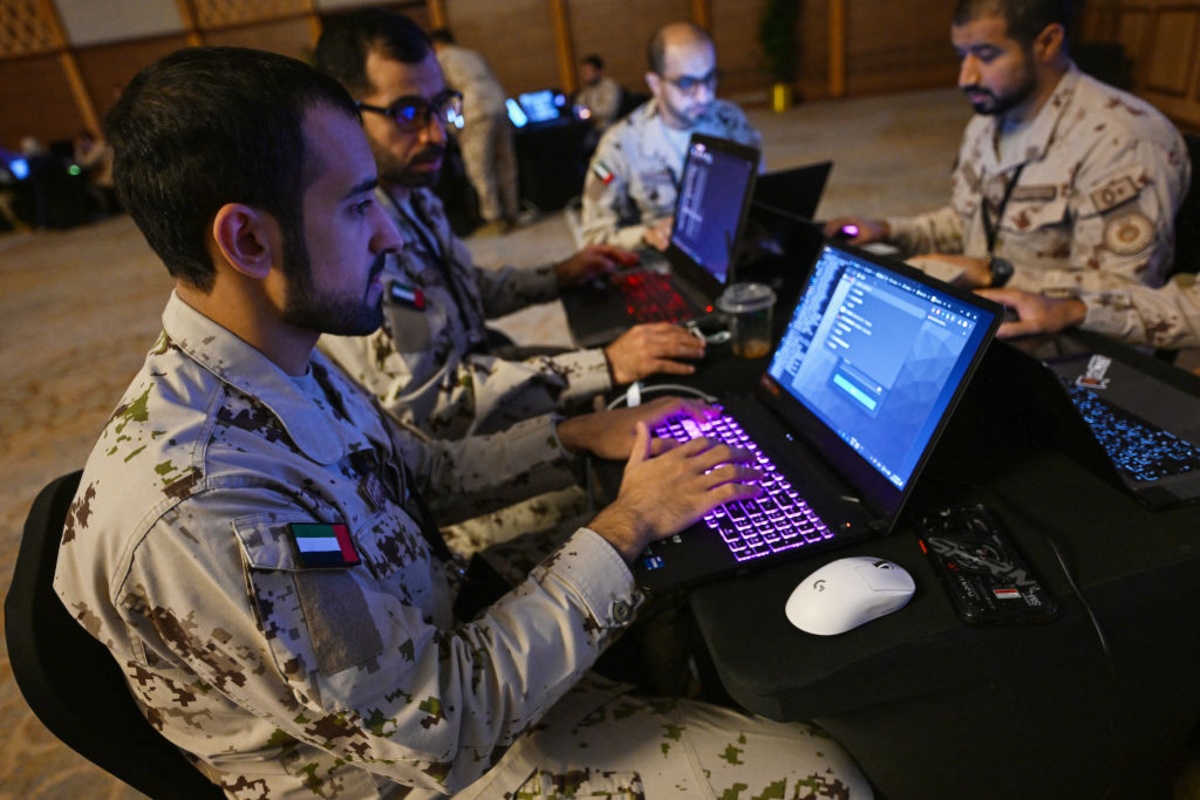
The United Arab Emirates repelled a coordinated, multi-vector cyberattack campaign targeting its aviation, energy, and education sectors on Monday — the third publicly disclosed critical-infrastructure campaign against the Gulf state in 2026 and the clearest signal yet that the attacks represent a sustained strategic pressure effort rather than opportunistic criminal activity. The UAE Cybersecurity Council confirmed the announcement via WAM, the UAE state news agency .
The UAE Cybersecurity Council confirmed that national defense systems detected and neutralized the intrusion attempts before any systems were disrupted or data compromised. The council said the attacks combined three simultaneous techniques: attempts to breach core digital systems and infrastructure directly, targeted campaigns against operational accounts and sensitive data, and coordinated phishing operations designed to turn end users into unwitting network entry points. Full details of the announcement were carried by Emirates 24|7 .
The target selection matters. Finance — the sector that drew the July campaign — is a high-value, high-visibility target. But aviation, energy, and education represent a different tier of strategic risk. Disruption to aviation operations would affect one of the world's busiest international hubs, airline safety systems, cargo logistics, and the data of millions of international travelers. Successful energy sector penetration could cascade into industrial control systems governing oil and gas export, a category of attack that has become a defining instrument of modern state-on-state conflict. Education networks, less intuitive as targets, yield university research data, student and faculty personal records, and network access paths that link to affiliated government and corporate institutions. Independent cybersecurity analysis of UAE priority targets confirms all three sectors as prime focus areas for Iran-aligned actors.
The council said all three attack streams were contained before the attacking parties could achieve their objectives. Exactly who was behind the attacks — and when precisely the campaign began — was not disclosed in the announcement, consistent with the UAE Cybersecurity Council's standard practice of confirming defense without assigning attribution.
This was not an isolated incident. The August 10 announcement is the third major publicly disclosed cyberattack campaign against UAE critical infrastructure since the start of 2026.
In February, the Cybersecurity Council confirmed it had foiled what it described as cyberattacks of a "terrorist nature" targeting the country's digital infrastructure and vital sectors. Those attacks involved attempts to infiltrate networks, deploy ransomware, and run systematic phishing campaigns against national digital platforms. The February wave introduced a threat element that has persisted: attackers were already using artificial intelligence to develop more sophisticated offensive tools, a qualitative shift the council called out explicitly at the time. Details of the February 2026 ransomware campaign were reported by The Record from Recorded Future News.
In July, a wave targeting the financial sector was detected and repelled. That campaign deployed phishing, exploited security vulnerabilities, and used malicious software against digital banking systems and technical infrastructure. The council warned explicitly that cybercriminals were using AI to develop increasingly advanced attack techniques — a pattern that has now repeated across three separate waves. The July 3 financial sector attack was reported by Emirates 24|7.
Monday's campaign adds aviation, energy, and education to that progression. Finance, then critical national infrastructure and research. The breadth of the August targeting is wider than either prior campaign.
The backdrop matters. Before the 2026 Iran conflict began in late February, UAE systems were absorbing between 90,000 and 200,000 breach attempts per day — already a significant figure, but manageable within the country's cybersecurity posture. These pre-conflict daily attack figures were documented by Dark Reading.
Following the opening of military operations, daily attack volume surged to between 600,000 and 800,000 breach attempts. By May, when the UAE Cybersecurity Council launched its Cyber Factory initiative, officials were disclosing that the country had been recording more than 800,000 attacks per day in recent months.
That is not a random crime wave. It is what independent analysts describe as a structured geopolitical pressure campaign.
"The conflict has created a real mobilization effect — hacktivists, opportunistic cybercriminals, and Iran-aligned actors now have a political trigger and a target list," Mohamed Amine Belarbi, CEO of CypherLeak, a cybersecurity firm with offices in the UAE and Morocco, told Dark Reading in May. His firm found little evidence of successful destructive attacks against UAE critical infrastructure, but significant evidence that attackers are focused on exactly the sectors now being disclosed: finance, telecoms, aviation, law enforcement, and energy-adjacent infrastructure.
Alexis Rapin, a cyber threat analyst at ESET, offered the strategic framing in the same Dark Reading report : Tehran's cyber operations may be functioning as a coercive supplement to missile strikes and drone attacks — a way to create friction that pressures Gulf states into supporting a ceasefire or negotiated outcome more favorable to Iran. "By creating all sorts of difficulties for Gulf states, Tehran ultimately hopes that they will pressure their American allies into agreeing to a deal more reflective of Iran's desires," Rapin said.
Neither Rapin nor any other analyst cited in this article, nor the UAE Cybersecurity Council, has explicitly attributed Monday's attack to Iran or any specific group. Attribution in ongoing conflicts is contested and carefully managed. What is documented is the pattern: three waves of multi-vector attacks, rising in complexity and sector breadth, across the exact timeline of the 2026 conflict — and the same sectors that independent security firms identified as priority Iranian APT targets.
A specific technical development threads through all three 2026 wave disclosures: attackers are using AI tools to enhance their offensive operations. This is not a vague claim.
In the February wave, the council noted AI was being used to develop "sophisticated offensive tools." In July, the council again flagged AI-enhanced attack techniques, describing them as enabling more complex methods against financial infrastructure. Monday's council announcement did not specifically re-invoke the AI language, but the multi-vector architecture it described — simultaneous infrastructure breach, credential targeting, and phishing — is consistent with AI-assisted reconnaissance and targeting at scale.
What this means in practice, according to analysts, is primarily a volume problem rather than a sophistication problem. "AI gives attackers a scaling advantage, but not necessarily a sophistication advantage. It makes mediocre attackers faster," Belarbi told Dark Reading. "The real risk for Gulf states is volume: more convincing phishing, more automated probing, more fake breach claims, and more pressure on security teams."
Adam Burgher, senior threat intelligence analyst at ESET, put the patch-management implication plainly: "Threat actors are readily willing to exploit exposed vulnerabilities and do so in a large number of compromises. Maintaining solid patch-management policies, procedures, and guidelines are critically important for defending against these threat actors."
The UAE's response to this campaign has moved beyond reactive defense. In May, the Cybersecurity Council and its strategic partner CPX Holding launched the UAE Cyber Factory — an initiative designed to build domestically produced, AI-powered cybersecurity capabilities. Details of the Cyber Factory's sovereign AI mission were reported by Computer Weekly.
The strategic logic is explicit: dependence on foreign-developed security tooling creates supply-chain risk. A vendor relationship with a foreign government-linked company means another government has potential visibility into your defense systems. By owning the full development pipeline — design, engineering, AI training, deployment — the UAE is attempting to close that vector entirely.
"The UAE stands as a leading model that not only protects but also innovates and leads by developing advanced technologies capable of detecting, preventing and deterring cyber threats effectively," said Dr. Mohamed Al Kuwaiti, head of cybersecurity for the UAE government. The quote appeared in The National's coverage of the Cyber Factory launch.
Hadi Anwar, CEO of CPX Holding, described the Cyber Factory's ambition as "a sovereign, future-ready cybersecurity ecosystem" built from local talent and UAE-developed engineering. "By enabling end-to-end capabilities and strengthening national ownership of digital defenses, it will help create a secure and resilient environment for government, businesses and citizens," Anwar said.
Computer Weekly reported in May that the Cyber Factory represents a major step in the UAE's wider strategy to build sovereign cyber capabilities and reduce reliance on external technologies at a time when governments globally are reassessing digital resilience, national infrastructure protection and supply chain security.
One open question the three-wave pattern raises: whether elevated attack volume against UAE systems is a temporary feature of the 2026 conflict or a permanent shift in the threat environment.
Austin Warnick, director of the national-security intelligence team at Flashpoint, offered a cautious forecast when asked in May. "It remains to be seen whether the frequency baseline of cyberattacks has been permanently raised," Warnick told Dark Reading. "Typically, a surge in cyberattacks follows a major Middle Eastern geopolitical event — those attack surges tend to become less frequent as geopolitical tensions cool."
But Warnick added a caveat that Monday's announcement reinforces: "Given the current climate, even if the conflict ends completely, it is possible that the baseline of attacks could be raised compared to the pre-conflict baseline as a 'new normal.'"
The UAE Cybersecurity Council renewed its standing directive: all public and private entities should comply with national cybersecurity controls, strengthen preventive measures, keep systems updated, and immediately report suspicious activity through official channels.
The UAE Cybersecurity Council has not publicly attributed any of the 2026 attack waves — including Monday's campaign — to a specific actor, country, or group. This is standard practice during active conflicts. Independently, cybersecurity firms including CypherLeak and ESET, citing analysis of the Iran conflict's cyber dimension, describe a landscape dominated by Iran-aligned state- actors, pro-Iran hacktivist groups, and opportunistic cybercriminals who have all been activated by the 2026 conflict. Iranian IRGC-linked groups including UNC1549 (also tracked as Smoke Sandstorm and Tortoiseshell) have documented histories of targeting UAE aerospace, aviation, and defense firms, according to Mandiant's UNC1549 threat research . No confirmed attribution for the August 10 campaign exists as of publication.
Before the 2026 conflict began, UAE systems absorbed between 90,000 and 200,000 breach attempts per day, according to Dr. Mohamed Al Kuwaiti, chairman of the UAE Cybersecurity Council, as reported by Dark Reading . Following the opening of military operations in late February 2026, that figure surged to between 600,000 and 800,000 daily breach attempts. By May, when the UAE Cyber Factory was launched, the council was disclosing more than 800,000 attacks per day as the recent baseline. That is a four-to-eight-fold increase from pre-conflict levels.
The UAE Cyber Factory is a national initiative launched in May 2026 by the UAE Cybersecurity Council and CPX Holding — a UAE-based cybersecurity company. Its purpose is to design, build, and scale cybersecurity systems using AI and domestically developed engineering, giving the UAE end-to-end sovereign control of its own defense capabilities without relying on foreign vendors. The strategic intent is to reduce supply-chain risk — if a security tool is developed by a foreign entity, that entity potentially has visibility into what the tool protects. By producing its own systems locally, the UAE aims to close that exposure. The factory is also intended to position the UAE as a global hub for advanced cybersecurity technology, not just a consumer of it. Full coverage of the launch is available from Computer Weekly's Cyber Factory report .
Vulnerability depends on the attack objective. Financial systems hold high-value data and process transactions that attackers can monetize quickly. Aviation and energy systems operate on operational technology infrastructure — industrial control systems, air traffic management, pipeline control networks — that can cause physical consequences if successfully disrupted. Security analysts note that a successful attack on UAE aviation operations, for example, would not need to crash a plane to cause serious damage: disrupting identity systems, flight operations software, or cargo logistics would create cascading delays and erode public confidence in a major global hub. UAE cyber officials and independent analysts agree that financial, aviation, energy, and education sectors all represent priority targets given the UAE's role as a regional economic and transit hub. Analysis from CypherLeak and Dark Reading supports this assessment.
The full story
This article is one source in a clustered incident — the cluster page carries the summary, timeline and every other outlet covering it.
