 www.aep.com
 AEP Announces $4 Billion Fuel Cell Project for Google
Article Content

- •AEP plans a $4 billion fuel cell plant in Wyoming for Google.
- •The project will provide 702 MW of power and is expected to be operational by 2028.
- •AEP's strategy focuses on meeting the energy needs of large customers.
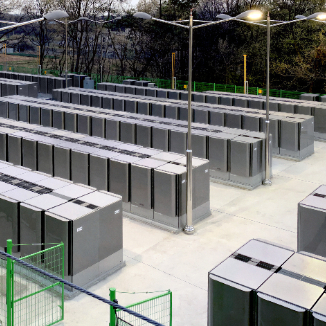
American Electric Power (AEP) has revealed plans for a $4 billion, 702-MW fuel cell power plant in Wyoming to supply Google, under a 20-year power purchase agreement (PPA). This facility, Cheyenne Fuel Cell LLC, is 92% owned by AEP and aims to meet the increasing energy demands of large customers. Construction is set to begin in 2026, with operations expected by the end of 2028. The project utilizes Bloom Energy's fuel cell technology, which generates electricity without combustion, and includes plans for carbon capture integration. AEP's recent announcements also include a deal for 190 MW of Mainspring Energy linear generators, potentially increasing total capacity to approximately 2.3 GW. This initiative aligns with AEP's strategy to support large-scale customers like Google and Amazon Web Services. The Wyoming plant is significantly larger than AEP's previous fuel cell deployments.
Ask AI about this cluster
Answers cite the sources they use
Timeline
More articles in this cluster (2)
Common questions
What is the capacity of the new plant?
Who owns the Cheyenne Fuel Cell LLC?
When will the plant be operational?
Continue Reading
 Critical Zero-Day Exploited in BeyondTrust Remote Support by China-linked Group A critical vulnerability in BeyondTrust Remote Support, tracked as CVE-2026-102764 with a CVSS score of 9.3, has been exploited by the China-linked espionage group Armory Castle since August 29, 2026. This flaw allows unauthenticated remote attackers to perform file operations, gaining root control and access to…
  CISA Warns of Exploited Vulnerabilities in ProFTPD, ONLYOFFICE, Strapi, and More The U.S. Cybersecurity and Infrastructure Security Agency (CISA) added five vulnerabilities to its Known Exploited Vulnerabilities (KEV) catalog, including critical flaws in ProFTPD, ONLYOFFICE Docs, Strapi, Apache Struts, and ISC BIND. These vulnerabilities are being by Chinese actors for cyber espionage, targeting…