 www.prnewswire.com
AI Data Centers Transform Waste Heat into Water Production
Article Content

- •Endeavor and Trevi Systems announced a partnership to produce clean water from AI data center waste heat.
- •The technology can generate up to 200,000 gallons of water per megawatt of computing capacity.
- •This approach significantly reduces energy consumption compared to traditional desalination methods.
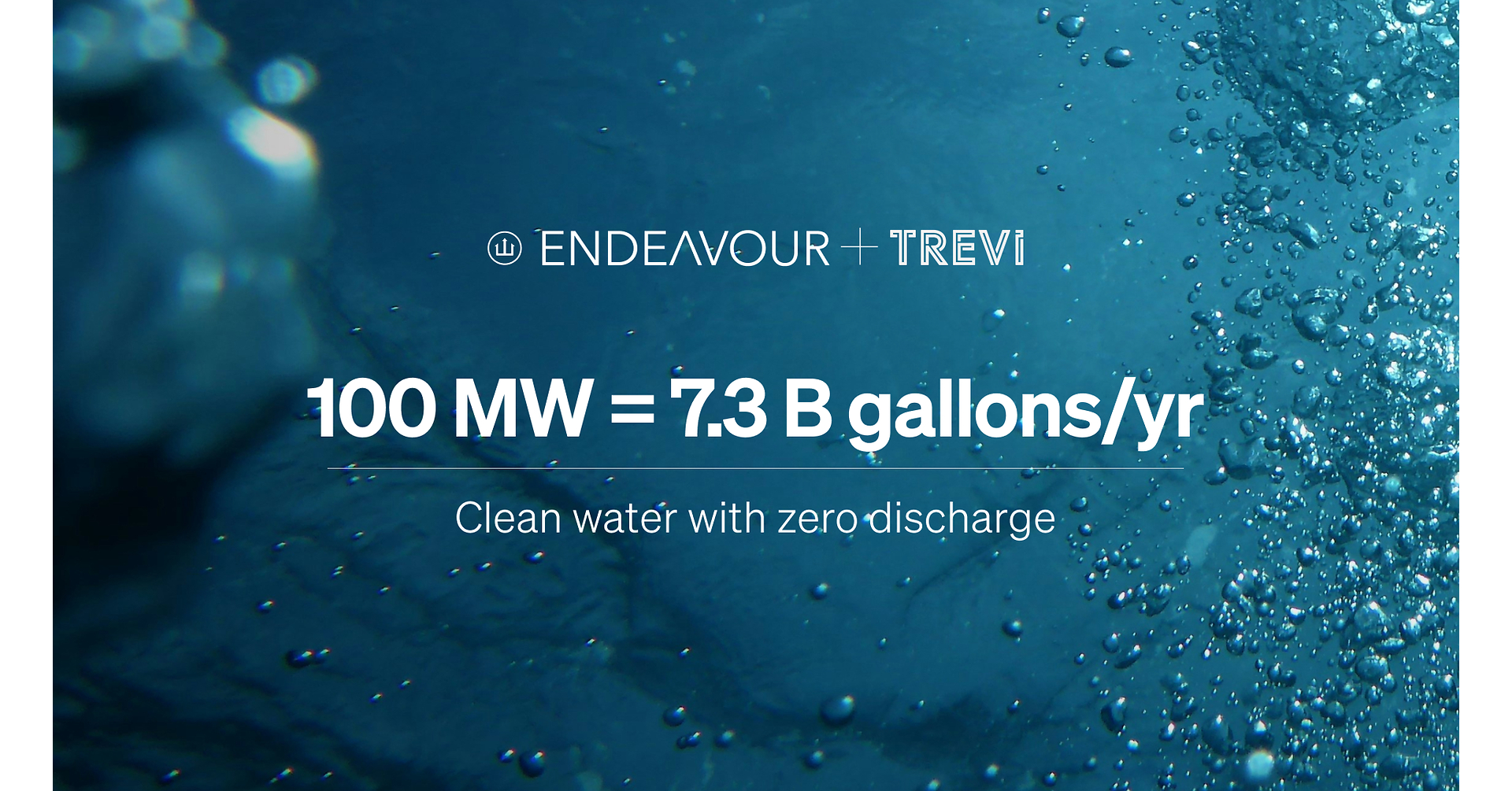
Endeavor and Trevi Systems have partnered to utilize waste heat from AI data centers for desalination, producing up to 200,000 gallons of clean water daily per megawatt of computing capacity. This innovative technology employs a forward-osmosis process that requires significantly less energy than traditional desalination methods. The first pilot deployment will occur at Endeavor's data center, aiming to address water scarcity while reducing the environmental impact of brine disposal. The system operates on a closed-loop, waterless cooling mechanism, minimizing the need for additional water. This approach could potentially convert a 100-megawatt data center into a water plant capable of generating 20 million gallons of fresh water each day. The technology is expected to significantly lower energy demands compared to conventional desalination plants, which typically consume 16 to 70 kWh per cubic meter of water produced. The partnership aims to scale this solution globally, targeting water-scarce regions. The International Energy Agency projects that data centers' electricity consumption will rise from 415 terawatt-hours in 2024 to 945 terawatt-hours by 2030.
Ask AI about this cluster
Answers cite the sources they use
Timeline
More articles in this cluster (2)
Common questions
How does the desalination process work?
What are the benefits of this technology?
Where will the technology be deployed first?
Continue Reading
 Critical BeyondTrust 9.3 Vulnerability Actively Exploited by Threat Actor A critical vulnerability (CVE-2026-102764) in BeyondTrust Remote Support has been discovered and is actively being exploited by the threat group ARMORY CASTLE, reportedly linked to China. The vulnerability, which has a CVSS score of 9.3, allows unauthenticated attackers to upload files and potentially compromise host…
 Lazarus APT Launches Operation FlashHole Using AI and Post-Quantum Cryptography Kaspersky has identified a cyberespionage campaign, dubbed Operation FlashHole, attributed to the Lazarus APT group, active since July 2025. The campaign has targeted at least three organizations in South Korea's construction, software, and wire-communication sectors. Attack methods include spear-phishing emails…