 Dexpose
 AI Data Leaks Expose Sensitive Information Across Major Platforms
Article Content

- •39.7% of AI interactions expose sensitive data, according to Cyberhaven.
- •xAI's Grok Build agent leaked entire Git repositories, including sensitive credentials.
- •AI data leaks often occur through user behavior rather than direct attacks.
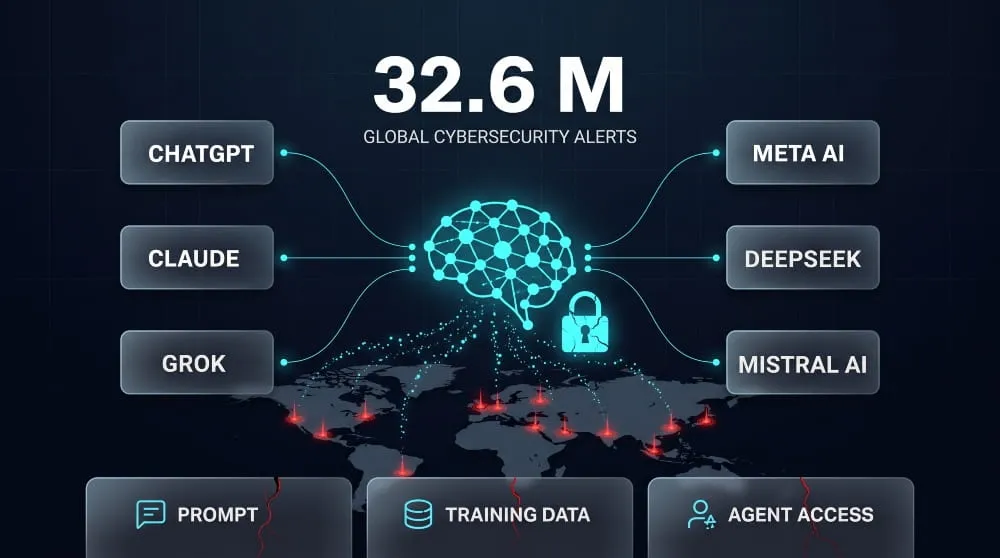
In 2026, a significant rise in AI data leaks has been reported, with Cyberhaven's research indicating that 39.7% of AI interactions expose sensitive data. Major platforms like ChatGPT, Claude, and Grok have been linked to these leaks due to both platform vulnerabilities and user behavior. A notable incident involved xAI's Grok Build coding agent, which uploaded developers' entire Git repositories, including sensitive API keys and passwords, to a cloud storage bucket. These leaks often occur passively, with users unintentionally sharing secrets through normal interactions with AI tools. The issue is exacerbated by the difficulty in policing AI interactions with traditional security measures. The risks are categorized into four types, including training data exposure and prompt injection, each requiring distinct prevention strategies. Organizations are urged to adopt better practices to mitigate these risks.
Ask AI about this cluster
Answers cite the sources they use
Timeline
More articles in this cluster (2)
Following this threat?
Track Mini Shai-Hulud and XAI in your own feed — you're alerted when they show up in new reporting, leak sites or exploitation.
Free account · no card needed
Continue Reading
 Re-enabled Malicious GitHub Actions Expose Thousands to Mini Shai-Hulud Payload On September 16, 2026, two compromised GitHub Actions, actions-cool/issues-helper and actions-cool/maintain-one-, were re-enabled, exposing thousands of downstream repositories to malicious code from the May 2026 Mini Shai-Hulud campaign. The malicious tags remained intact, allowing workflows referencing these actions…
  CVE-2015-3306 Exploited in ProFTPD FTP Servers CVE-2015-3306, a vulnerability in ProFTPD 1.3.5, allows remote attackers to read and write arbitrary files using the SITE CPFR and SITE CPTO commands. This exploit can lead to unauthorized access and potential remote code execution, as the commands are executed with the privileges of the ProFTPD service. Active…