 blog.google
 Android Enhances Scam Protection with AI in Google Messages
Article Content

- •New AI-driven scam protection features are being introduced in Google Messages.
- •Enhanced protection mode uses Gemini AI for assessing unrecognized senders' intentions.
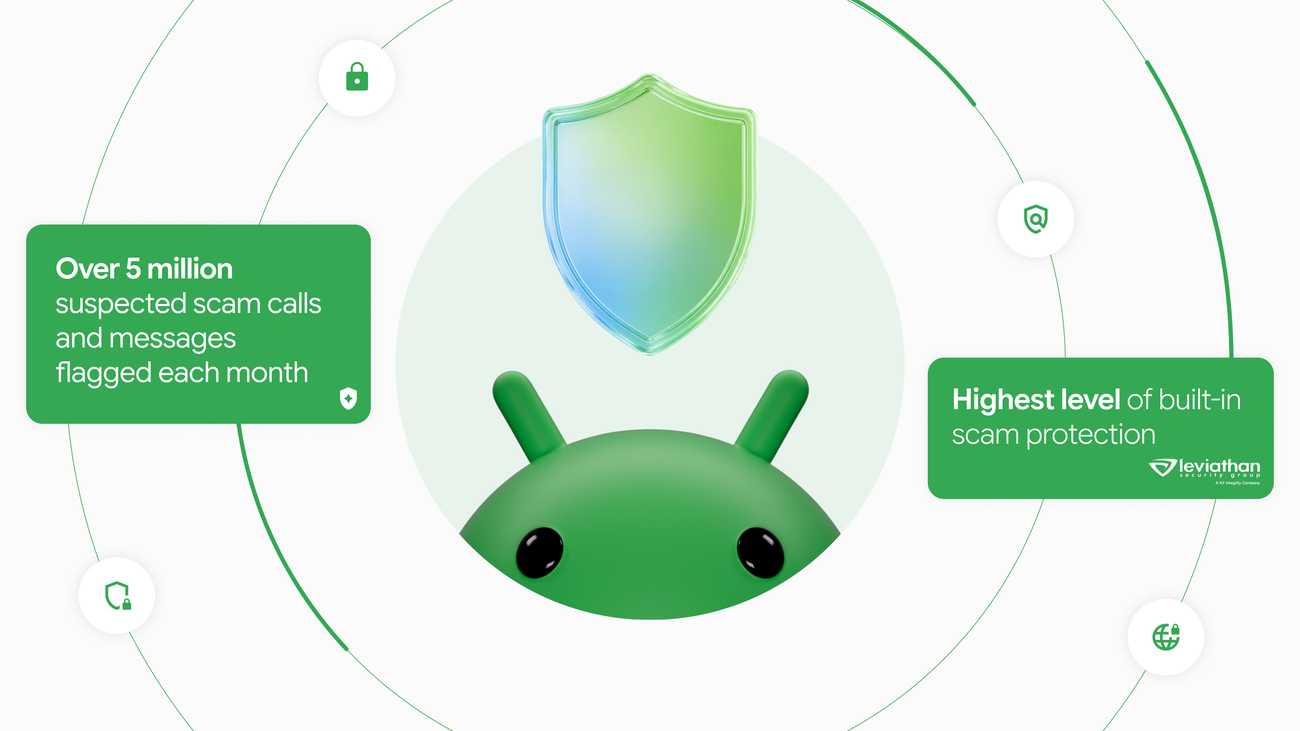
- •Over 5 million suspected scam communications are flagged monthly by existing Android defenses.
On October 14, 2026, Google announced new scam protection features for Android users, leveraging AI to enhance security in Google Messages. The new 'enhanced protection' mode utilizes Gemini AI to assess the intentions of unrecognized senders, aiming to prevent sophisticated scams. This feature builds on existing scam detection capabilities, flagging over 5 million suspected scam calls and texts monthly. Users can opt into this enhanced protection, which includes real-time web signal analysis for unfamiliar URLs. Additional features include blocking unauthorized call forwarding and concealing sensitive information during screen sharing. The rollout will expand to hundreds of millions of devices later this year, enhancing user safety against evolving mobile fraud tactics.
Ask AI about this cluster
Answers cite the sources they use
Timeline
More articles in this cluster (2)
Following this threat?
Track Google in your own feed — you're alerted when they show up in new reporting, leak sites or exploitation.
Free account · no card needed
Common questions
What is the enhanced protection mode?
How many suspected scams are flagged monthly?
Is the enhanced protection mandatory?
Continue Reading
 CVE-2015-3306 Exploited in ProFTPD FTP Servers CVE-2015-3306, a vulnerability in ProFTPD 1.3.5, allows remote attackers to read and write arbitrary files using the SITE CPFR and SITE CPTO commands. This exploit can lead to unauthorized access and potential remote code execution, as the commands are executed with the privileges of the ProFTPD service. Active…
  CISA Mandates Urgent Patching of Five Critical Flaws Exploited by Flax Typhoon The U.S. Cybersecurity and Infrastructure Security Agency (CISA) has ordered federal agencies to patch five critical vulnerabilities by October 11, 2026, following exploitation by the China-linked hacking group Flax Typhoon. The vulnerabilities, added to CISA's Known Exploited Vulnerabilities (KEV) catalog, include…