 Dvidshub
 Army Reserve Cyber Soldiers Briefed on OCAR Role
Article Content
Browse articles 
- •OCAR briefing aimed at career development for Army Reserve Cyber Soldiers.
- •Chief Warrant Officer 5 Lashon White led the presentation.
- •Event held at the Army Research Laboratory in Adelphi, Maryland.
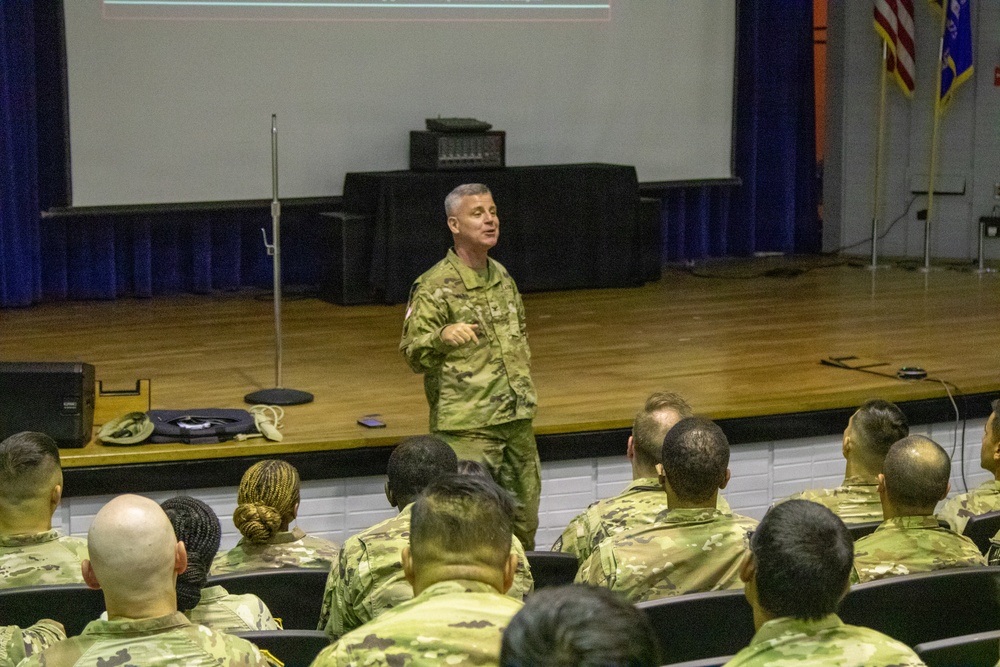
On September 12, 2026, Chief Warrant Officer 5 Lashon White presented to the Army Reserve Cyber Protection Brigade at the Army Research Laboratory in Adelphi, Maryland. The briefing focused on the Office of the Chief Army Reserve (OCAR) and its potential benefits for soldiers' careers. Col. Andrew Walsh introduced White, emphasizing the importance of understanding OCAR's role within the Army Reserve. The event aimed to enhance soldiers' knowledge about career advancement opportunities related to OCAR. This initiative is part of ongoing efforts to support the professional development of Army Reserve Cyber Soldiers.
Ask AI about this cluster
Answers cite the sources they use
Updated just now How this analysis works
Timeline
2026-09-12
OCAR briefing conducted
Chief Warrant Officer 5 Lashon White presented to the Army Reserve Cyber Protection Brigade about OCAR's role.
Article 12026-09-12
Col. Andrew Walsh introduces White
Col. Andrew Walsh introduced Chief Warrant Officer 5 Lashon White to the soldiers before the presentation.
Article 22026-09-12
Presentation focused on career benefits
The briefing highlighted how OCAR can benefit soldiers' individual careers.
Article 3More articles in this cluster (3)
Continue Reading
 Critical Cisco FMC Vulnerabilities Under Active Exploitation Cisco's Secure Firewall Management Center (FMC) Software has two critical vulnerabilities, CVE-2026-20079 and CVE-2026-20316, that are currently being exploited by state-sponsored and ransomware actors. CVE-2026-20079, rated 10.0 on the CVSS scale, allows unauthenticated remote attackers to bypass authentication and…
  Critical GitLab Vulnerabilities Exploited Within Hours of Disclosure On September 10, 2026, GitLab released patches for critical vulnerabilities CVE-2026-85706 and CVE-2026-87719. CVE-2026-85706, a path traversal flaw, allows unauthenticated users to read arbitrary files from GitLab servers, while CVE-2026-87719 enables credential theft via insecure deserialization. Both…