 Link.Springer
 Automated CVSS Scoring: Addressing Vulnerability Assessment Bottlenecks
Article Content

- •The volume of disclosed vulnerabilities is increasing, leading to assessment delays.
- •Current CVSS scoring relies heavily on manual expert analysis, creating operational bottlenecks.
- •Automated scoring methods are being developed to improve transparency and reasoning in vulnerability assessments.
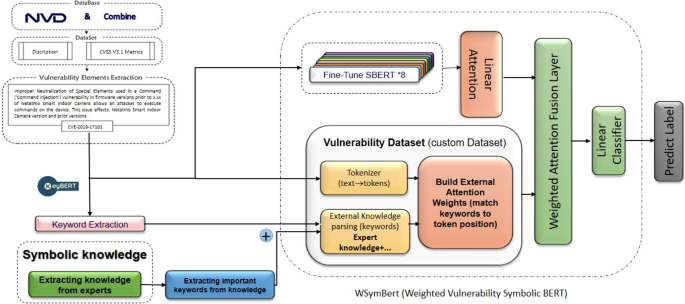
The rise in software vulnerabilities has led to operational challenges for security teams in timely risk assessment and remediation prioritization. Many vulnerabilities remain unscored for extended periods, complicating patch prioritization and risk management. The Common Vulnerability Scoring System (CVSS) is widely used for assessing vulnerability severity, yet its reliance on manual expert analysis creates bottlenecks. Recent efforts focus on automating CVSS predictions using machine learning and neuro-symbolic approaches to enhance transparency and reasoning aligned with expert knowledge. The article highlights the need for a scoring system that not only provides accurate classifications but also offers explanations consistent with domain logic. The CVSS v3.1 metrics are foundational for this analysis, but existing models often lack interpretability and fail to incorporate structured security knowledge effectively.
Ask AI about this cluster
Answers cite the sources they use
Timeline
More articles in this cluster (2)
Following this threat?
Track CVE-2022-33955 in your own feed — you're alerted when they show up in new reporting, leak sites or exploitation.
Free account · no card needed
Common questions
What is CVSS and why is it important?
How does automated CVSS scoring improve assessments?
What challenges do security teams face with current CVSS scoring?
Continue Reading
 CVE-2015-3306 Exploited in ProFTPD FTP Servers CVE-2015-3306, a vulnerability in ProFTPD 1.3.5, allows remote attackers to read and write arbitrary files using the SITE CPFR and SITE CPTO commands. This exploit can lead to unauthorized access and potential remote code execution, as the commands are executed with the privileges of the ProFTPD service. Active…
  CISA Mandates Urgent Patching of Five Critical Flaws Exploited by Flax Typhoon The U.S. Cybersecurity and Infrastructure Security Agency (CISA) has ordered federal agencies to patch five critical vulnerabilities by October 11, 2026, following exploitation by the China-linked hacking group Flax Typhoon. The vulnerabilities, added to CISA's Known Exploited Vulnerabilities (KEV) catalog, include…