 Bssnews
 Bangladesh Defence Adviser Advocates for National Satellite Launch
Article Content

- •Bangladesh's Defence Adviser calls for a national satellite to enhance security.
- •SPARRSO is directed to improve border surveillance and disaster management capabilities.
- •Emphasis on integrating AI and advanced technologies in satellite data processing.
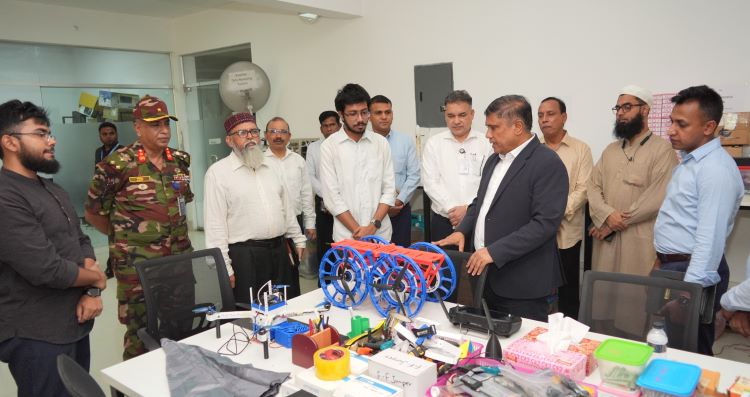
On June 8, 2026, Brig Gen (retd) AKM Shamsul Islam, the Prime Minister's Defence Adviser, urged the launch of a national satellite to enhance Bangladesh's security and disaster management capabilities. During his visit to the Bangladesh Space Research and Remote Sensing Organization (SPARRSO), he emphasized the importance of utilizing space research and remote sensing technologies for national defense and disaster response. He directed SPARRSO to improve its role in border surveillance and strategic mapping. The adviser highlighted the need for advanced satellite image-processing systems and AI to bolster SPARRSO's capabilities. He also called for effective use of remote sensing technologies for early warnings and damage assessments related to natural disasters. Additionally, he stressed the importance of sharing satellite data with military and government agencies to support evidence-based policymaking. The initiative aims to transform SPARRSO into a self-reliant institution contributing to national security and sustainable development.
Ask AI about this cluster
Answers cite the sources they use
Timeline
More articles in this cluster (2)
Continue Reading
 Critical WSO2 API Manager Vulnerability Under Active Exploitation A critical vulnerability (CVE-2026-5430) in WSO2 API Manager is being actively exploited, allowing unauthenticated attackers to forge admin tokens via JWT authentication bypass. This flaw, which has a CVSS score of 10.0, affects multiple WSO2 products including API Manager, Universal Gateway, Traffic Manager, and API…
  Critical Linux Kernel Vulnerability CVE-2025-39682 Under Active Exploitation A critical vulnerability (CVE-2025-39682) in the Linux kernel allows remote code execution through mishandling of zero-length TLS records. This flaw affects kTLS-enabled hosts running vulnerable kernel versions, exposing them to attackers without authentication. CISA added this vulnerability to its Known Exploited…