 www.armyrecognition.com
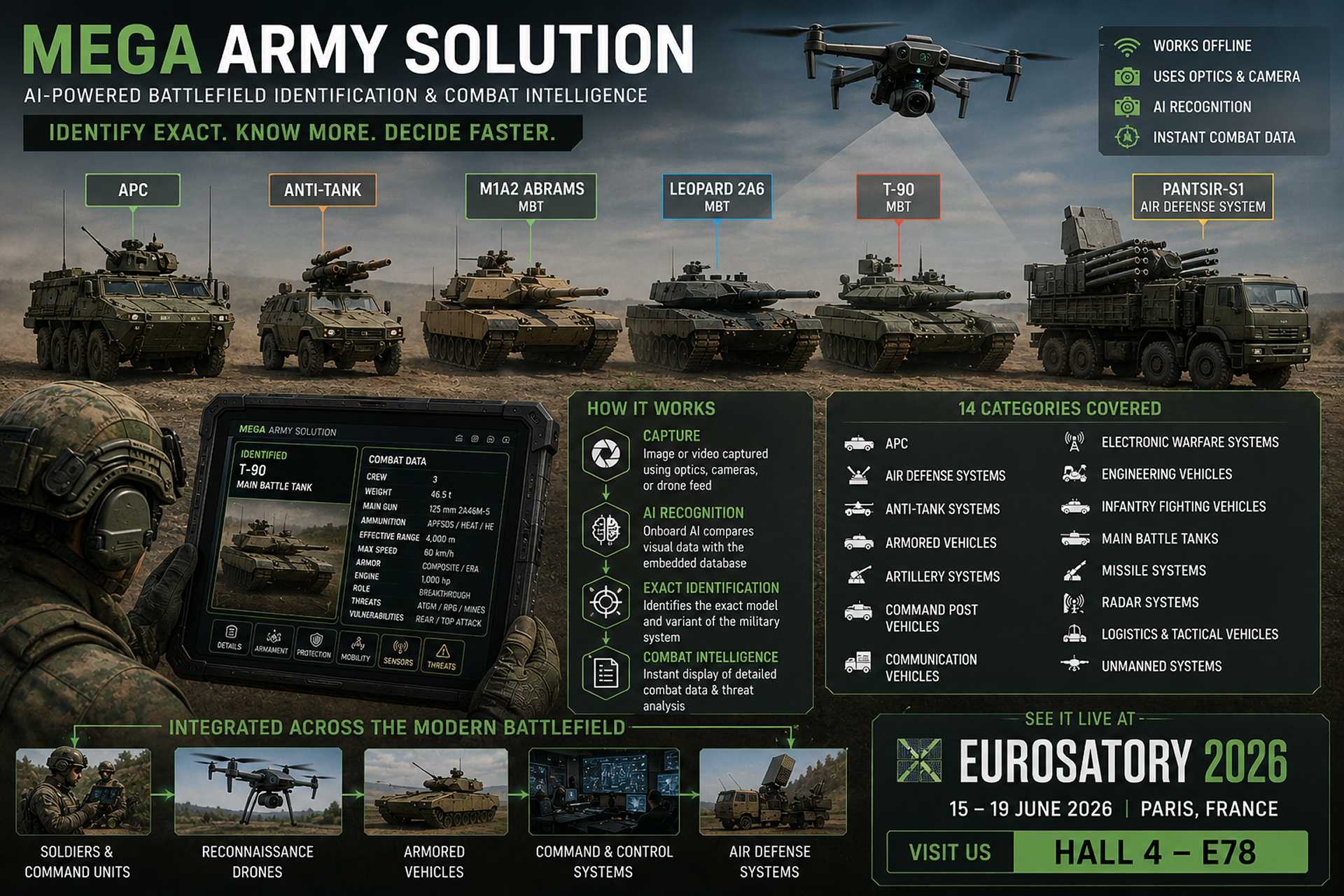
 Belgium's IDDEA Launches Offline AI System for Military Equipment Identification
Article Content

- •IDDEA's MEGA Army Solution operates offline, enhancing military equipment identification.
- •The system can recognize specific military vehicle models and provide detailed combat data.
- •This technology addresses vulnerabilities in contested environments, reducing reliance on internet connectivity.
Belgian defense technology firm IDDEA has unveiled the MEGA Army Solution, an offline AI system designed for real-time identification of military equipment. This system operates without internet connectivity, crucial for contested environments where GPS and communications may be compromised. It can identify specific models of military vehicles, such as tanks and armored personnel carriers, and provide detailed operational data. The technology enhances situational awareness and decision-making for frontline forces, addressing vulnerabilities associated with cyber threats. By minimizing reliance on external networks, the MEGA Army Solution aims to improve battlefield response times and coordination across military operations. The system supports 14 categories of military equipment, delivering tactical intelligence beyond simple visual recognition. This innovation is expected to influence future military engagements and defense strategies worldwide.
Ask AI about this cluster
Answers cite the sources they use
Timeline
More articles in this cluster (2)
Continue Reading
 Critical WSO2 API Manager Vulnerability Under Active Exploitation A critical vulnerability (CVE-2026-5430) in WSO2 API Manager is being actively exploited, allowing unauthenticated attackers to forge admin tokens via JWT authentication bypass. This flaw, which has a CVSS score of 10.0, affects multiple WSO2 products including API Manager, Universal Gateway, Traffic Manager, and API…
  Red Heron Exploits Gitea RCE Flaw in Multinational Campaign A Chinese-speaking threat actor, tracked as Red Heron, exploited the CVE-2026-60004 remote code execution vulnerability in Gitea, compromising 1,386 instances across seven countries. The campaign involved source-code theft, credential collection, and lateral movement, affecting organizations in Canada, Argentina…