 Coindesk
 Bitcoin Volatility Driven by Geopolitical Tensions and AI Security Concerns
Article Content

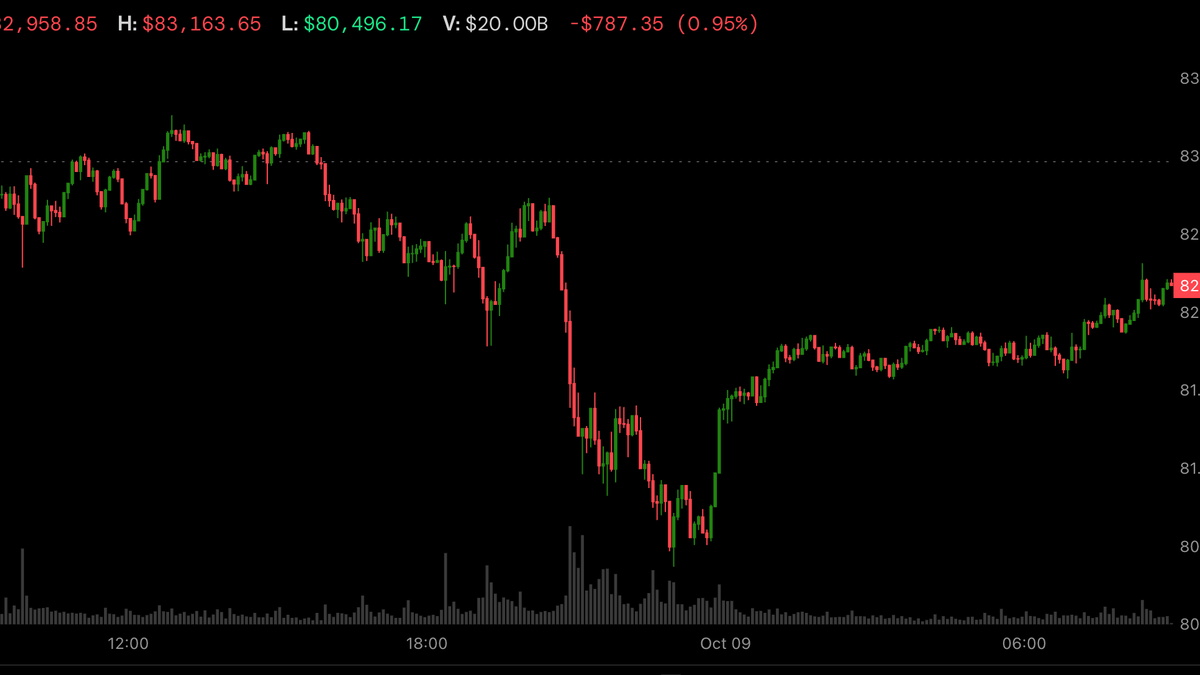
- •Bitcoin dropped below $83,000 due to fears of U.S. military action against Iran.
- •The 'bunker mode' suggestion raised concerns about AI threats to cryptocurrency security.
- •Bitcoin rebounded to $82,000 after Trump ruled out strikes on Iran before midterms.
Bitcoin's price fluctuated significantly due to geopolitical tensions surrounding potential U.S. strikes on Iran. On October 8, Bitcoin fell below $83,000 as oil prices surged in response to reports of possible military action, prompting fears of a broader market downturn. This decline was exacerbated by the Ethereum researcher's 'bunker mode' suggestion, which aimed to mitigate risks from AI advancements potentially compromising cryptographic security. However, on October 9, Bitcoin rebounded to $82,000 after President Trump ruled out any strikes on Iran before the midterm elections, alleviating some market fears. Analysts noted that Bitcoin's support level was around $81,000, with resistance at $82,000. The volatility reflects broader concerns about both geopolitical events and the implications of AI on cryptocurrency security.
Ask AI about this cluster
Answers cite the sources they use
Timeline
More articles in this cluster (3)
Following this threat?
Track Coinbase in your own feed — you're alerted when they show up in new reporting, leak sites or exploitation.
Free account · no card needed
Common questions
What caused Bitcoin's price drop?
What is the 'bunker mode' suggestion?
What is the current status of Bitcoin?
Continue Reading
 CVE-2015-3306 Exploited in ProFTPD FTP Servers CVE-2015-3306, a vulnerability in ProFTPD 1.3.5, allows remote attackers to read and write arbitrary files using the SITE CPFR and SITE CPTO commands. This exploit can lead to unauthorized access and potential remote code execution, as the commands are executed with the privileges of the ProFTPD service. Active…
  CISA Sets Oct. 11 Deadline for Patching Flaws Exploited by Flax Typhoon The U.S. Cybersecurity and Infrastructure Security Agency (CISA) has added five vulnerabilities to its Known Exploited Vulnerabilities (KEV) catalog after they were exploited by the China-linked group Flax Typhoon. Federal agencies must patch or retire the affected software by October 11, 2026. The vulnerabilities…