 Securityaffairs
New ChainScript RAT Exploits ClickFix Lures with Blockchain C2
Article Content

- •ChainScript RAT uses ClickFix lures to infect Windows systems via malicious installers.
- •The malware employs blockchain technology for dynamic command-and-control server rotation.
- •Security teams should monitor for unusual process behaviors and educate users on social engineering.
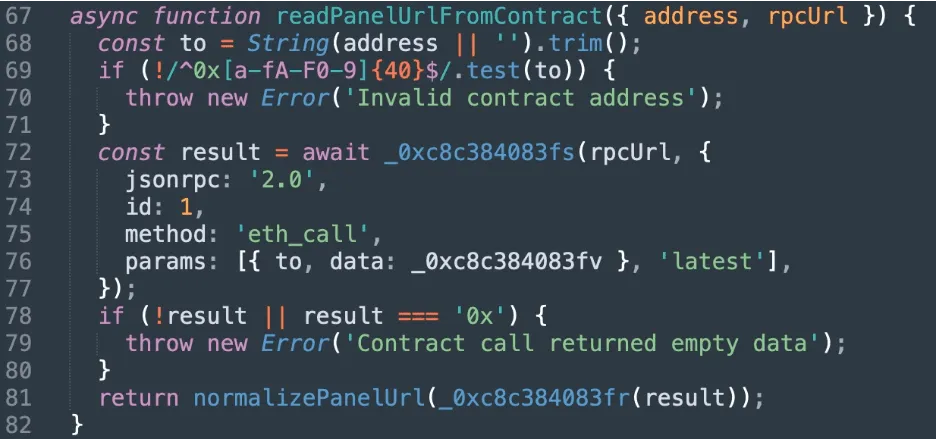
A newly discovered Node.js remote access trojan (RAT) named ChainScript is being deployed through ClickFix social engineering tactics, targeting Windows systems. The malware utilizes a unique command-and-control (C2) discovery method by querying a Polygon blockchain smart contract to dynamically rotate its server addresses. Once executed, ChainScript can perform a variety of malicious activities, including file manipulation and cryptocurrency wallet reconnaissance. The attack vector begins with users being tricked into running a malicious installer disguised as legitimate software like Spotify. Analysts have observed multiple build names for ChainScript, indicating a diverse deployment strategy. The malware's ability to hide its C2 infrastructure complicates detection and response efforts. Current reports suggest that this malware is actively being used in the wild, raising concerns about its potential impact on organizations. Security teams are advised to monitor for unusual process activities and educate users on recognizing social engineering attempts.
Ask AI about this cluster
Answers cite the sources they use
Timeline
More articles in this cluster (7)
Following this threat?
Track Adversary Pursuit Group, ClickFix and HBO Max in your own feed — you're alerted when they show up in new reporting, leak sites or exploitation.
Free account · no card needed
Continue Reading
 Active Exploitation of Siemens Software Center Vulnerability in ClickFix Campaign Siemens has confirmed that a DLL side-loading vulnerability (CVE-2026-110936) in Siemens Software Center is actively being exploited in malware attacks. The vulnerability allows attackers to execute malicious code by placing a specially crafted DLL in a directory searched by the application. Siemens first disclosed…
 ClickFix Technique Surges with AI Lures in Cyber Attacks ClickFix has emerged as a dominant cyber attack technique since 2024, now accounting for over 52% of Push's detections. This method has evolved to include sub-techniques like InstallFix and ConsentFix, with attackers increasingly using AI tools as bait. In Q2 2026, ClickFix detections reached 67%, surpassing other…