
CISA Adds High-Risk WordPress Vulnerability to KEV Catalog
Article Content

- •CVE-2026-119977 added to CISA's KEV Catalog due to active exploitation.
- •The vulnerability affects WordPress and poses significant risks to federal agencies.
- •BOD 26-04 mandates rapid remediation of high-risk vulnerabilities for federal entities.
CISA has added CVE-2026-119977, a WordPress Core Time-of-check Time-of-use (TOCTOU) race condition vulnerability, to its Known Exploited Vulnerabilities (KEV) Catalog due to evidence of active exploitation. This vulnerability is a common attack vector for malicious actors and poses significant risks to federal agencies. Under Binding Operational Directive (BOD) 26-04, federal agencies are required to prioritize the rapid remediation of high-risk vulnerabilities listed in the KEV Catalog, particularly those that could grant total control of affected assets post-exploitation. While BOD 26-04 specifically targets Federal Civilian Executive Branch agencies, CISA encourages all organizations to adopt similar risk-based vulnerability management practices. CISA will continue to update the KEV Catalog as new vulnerabilities are identified and confirmed.
Ask AI about this cluster
Answers cite the sources they use
More articles in this cluster (2)
Following this threat?
Track CVE-2026-119977 in your own feed — you're alerted when they show up in new reporting, leak sites or exploitation.
Free account · no card needed
Common questions
What is CVE-2026-119977?
How urgent is the response to this vulnerability?
What should organizations do to protect against this vulnerability?
Continue Reading
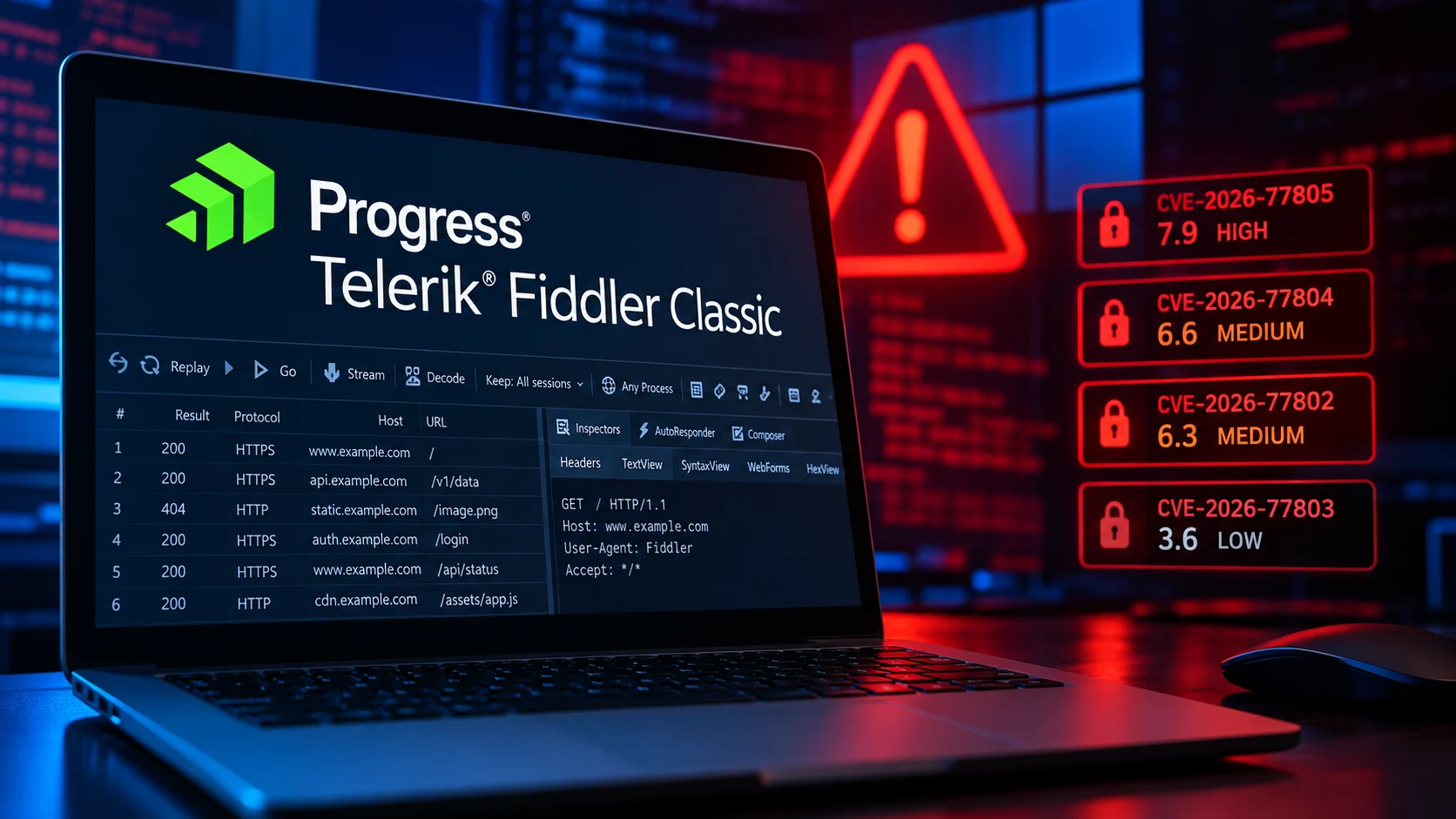 Progress Patches High-Severity Flaws in Telerik Fiddler Classic Progress Software has released patches for four vulnerabilities in Telerik Fiddler Classic, including a high-severity flaw (CVE-2026-77805) that allows local privilege escalation through weak executable signature verification. The vulnerabilities affect versions prior to 6.0.20262.10021 and require local access or…
 Critical Zero-Day Exploited in BeyondTrust Remote Support by China-linked Group A critical vulnerability in BeyondTrust Remote Support, tracked as CVE-2026-102764 with a CVSS score of 9.3, has been exploited by the China-linked espionage group Armory Castle since August 29, 2026. This flaw allows unauthenticated remote attackers to perform file operations, gaining root control and access to…