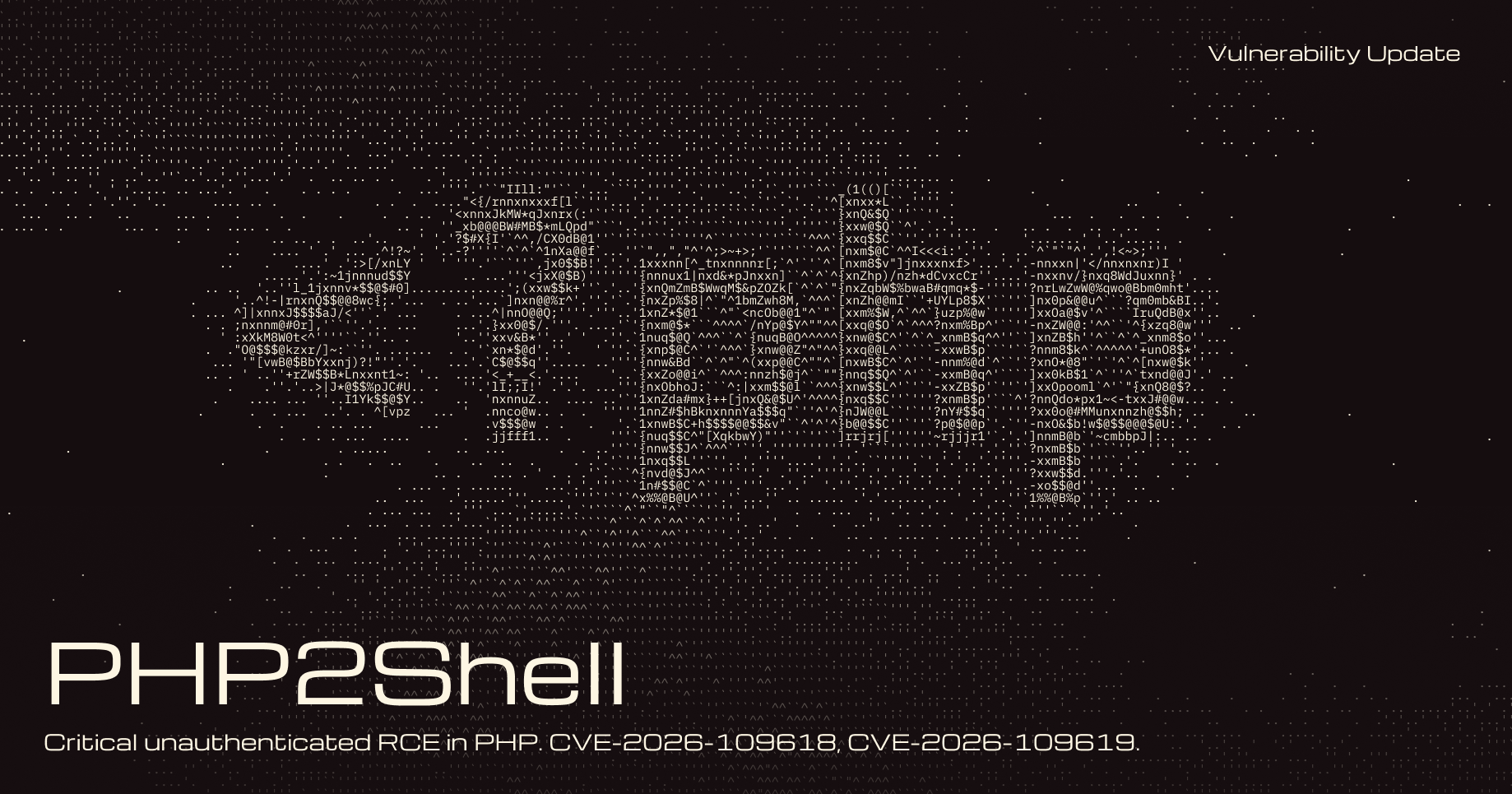
 Hacktron.Ai
Critical PHP Vulnerabilities Expose 70% of Websites to Cyber Attacks
Article Content

- •CVE-2026-109618 and CVE-2026-109619 allow remote code execution on PHP-powered sites.
- •Over 70% of websites, including major platforms like WordPress, are at risk.
- •Governments worldwide have temporarily shut down services to mitigate potential attacks.
Two critical vulnerabilities in PHP, identified as CVE-2026-109618 and CVE-2026-109619, were disclosed on October 21 and 22, 2026, respectively. These flaws allow unauthenticated remote code execution, potentially affecting around 70% of websites globally. Following the announcement, millions of hacking attempts were reported as attackers sought to exploit the vulnerabilities. Governments and organizations worldwide, including the UK and Japan, have taken numerous websites offline as a precautionary measure while they implement security patches. The PHP Foundation has released emergency updates, urging all users to apply them immediately. The vulnerabilities were discovered using AI by researchers from Wiz and Calif, marking a significant moment in cybersecurity. The situation is evolving rapidly, with ongoing monitoring and updates from cybersecurity agencies.
Ask AI about this cluster
Answers cite the sources they use
Timeline
More articles in this cluster (37)
Following this threat?
Track Amazon and CVE-2026-109618 in your own feed — you're alerted when they show up in new reporting, leak sites or exploitation.
Free account · no card needed
Common questions
What systems are affected by these vulnerabilities?
What should organizations do immediately?
Is there evidence of active exploitation?
Continue Reading
 Critical PHP Vulnerabilities CVE-2026-109618 and CVE-2026-109619 Disclosed On October 20, 2026, two critical vulnerabilities in PHP, tracked as CVE-2026-109618 and CVE-2026-109619, were disclosed, allowing unauthenticated remote code execution (RCE) on affected systems. The vulnerabilities, collectively known as 'PHP2Shell', stem from improper memory handling during HTTP request processing…
 Critical PHP Vulnerabilities PHP2Shell Prompt Urgent Global Response On October 21, 2026, the PHP Foundation disclosed two critical vulnerabilities, CVE-2026-109618 and CVE-2026-109619, both rated 9.2 on the CVSS scale. These vulnerabilities allow unauthenticated remote code execution (RCE) on affected servers, impacting millions of websites powered by PHP, including major platforms…