 www.ox.security
 Critical RCE Vulnerability in Anthropic's AI Supply Chain Protocol
Article Content

- •A critical RCE vulnerability in Anthropic's MCP threatens AI supply chains.
- •Over 30 responsible disclosures and 10+ High/Critical CVEs have been reported.
- •Organizations are advised to prioritize Software Supply Chain Security.
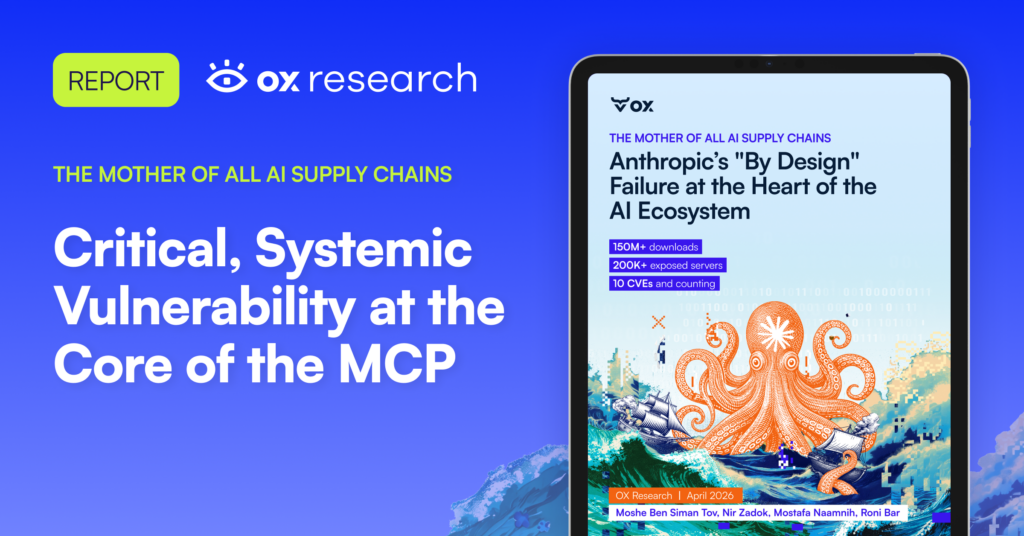
OX Security has identified a significant RCE-by-Design vulnerability in Anthropic’s Model Context Protocol (MCP), which poses a critical risk to organizations utilizing AI agents. This flaw has led to over 30 responsible disclosures and more than 10 High/Critical CVEs. The vulnerability stems from architectural choices in the MCP, making it a systemic issue rather than a simple patchable flaw. The ongoing risk affects any organization that integrates AI into their operations, emphasizing the need for enhanced Software Supply Chain Security. Despite efforts to address downstream impacts, the root cause remains unpatched at the protocol level. Security leaders are urged to adopt a 'Secure by Design' approach to mitigate these risks. The current status indicates that while patches have been issued, the fundamental vulnerability persists.
Ask AI about this cluster
Answers cite the sources they use
Timeline
More articles in this cluster (3)
Following this threat?
Track Anthropic in your own feed — you're alerted when they show up in new reporting, leak sites or exploitation.
Free account · no card needed
Continue Reading
 Critical BeyondTrust 9.3 Vulnerability Actively Exploited by Threat Actor A critical vulnerability (CVE-2026-102764) in BeyondTrust Remote Support has been discovered and is actively being exploited by the threat group ARMORY CASTLE, reportedly linked to China. The vulnerability, which has a CVSS score of 9.3, allows unauthenticated attackers to upload files and potentially compromise host…
  Lazarus APT Launches Operation FlashHole Using AI and Post-Quantum Cryptography Kaspersky has identified a cyberespionage campaign, dubbed Operation FlashHole, attributed to the Lazarus APT group, active since July 2025. The campaign has targeted at least three organizations in South Korea's construction, software, and wire-communication sectors. Attack methods include spear-phishing emails…