 Macaubusiness
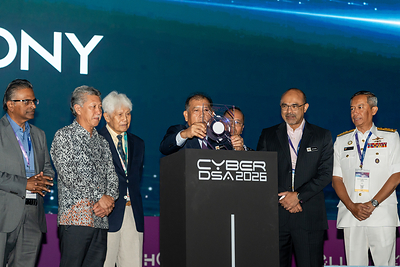
 CyberDSA 2026 Highlights Malaysia's AI Security Challenges
Article Content

- •CyberDSA 2026 opened in Kuala Lumpur on October 5, 2026.
- •The event focuses on integrating AI adoption with cybersecurity measures.
- •Malaysia aims to become an AI Nation by 2030, emphasizing security and trust.
Cyber Digital Services, Defence & Security Asia (CyberDSA) 2026 opened on October 5, 2026, in Kuala Lumpur, focusing on the intersection of AI adoption and cybersecurity. The event gathered government officials, industry leaders, and researchers to discuss Malaysia's ambition to become an AI Nation by 2030. Deputy Minister YB Datuk Wilson Ugak Anak Kumbong emphasized the need for robust security measures as AI becomes integral to the economy. The Malaysia Digital Action Plan 2030 aims to ensure that security, trust, and national capability underpin AI initiatives. The conference theme, 'Advancing Secure AI, Strengthening Digital Trust, and Safeguarding Data Sovereignty,' reflects the urgency of addressing cybersecurity as AI technologies proliferate. As AI adoption progresses, the need for governance and control over data and infrastructure becomes critical for maintaining public trust.
Ask AI about this cluster
Answers cite the sources they use
Timeline
More articles in this cluster (2)
Common questions
What is the focus of CyberDSA 2026?
Who opened the CyberDSA 2026 event?
What is Malaysia's goal regarding AI by 2030?
Continue Reading
 Critical Citrix NetScaler Zero-Day Vulnerabilities Exploited Citrix disclosed two critical zero-day vulnerabilities, CVE-2026-88771 and CVE-2026-88772, affecting NetScaler ADC and Gateway systems, which are being actively exploited. Both vulnerabilities have a CVSS score of 9.5 and allow unauthenticated attackers to execute arbitrary commands remotely. CVE-2026-88771 arises…
  Critical Authentication Bypass in Cisco Catalyst SD-WAN Manager Exploited On September 30, 2026, Cisco disclosed a critical vulnerability (CVE-2026-76504) in the Catalyst SD-WAN Manager that allows unauthenticated remote attackers to bypass authentication and gain admin-level access to the system. This flaw stems from improper handling of URI encoding in HTTP requests, enabling attackers to…