 www.cnas.org
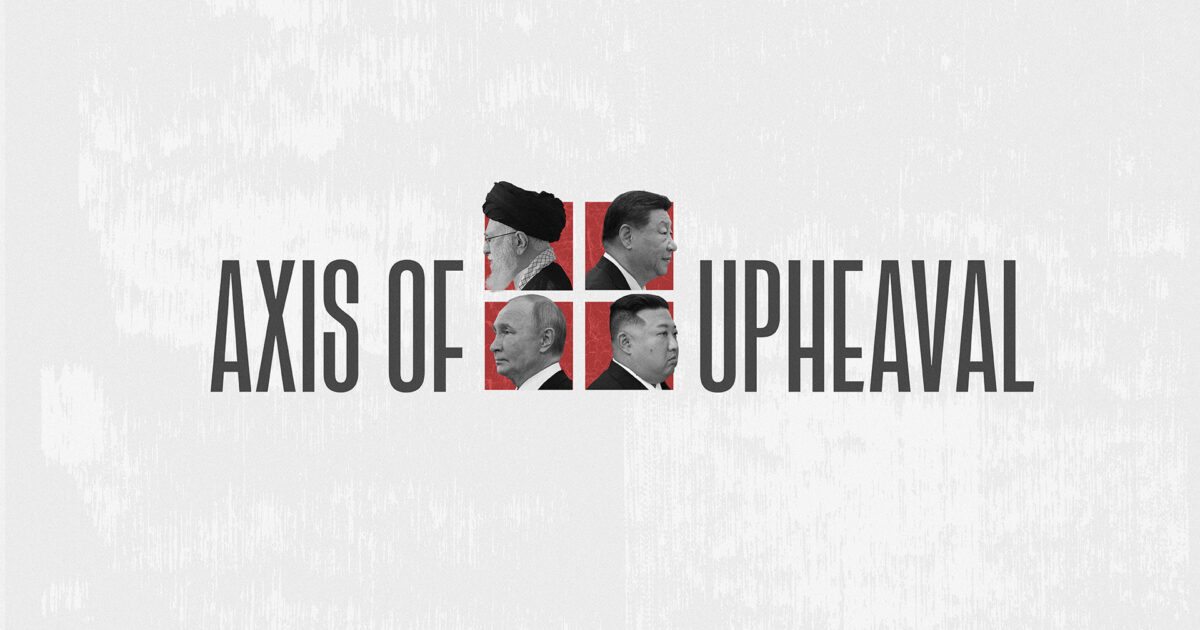
 Emerging Axis of Upheaval Threatens U.S. Global Influence
Article Content

- •China, Russia, Iran, and North Korea are forming a new geopolitical coalition.
- •The U.S. is losing its ability to shape global security agendas due to weakened alliances.
- •The U.S. must develop strategies to counter the growing influence of this new axis.
The geopolitical landscape is shifting with the increasing alignment of China, Russia, Iran, and North Korea, collectively termed the 'Axis of Upheaval.' This coalition is expanding its economic, military, and technological ties, particularly after Russia's invasion of Ukraine in 2022. The United States faces significant challenges in maintaining its global leadership and security partnerships, as allies form new alliances independent of U.S. influence. Recent developments indicate a decline in U.S. soft power, complicating military operations and access to intelligence. The U.S. must respond to this generational challenge by reinforcing the international order and countering the new axis's influence. The situation is exacerbated by strained relationships with traditional allies, which could hinder U.S. military operations and strategic planning.
Ask AI about this cluster
Answers cite the sources they use
Timeline
More articles in this cluster (9)
Continue Reading
 Critical WSO2 API Manager Vulnerability Under Active Exploitation A critical vulnerability (CVE-2026-5430) in WSO2 API Manager is being actively exploited, allowing unauthenticated attackers to forge admin tokens via JWT authentication bypass. This flaw, which has a CVSS score of 10.0, affects multiple WSO2 products including API Manager, Universal Gateway, Traffic Manager, and API…
  Critical Linux Kernel Vulnerability CVE-2025-39682 Under Active Exploitation A critical vulnerability (CVE-2025-39682) in the Linux kernel allows remote code execution through mishandling of zero-length TLS records. This flaw affects kTLS-enabled hosts running vulnerable kernel versions, exposing them to attackers without authentication. CISA added this vulnerability to its Known Exploited…