 Nature
 New Method for Air-Stable 2D Superconductors Enhances Quantum Device Scalability
Article Content

- •New encapsulation epitaxy method enables stable growth of niobium diselenide superconductors.
- •The protective graphene layer allows for large-area production while preventing oxidation.
- •High kinetic inductance of the superconductors is beneficial for quantum circuit applications.
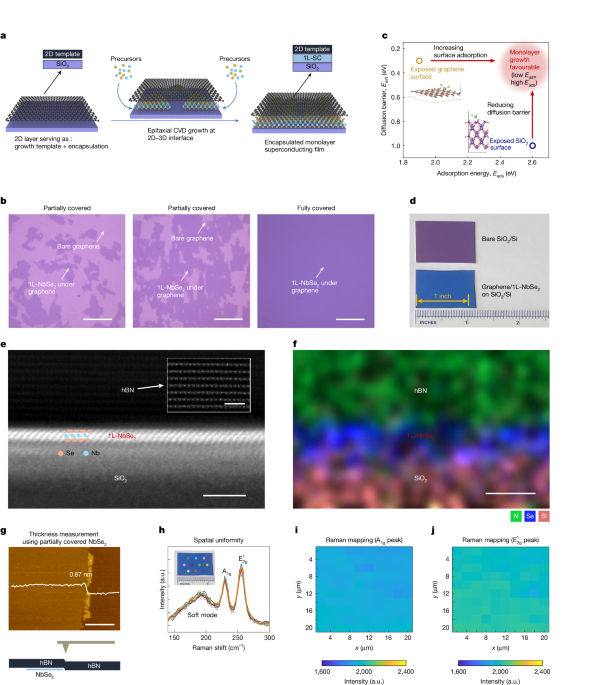
Researchers have developed a technique to create air-stable, ultrathin superconductors, specifically niobium diselenide, by growing it beneath a protective graphene layer. This encapsulation epitaxy method allows for the production of large-area superconductors that maintain their properties in air, overcoming previous challenges of rapid degradation. The superconductors exhibit high kinetic inductance, making them suitable for quantum circuits. This advancement could lead to more compact and efficient quantum devices, including superconducting quantum computing hardware and ultrasensitive detectors. The research was conducted by a team from MIT and other institutions and is published in Nature.
Ask AI about this cluster
Answers cite the sources they use
Timeline
More articles in this cluster (7)
Continue Reading
 Critical WSO2 API Manager Vulnerability Under Active Exploitation A critical vulnerability (CVE-2026-5430) in WSO2 API Manager is being actively exploited, allowing unauthenticated attackers to forge admin tokens via JWT authentication bypass. This flaw, which has a CVSS score of 10.0, affects multiple WSO2 products including API Manager, Universal Gateway, Traffic Manager, and API…
  Critical Linux Kernel Vulnerability CVE-2025-39682 Under Active Exploitation A critical vulnerability (CVE-2025-39682) in the Linux kernel allows remote code execution through mishandling of zero-length TLS records. This flaw affects kTLS-enabled hosts running vulnerable kernel versions, exposing them to attackers without authentication. CISA added this vulnerability to its Known Exploited…