 Themoscowtimes
 EU Proposes Stricter Visa Rules for Russian Tourists Amid Ongoing Ukraine Conflict
Article Content

- •EU countries are pushing for stricter visa rules for Russian tourists amid the Ukraine war.
- •Visa issuances to Russians dropped from over four million in 2021 to 623,451 in 2025.
- •Renew Europe calls for enhanced security screenings and checks on military service records.
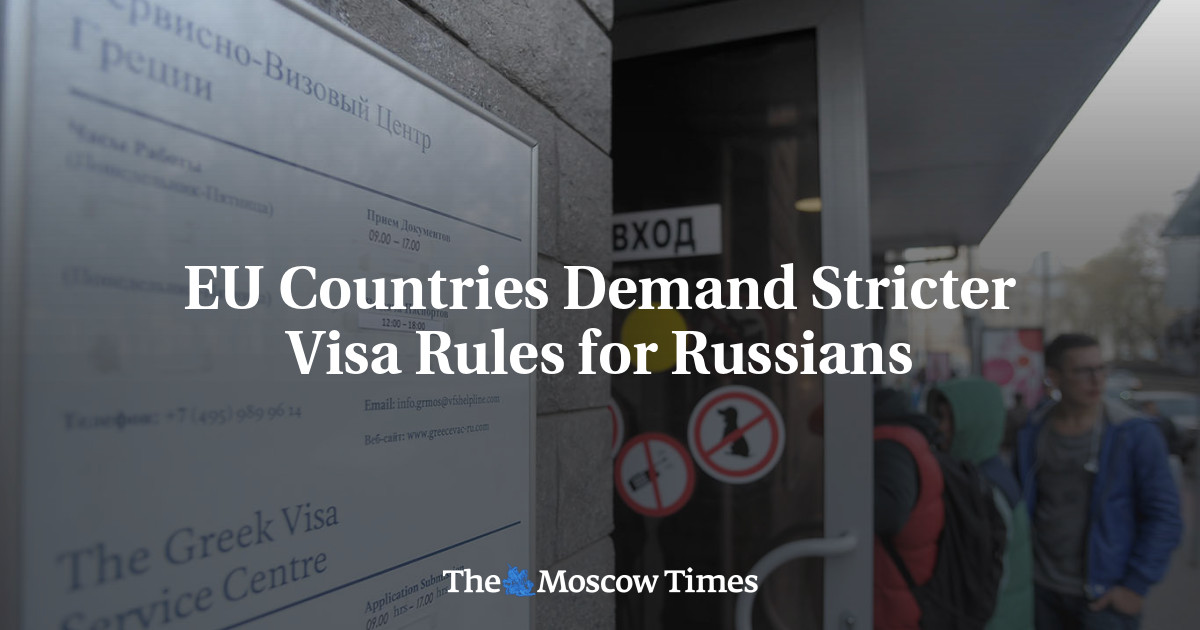
On June 4, 2026, EU countries called for tighter visa regulations for Russian travelers in response to the ongoing war in Ukraine. The proposal, supported by Poland, Norway, and the Baltic states, aims to restrict leisure travel to the Schengen area, citing security risks. The EU has already suspended its visa facilitation agreement with Russia, resulting in a significant drop in visa issuances from over four million in 2021 to 623,451 in 2025. Renew Europe, a parliamentary group, emphasized the need for enhanced security screenings and military service record checks for visa applicants. The initiative seeks to prevent individuals linked to the Russian military or propaganda from entering Europe. The proposal is set against a backdrop of increasing Russian aggression and hybrid threats to European democracies. Some EU nations argue against blanket restrictions, fearing they may alienate ordinary Russians and reinforce Kremlin narratives. The discussions are timely as the summer travel season approaches.
Ask AI about this cluster
Answers cite the sources they use
Timeline
More articles in this cluster (2)
Continue Reading
 Critical WSO2 API Manager Vulnerability Under Active Exploitation A critical vulnerability (CVE-2026-5430) in WSO2 API Manager is being actively exploited, allowing unauthenticated attackers to forge admin tokens via JWT authentication bypass. This flaw, which has a CVSS score of 10.0, affects multiple WSO2 products including API Manager, Universal Gateway, Traffic Manager, and API…
  Critical Linux Kernel Vulnerability CVE-2025-39682 Under Active Exploitation A critical vulnerability (CVE-2025-39682) in the Linux kernel allows remote code execution through mishandling of zero-length TLS records. This flaw affects kTLS-enabled hosts running vulnerable kernel versions, exposing them to attackers without authentication. CISA added this vulnerability to its Known Exploited…