 Organiser
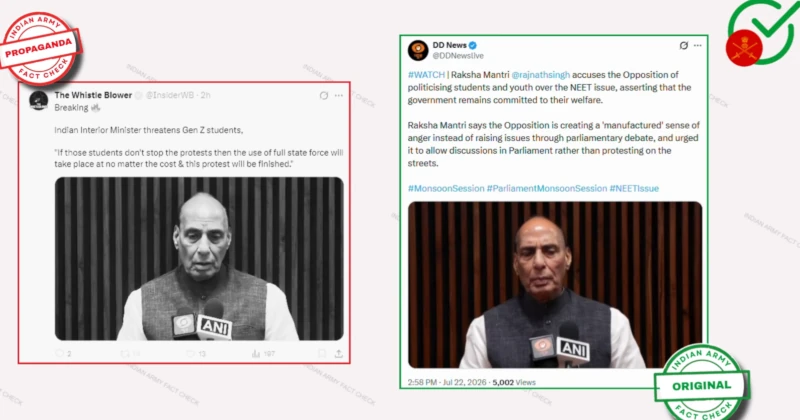
 Pakistan-Based Handles Spread AI Deepfake Videos Amid Delhi Protests
Article Content

- •AI-generated deepfake videos are being used to spread misinformation during Delhi protests.
- •The Indian Army and PIB have debunked false claims attributed to Defence Minister Rajnath Singh.
- •Authorities emphasize the importance of verifying information to prevent the spread of propaganda.
Amid ongoing protests in Delhi, Pakistan-based propaganda networks have intensified a misinformation campaign using AI-generated deepfake videos. The Indian Army and the Press Information Bureau (PIB) have debunked multiple manipulated videos, including one falsely attributing inflammatory remarks to Defence Minister Rajnath Singh. Authorities confirmed that these videos are part of a coordinated effort to mislead the public and undermine trust in government institutions. The Army clarified that maintaining order is the responsibility of local police, not military personnel. No casualties have been reported during the protests, despite viral claims. The misinformation campaign aims to exploit the unrest to incite confusion and distrust among the youth. Citizens are urged to verify information through official channels to combat the spread of false narratives.
Ask AI about this cluster
Answers cite the sources they use
Timeline
More articles in this cluster (3)
Following this threat?
Track X in your own feed — you're alerted when they show up in new reporting, leak sites or exploitation.
Free account · no card needed
Continue Reading
 Critical WSO2 API Manager Vulnerability Under Active Exploitation A critical vulnerability (CVE-2026-5430) in WSO2 API Manager is being actively exploited, allowing unauthenticated attackers to forge admin tokens via JWT authentication bypass. This flaw, which has a CVSS score of 10.0, affects multiple WSO2 products including API Manager, Universal Gateway, Traffic Manager, and API…
  Critical Linux Kernel Vulnerability CVE-2025-39682 Under Active Exploitation A critical vulnerability (CVE-2025-39682) in the Linux kernel allows remote code execution through mishandling of zero-length TLS records. This flaw affects kTLS-enabled hosts running vulnerable kernel versions, exposing them to attackers without authentication. CISA added this vulnerability to its Known Exploited…