 2-Spyware
 FedEx and FTX Scams: Rising Phishing Threats in 2026
Article Content

- •FedEx and FTX scams are exploiting public expectations around deliveries and payouts.
- •Phishing messages aim to steal personal information and financial details.
- •Users should verify communications through official channels to avoid falling victim.
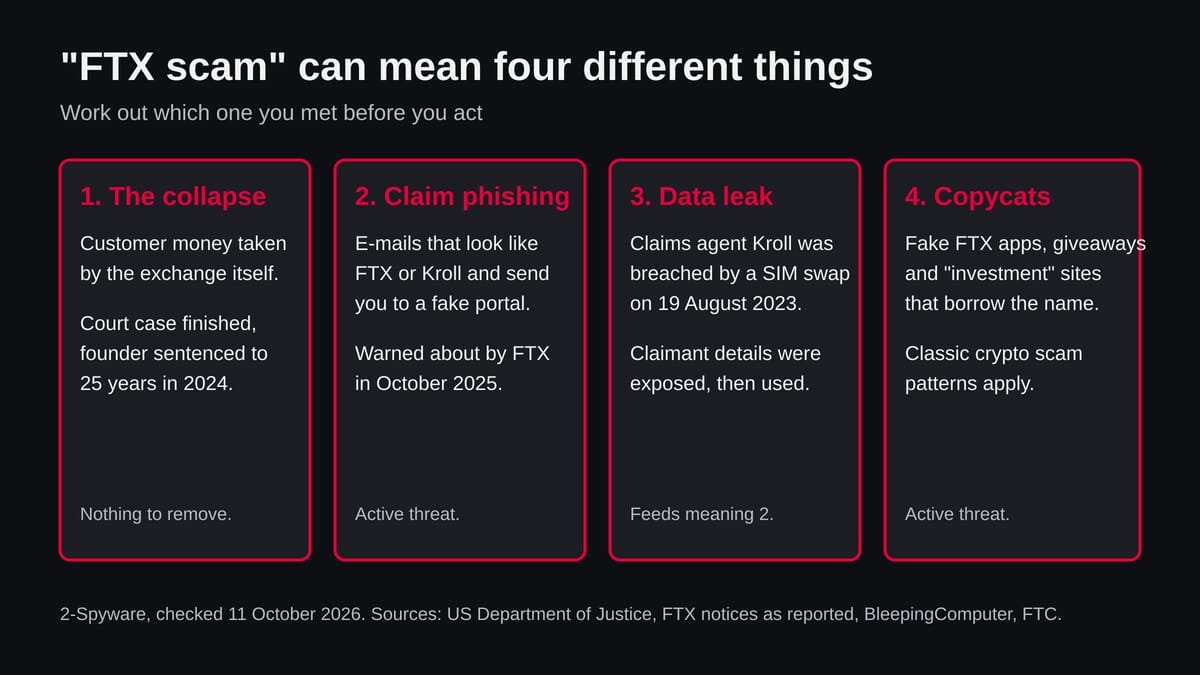
A surge in phishing scams impersonating FedEx and FTX has been reported as of October 2026. The FedEx scam involves fake messages claiming parcels are on hold, aiming to extract personal information like credit card numbers and passwords. Meanwhile, the FTX scam targets individuals awaiting payouts, sending fraudulent emails that appear to be from legitimate claims services. Both scams exploit the expectation of deliveries and financial transactions, particularly around holidays and significant sales events. The scams have led to a notable increase in searches for related terms, indicating growing public concern. Users are advised to verify messages through official channels and avoid clicking on suspicious links. The scams are not linked to any specific vulnerabilities or exploits but represent ongoing threats in the cybersecurity landscape.
Ask AI about this cluster
Answers cite the sources they use
Timeline
More articles in this cluster (8)
Following this threat?
Track FTX in your own feed — you're alerted when they show up in new reporting, leak sites or exploitation.
Free account · no card needed
Common questions
How can I identify a FedEx scam message?
What should I do if I receive an FTX scam email?
Are these scams linked to any known vulnerabilities?
Continue Reading
 CVE-2015-3306 Exploited in ProFTPD FTP Servers CVE-2015-3306, a vulnerability in ProFTPD 1.3.5, allows remote attackers to read and write arbitrary files using the SITE CPFR and SITE CPTO commands. This exploit can lead to unauthorized access and potential remote code execution, as the commands are executed with the privileges of the ProFTPD service. Active…
  CISA Mandates Urgent Patching of Five Critical Flaws Exploited by Flax Typhoon The U.S. Cybersecurity and Infrastructure Security Agency (CISA) has ordered federal agencies to patch five critical vulnerabilities by October 11, 2026, following exploitation by the China-linked hacking group Flax Typhoon. The vulnerabilities, added to CISA's Known Exploited Vulnerabilities (KEV) catalog, include…