 Ceew.In
 India and Bhutan Face Rising Heat Risks Amid Climate Change
Article Content

- •India's average temperature rose by 0.89°C from 2015-2024, with 2024 as the warmest year.
- •Bhutan's temperatures increased by over 1°C in the 20th century, with southern areas exceeding 30°C.
- •Both countries are implementing Heat Action Plans to mitigate health risks from extreme heat.
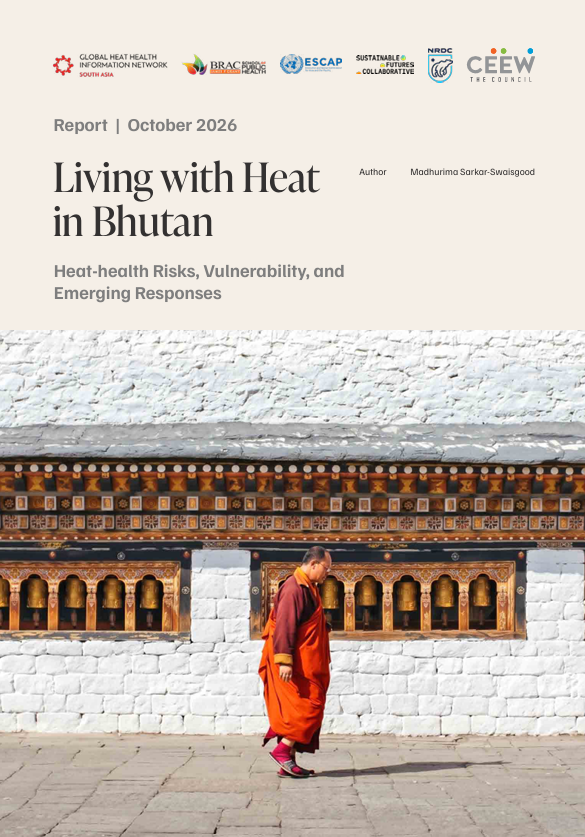
India and Bhutan are experiencing significant increases in heat exposure, impacting population health and productivity. India reported an average temperature rise of 0.89°C from 2015-2024 compared to the 1901-1930 baseline, with 2024 being the warmest year recorded. Bhutan's temperatures have increased by over 1°C in the 20th century, with southern regions already exceeding 30°C on many days. Both countries are implementing Heat Action Plans (HAPs) to address these risks, with India declaring heatwaves a notified natural disaster in August 2026. Vulnerable populations, including outdoor workers and the elderly, face heightened health risks, including increased mortality rates. In India, heat exposure has led to significant productivity losses, particularly in outdoor labor sectors. Bhutan's agricultural sector is also severely affected, with millions of labor hours lost annually due to heat stress. Both nations are prioritizing heat-health surveillance and institutional coordination to enhance resilience against extreme heat events.
Ask AI about this cluster
Answers cite the sources they use
Timeline
More articles in this cluster (2)
Common questions
What are the main health risks from rising temperatures?
How are India and Bhutan responding to heat risks?
What sectors are most affected by heat exposure?
Continue Reading
 CISA Mandates Urgent Patching of Five Critical Flaws Exploited by Flax Typhoon The U.S. Cybersecurity and Infrastructure Security Agency (CISA) has ordered federal agencies to patch five critical vulnerabilities by October 11, 2026, following exploitation by the China-linked hacking group Flax Typhoon. The vulnerabilities, added to CISA's Known Exploited Vulnerabilities (KEV) catalog, include…
  Critical Zero-Day Exploit Found in BeyondTrust Remote Support BeyondTrust disclosed a critical vulnerability, CVE-2026-102764, in its Remote Support product, exploited by the suspected China-linked group ARMORY CASTLE since August 2026. This flaw, with a CVSS score of 9.3, allows attackers to perform arbitrary file uploads and gain host-level control without requiring…