 Quantumcomputingreport
 Infineon and NVIDIA Enhance Security for Autonomous Systems with OPTIGA TPM Integration
Article Content

- •Infineon's OPTIGA TPM integrates with NVIDIA's Jetson Thor for enhanced security.
- •The solution provides a certified root of trust, crucial for robotics and Physical AI systems.
- •Post-quantum cryptography ensures long-term security against future quantum threats.
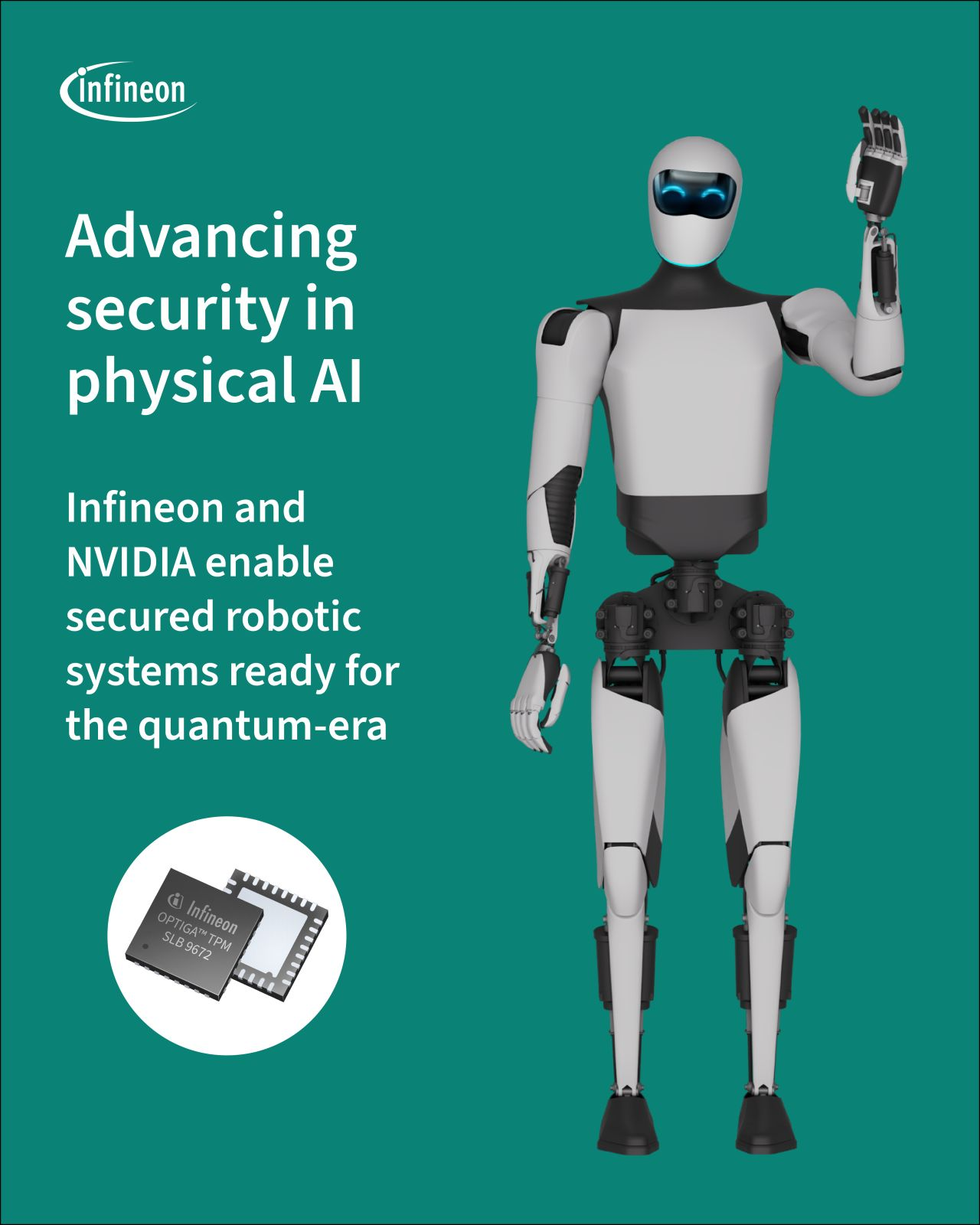
Infineon Technologies has integrated its OPTIGA™ Trusted Platform Module (TPM) SLB 9672 with NVIDIA's Jetson Thor platform to enhance security for robotics and Physical AI systems. This hardware-based solution provides a certified root of trust, isolating cryptographic assets and verifying system integrity at the chip level. The integration addresses vulnerabilities associated with software-defined isolation, ensuring secure operation in various environments, including factories and public spaces. The OPTIGA TPM is designed to withstand future quantum threats through post-quantum cryptography, safeguarding firmware updates and cryptographic keys. Compliance with international regulations, such as the EU Cyber Resilience Act and the EU AI Act, drives the demand for such hardware security solutions. The partnership aims to support the robotics industry by providing a robust security foundation, crucial for the safe deployment of autonomous systems.
Ask AI about this cluster
Answers cite the sources they use
Timeline
More articles in this cluster (4)
Continue Reading
 Critical WSO2 API Manager Vulnerability Under Active Exploitation A critical vulnerability (CVE-2026-5430) in WSO2 API Manager is being actively exploited, allowing unauthenticated attackers to forge admin tokens via JWT authentication bypass. This flaw, which has a CVSS score of 10.0, affects multiple WSO2 products including API Manager, Universal Gateway, Traffic Manager, and API…
  Critical Linux Kernel Vulnerability CVE-2025-39682 Under Active Exploitation A critical vulnerability (CVE-2025-39682) in the Linux kernel allows remote code execution through mishandling of zero-length TLS records. This flaw affects kTLS-enabled hosts running vulnerable kernel versions, exposing them to attackers without authentication. CISA added this vulnerability to its Known Exploited…