 Thelec
Korean Cybersecurity Firms Strengthen Ties with Japan Amid Growing Threats
Article Content

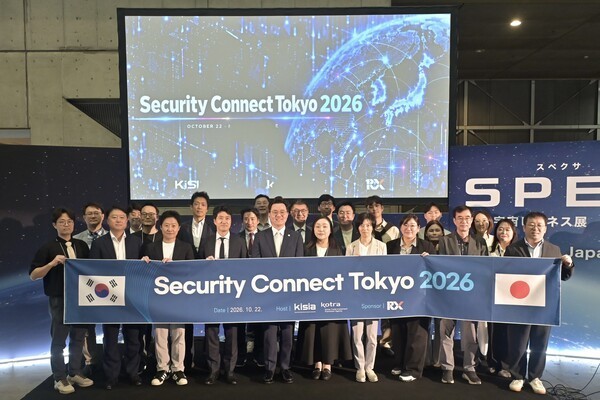
- •KISIA hosted Security Connect Tokyo 2026 to promote collaboration between Korean and Japanese cybersecurity firms.
- •Presentations included insights on global trust-based security and supply chain security from Japanese companies.
- •The event facilitated networking opportunities for Korean startups to enter the Japanese market.
On October 23, the Korea Information Security Industry Association (KISIA) hosted Security Connect Tokyo 2026, a networking event aimed at fostering collaboration between Korean and Japanese cybersecurity firms. The event featured presentations from Japanese companies TOPPAN and OTSUKA Corporation on global trust-based security and supply chain security. Korean firms, including Penta Security, PIOLINK, and S2W, showcased their security technologies. The event coincided with Japan IT Week Autumn, facilitating business meetings and potential partnerships. KISIA is also running a K-Security Startup Japan Market Development Delegation from October 20 to 23 to assist Korean startups in entering the Japanese market. The initiative aims to enhance understanding of market trends and establish partnerships, with an emphasis on joint proof-of-concept projects.
Ask AI about this cluster
Answers cite the sources they use
Timeline
More articles in this cluster (2)
Following this threat?
Track Penta Security in your own feed — you're alerted when they show up in new reporting, leak sites or exploitation.
Free account · no card needed
Common questions
What was the purpose of Security Connect Tokyo 2026?
Which companies presented at the event?
What initiatives are KISIA undertaking for Korean startups?
Continue Reading
 Critical BeyondTrust 9.3 Vulnerability Actively Exploited by Threat Actor A critical vulnerability (CVE-2026-102764) in BeyondTrust Remote Support has been discovered and is actively being exploited by the threat group ARMORY CASTLE, reportedly linked to China. The vulnerability, which has a CVSS score of 9.3, allows unauthenticated attackers to upload files and potentially compromise host…
 Lazarus APT Launches Operation FlashHole Using AI and Post-Quantum Cryptography Kaspersky has identified a cyberespionage campaign, dubbed Operation FlashHole, attributed to the Lazarus APT group, active since July 2025. The campaign has targeted at least three organizations in South Korea's construction, software, and wire-communication sectors. Attack methods include spear-phishing emails…