 ooni.org
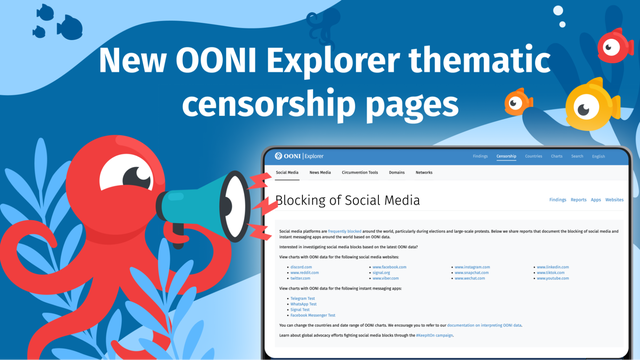
 Launch of OONI Explorer Thematic Censorship Pages
Article Content

- •OONI launched thematic censorship pages to document global internet censorship.
- •The new pages focus on social media, news media, and circumvention tools.
- •OONI data includes over 2 billion measurements from 28,000 networks worldwide.
On May 12, 2026, OONI announced new thematic censorship pages on OONI Explorer, documenting the blocking of social media, news media, and circumvention tools globally. This initiative aims to assist researchers and human rights defenders in monitoring censorship events more effectively. OONI Explorer is the largest open dataset on internet censorship, with over 2 billion measurements from 28,000 networks in 242 countries since 2012. The thematic pages focus on areas frequently targeted by censorship, including social media and news outlets. The launch follows extensive user research to enhance usability and accessibility of OONI data. This effort highlights the ongoing decline in internet freedom, with governments increasingly targeting specific sites and services. The thematic pages will provide short reports and charts to help users quickly understand censorship trends and events. OONI's work is crucial for accountability during critical moments like elections and protests.
Ask AI about this cluster
Answers cite the sources they use
Timeline
More articles in this cluster (2)
Continue Reading
 PHP2Shell Attack Chain Compromises 25 Servers in U.S. Government Environment Dream reported a PHP2Shell attack chain that compromised 25 servers, including those in a U.S. government-affiliated environment. The investigation revealed that an exposed firewall management interface allowed attackers to access internal identity infrastructure. The attack utilized PHP2Shell (CVE-2026-109618 and…